Neighbor News
Alameda County Water District Celebrates Clean Energy Milestone with Ribbon-Cutting Ceremony
Solar installations across four facilities generate 5,500 megawatt-hours annually and deliver an estimated $6 million in lifetime

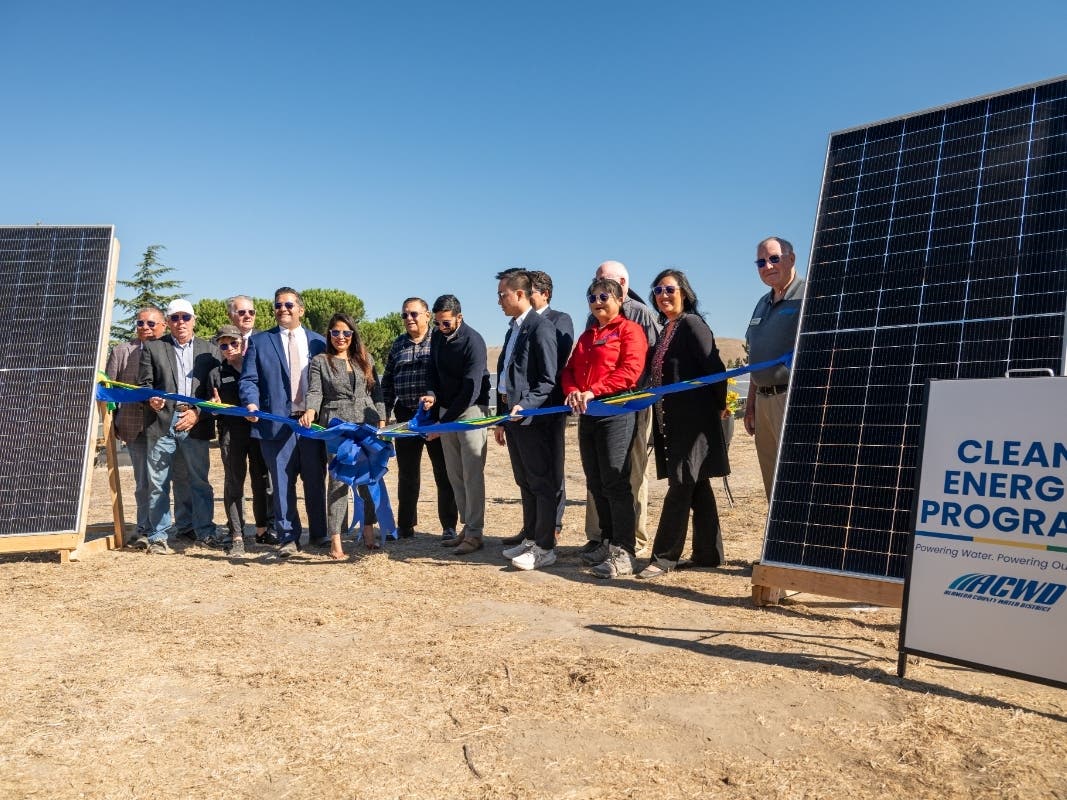
The Alameda County Water District (ACWD) celebrated a major milestone in its commitment to sustainability with a ribbon-cutting ceremony on October 14, marking the District’s Clean Energy Program and its investment in a more resilient, energy-efficient water system.
Held at Whitfield Reservoir in Fremont, the event brought together over 70 attendees, including ACWD Board members, agency leadership, project partners, and local and state representatives to celebrate the program and the role clean energy plays in delivering reliable water service to the Tri-City community.
Through the Clean Energy Program, ACWD harnesses solar power at four facilities across its service area. The program generates approximately 5,500 megawatt-hours of electricity annually — enough to power an estimated 915 homes for a year. The District anticipates approximately $200,000 in annual savings, or $6 million over the program’s lifetime.
Find out what's happening in Fremontfor free with the latest updates from Patch.
“Reliable water depends on reliable energy,” said ACWD Board President Aziz Akbari. “This project is a great example of how we can make the most of the resources we already have. It shows what happens when a vision becomes a commitment—and when that commitment becomes a project that will serve our community for years to come.”
The ceremony took place at Whitfield Reservoir, an underground reservoir that stores an average of 21 million gallons of treated water. Solar panels installed on a previously unused field above the reservoir generate nearly 4,000 megawatt-hours of electricity annually, demonstrating how ACWD can put available space to productive use while continuing to provide essential water storage.
Find out what's happening in Fremontfor free with the latest updates from Patch.
Through clean energy incentive programs offered by PG&E, ACWD can use energy generated at one facility to offset electricity consumed at another. This flexibility is particularly beneficial because the District’s covered reservoirs offer large, flat surfaces suitable for solar installations, while much of its electricity demand occurs at wellfields and pump stations.
The program also builds on ACWD’s history of connecting water and energy. In 1993, the District developed hydroelectric power at Water Treatment Plant No. 2, using energy available within its water system to help power operations. The Clean Energy Program continues that legacy through solar power and a broader commitment to resource efficiency.
The initiative reflects the District’s updated five-year strategic plan, including its emphasis on sustainability and its vision statement, “Quality water, thriving community.” By investing in clean energy, ACWD is strengthening operational resilience, managing long-term costs, and supporting a sustainable future for the community it serves.
“Today, as we cut this ribbon, we’re not just celebrating solar panels or clean energy. We’re celebrating progress, innovation, and our continued commitment to creating a more resilient, sustainable, and thriving community,” Akbari said.
The ceremony also coincided with the eve of Imagine a Day Without Water, a national public information campaign highlighting the value of water and its essential role in powering homes, businesses, industries, and communities.
ACWD extends its appreciation to its project partners—Madison Energy Infrastructure, Evergreen Innovations Group (EIG), PG&E, and NV5—for their collaboration in advancing the Clean Energy Program.
For more information about ACWD’s Clean Energy Program, visit acwd.org/CleanEnergyProgram.