Arts & Entertainment
‘One Night Only’ Review: A Charming Rom-Com Undone By Its Half-Built Dystopia
Monica Barbaro and Callum Turner shine, but their chemistry can't steady a rom-com constantly disrupted by its lightly sketched dystopia.



LOS ANGELES, CA — A city under curfew. A one-night mandate. A broken heart. A longing. A countdown. Then connection.
From these fragments emerges Will Gluck’s “One Night Only,” not as a conventional romantic comedy but as an off-kilter romance set against a lightly dystopian New York where people are constantly reachable yet rarely available. It’s a familiar metropolis, only slightly skewed — a place where repression masquerades as order, intimacy becomes a controlled substance, and desire flickers like a fleeting impulse.
Three years earlier, premarital sex was outlawed, and now chastity gear, surveillance checkpoints, and corporate clutter shape the rhythms of everyday life. For one sanctioned night each year, single people can briefly reclaim that libido — a chaotic, state-approved 12-hour window when intimacy is suddenly legalized.
Find out what's happening in Los Angelesfor free with the latest updates from Patch.
Yet for all its genre-bending ambition, Gluck’s film struggles to reconcile its buoyant rom-com instincts with the melancholy world it sketches, creating a tonal mismatch that leaves the viewer unable to fully inhabit either set of stakes. The dystopia never carries emotional weight; instead, it drifts along the margins, nodding toward political anxieties it has no real interest in unpacking. What emerges is a romance constantly at odds with a world too thinly imagined to support it.

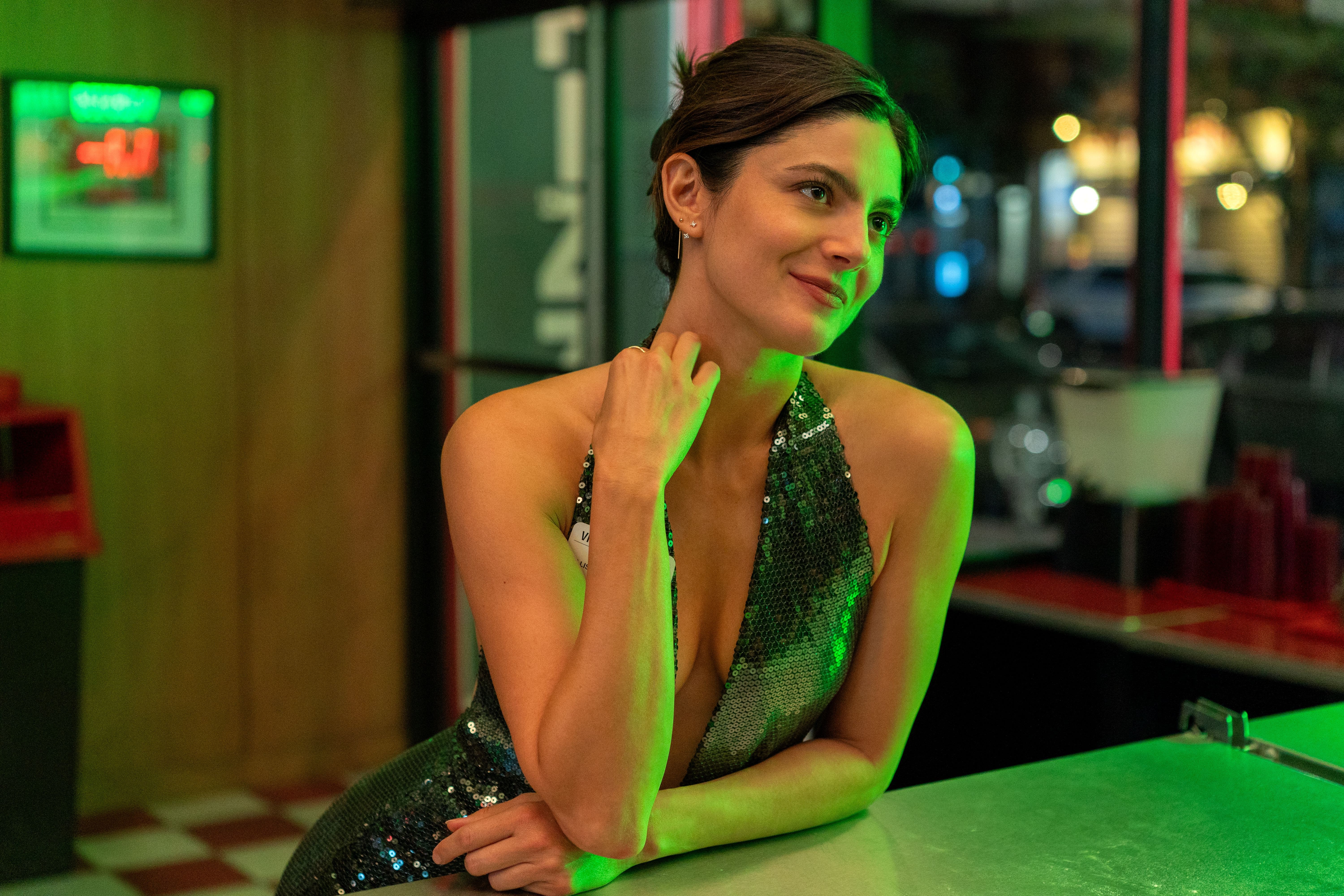
Enter Allie, a shy commercial singer whose soul-numbing day job — belting out pharmaceutical jingles repurposed from pop songs — mirrors the city’s habit of commodifying desire. Monica Barbaro plays her with a disappointed romantic’s softness, giving Allie a tentative, searching quality that makes her exhaustion with ghosting and casual hookups feel lived-in rather than contrived. In a world that keeps intimacy on a timer, she isn’t looking for another fleeting encounter; she wants a connection that feels real and intentional rather than transactional.
Find out what's happening in Los Angelesfor free with the latest updates from Patch.
Meanwhile, Owen, a pizza shop owner, is not having the time of his life. His carefully planned evening to propose collapses when his girlfriend suggests they see other people, leaving him suddenly emotionally adrift. Callum Turner plays Owen with a wounded sweetness, shading his bruised ego and vulnerability against a physique that projects solidity — a contrast he uses to underscore just how unsteady Owen feels inside, especially in a place where desire has become a regulated event.
Like Allie, Owen isn’t chasing the city’s fleeting, state-sanctioned flings. So when their paths finally cross, the spark is undeniable — a jolt of connection in a world that rations intimacy. Together, these two drifting souls make it tempting to believe they might find the emotional stability they long for. But that exhilarating moment is short-lived. Every time their romance starts to breathe, the film undercuts it with tonal chaos.
Gluck has spent much of his career steeped in the romantic comedy, from the breezy studio sheen of “Friends With Benefits” to the recent breakout success of “Anyone But You.” His films tend to move with pop-song clarity — bright, quick, bustling, unapologetically mainstream — built around snappy banter and electric chemistry. “One Night Only” carries that same sensibility, but its dystopian conceit keeps pulling the narrative out of Gluck’s usual rom-com rhythm.
That tonal whiplash becomes more striking once Allie and Owen begin their all-night odyssey. Every time the romance settles into something tender, the dystopia tilts back into farce, sending the couple ricocheting through bureaucratic checkpoints, last-minute hunts for sanctioned protection, and outlandish detours. The result is a rom-com that keeps trying to glide while the world around it meanders toward satire — a dizzying split-screen effect in which the viewer is never quite anchored in either mode.
By the time the night winds down, “One Night Only” has generated enough charm to keep the romance afloat, but not enough clarity to give its world any real shape. Gluck’s conceit remains a clever metaphor in search of a fully realized idea, its dystopia sketched so lightly it dissolves whenever the film needs it to hold the story together.
While Barbaro and Turner bring a grounded sweetness to the chaos, their sincerity can’t fully bridge the gap between rom-com buoyancy and satirical world-building. In the end, the film settles into a delightful yet unstable romance — bright enough to entertain, but too conceptually fragile to ever truly stand on its own, leaving viewers stranded in the same emotional limbo it never learns how to escape.

Get more local news delivered straight to your inbox. Sign up for free Patch newsletters and alerts.