Arts & Entertainment
'The Social Reckoning' Review: Aaron Sorkin Examines Power, Accountability And Facebook's Reckoning
Mikey Madison, Jeremy Allen White and Jeremy Strong anchor Aaron Sorkin's ambitious study of influence and accountability.


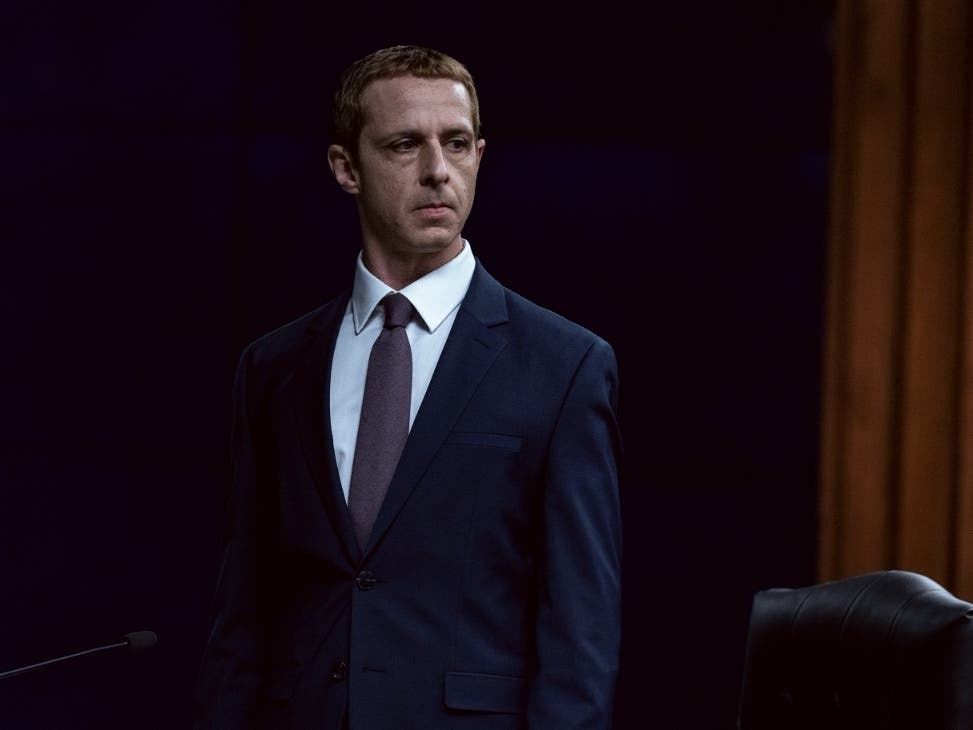
LOS ANGELES, CA — More than a whistleblower drama, “The Social Reckoning” explores a fault line within contemporary institutions, where influence and accountability no longer neatly align. Internal knowledge hardens into evidence, evidence yields consequence, and consequence ripples outward into public reckoning.
Sixteen years after scripting “The Social Network,” Sorkin returns to Facebook from the opposite side of its mythology. If the earlier film chronicled the birth of a platform destined to reshape modern life, “The Social Reckoning” examines the consequences of an influence that has become too vast, too profitable, and too deeply embedded to easily hold accountable.
Prioritizing argument, dialogue, and performance over cinematic flourish, Sorkin crafts an ambitious and often thought-provoking companion piece. Even when its procedural instincts occasionally steer the material toward a more familiar David-and-Goliath narrative, the film succeeds as an examination of how institutions respond when internal realities become matters of public scrutiny.
Find out what's happening in Los Angelesfor free with the latest updates from Patch.

Rather than relying on visual bravura, the film derives its momentum from the movement of information itself. Interviews, leaked documents, internal research, and congressional testimony become its primary means of dramatic propulsion, transforming disclosure into action. While the approach lacks the tactile atmosphere and lingering unease that David Fincher infused into “The Social Network,” it serves as an effective vehicle for a story more concerned with accountability and consequence than spectacle. The density of information can occasionally prove burdensome, yet Sorkin generally finds dramatic tension in the process of revelation itself.
Drawing from the reporting that became known as the Facebook Files, the film follows former Facebook engineer Frances Haugen (Mikey Madison) and Wall Street Journal reporter Jeff Horwitz (Jeremy Allen White) as internal research and leaked documents move from private knowledge into public view. As evidence accumulates, Facebook is gradually reframed not as a technological innovator but as an institution confronting the consequences of its influence.
Find out what's happening in Los Angelesfor free with the latest updates from Patch.
As Frances Haugen moves from conscientious employee to reluctant whistleblower, Madison avoids the temptation to play her as a crusading hero. Her performance is marked by quiet conviction rather than grandstanding certainty, suggesting a woman increasingly unsettled by the widening gap between what she knows and what she can continue to justify. The film is at its most effective in these moments of hesitation and uncertainty, where moral responsibility emerges not through dramatic declarations but through the accumulation of compromises that can no longer be ignored.
Opposite her, Jeremy Allen White's Jeff Horwitz functions less as a journalistic savior than as a conduit through which private knowledge acquires public consequence. White brings a restrained focus to the role, emphasizing persistence over heroism. Together, he and Madison anchor the film's procedural machinery, giving emotional weight to material that might otherwise remain purely informational.
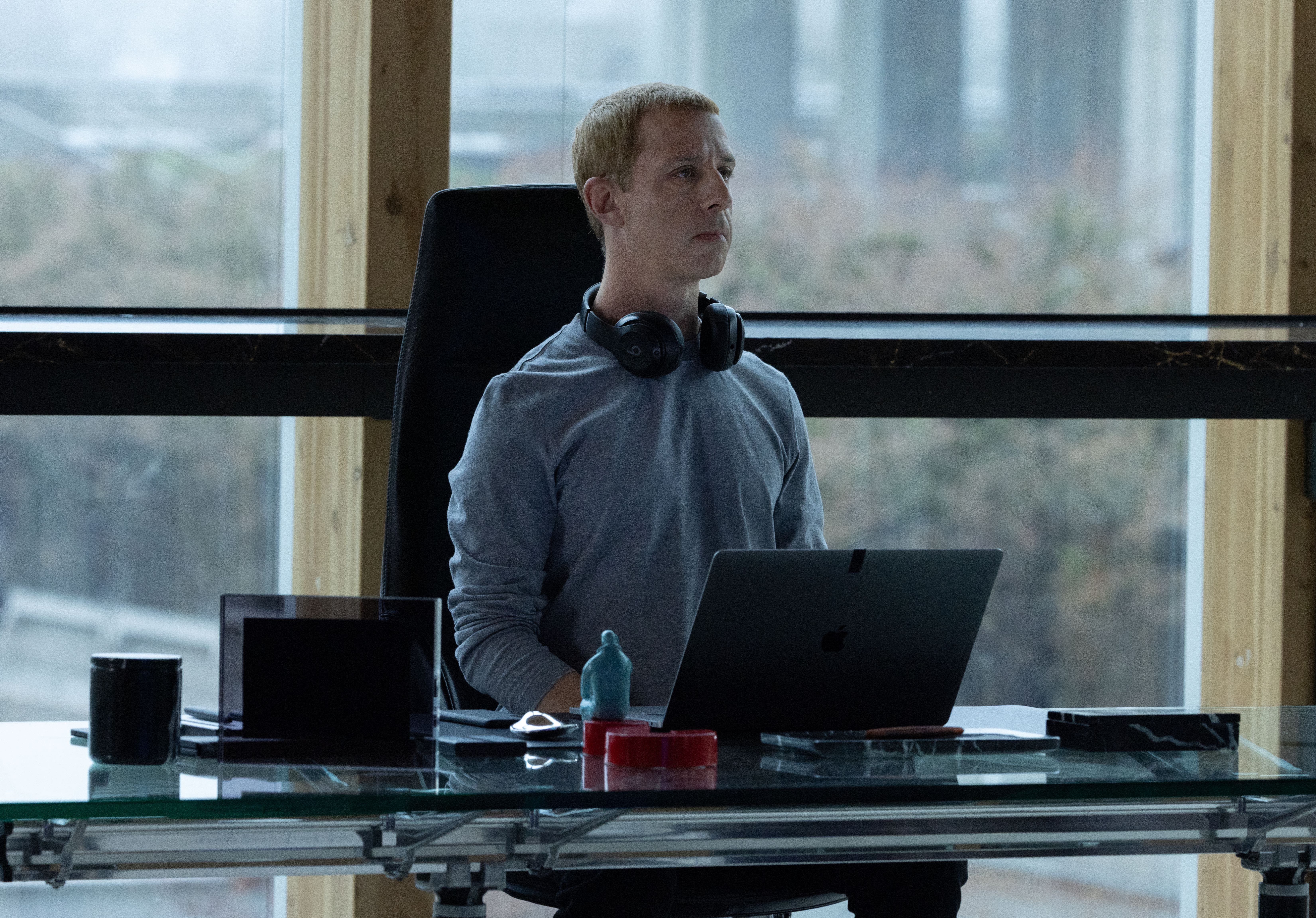
Yet the film's most intriguing figure remains Mark Zuckerberg (Jeremy Strong). Rather than portraying him as a conventional antagonist, Strong plays Zuckerberg with a detached, almost unnerving confidence, a man less interested in defending specific decisions than in defending the logic that produced them. The effect is to recast criticism as a challenge not merely to a leader but to the institution he represents. It is in those terms that “The Social Reckoning” transcends the confines of a whistleblower procedural and becomes a broader examination of how power justifies itself.
Ultimately, the tension between systemic critique and conventional drama defines both the film's strengths and its limitations. That tension becomes most apparent when the narrative gravitates toward clearer heroes and villains than the material requires, simplifying a system whose most troubling feature is the diffusion of responsibility itself.
In the end, the film remains most compelling when it recognizes that accountability is rarely a matter of identifying a single culprit. Power, once sufficiently entrenched, develops its own logic, its own justifications, and its own momentum. If “The Social Network” captured the exhilaration of building something capable of reshaping the world, “The Social Reckoning” confronts the far murkier question of who bears responsibility once that transformation is complete.
Get more local news delivered straight to your inbox. Sign up for free Patch newsletters and alerts.