Politics & Government
Synchronized Traffic Signals Coming To All Of Western Riverside County As Part Of Pilot Program
How much travel time could be saved? Signal synchronization reduces travel delay between 13% and 94%, according to state analysis.


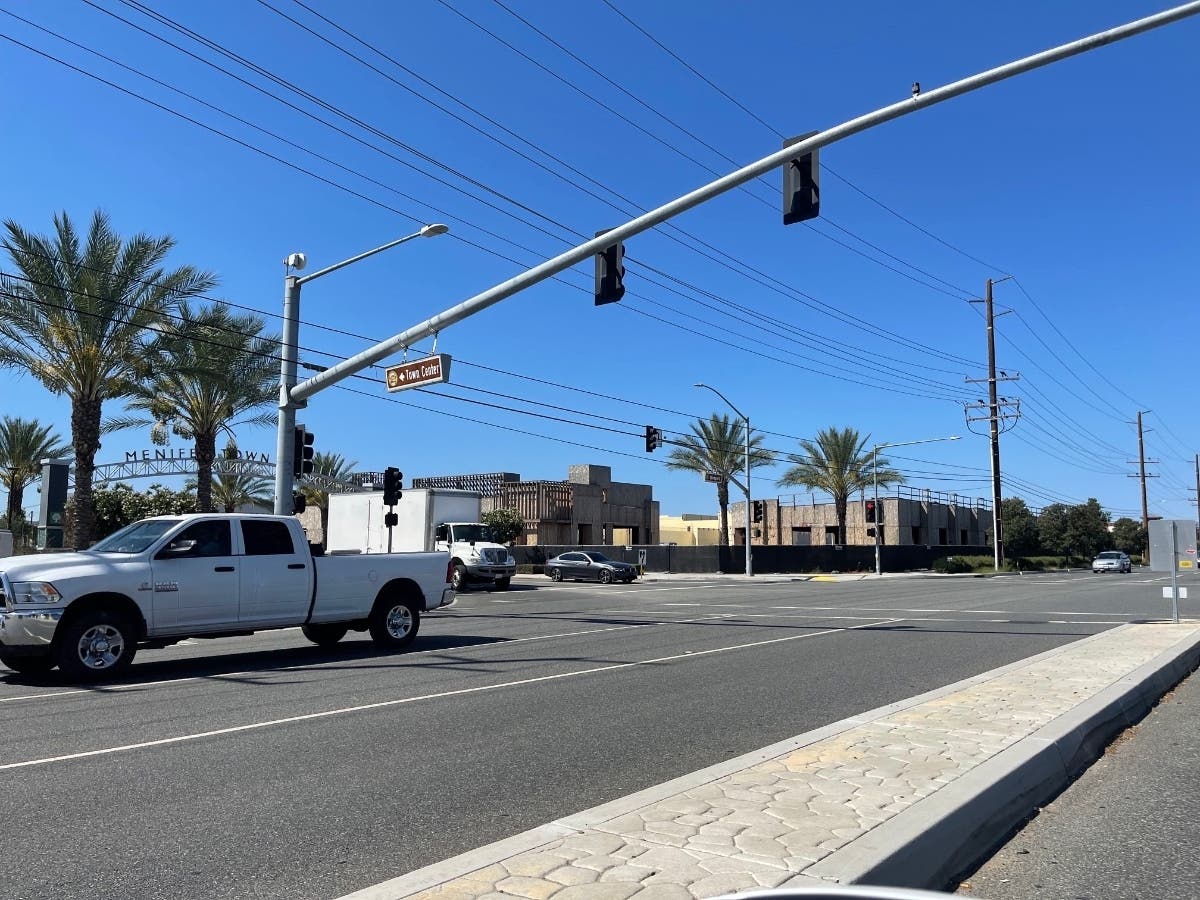
SACRAMENTO, CA — Western Riverside County will become California's bellwether on the success or failure of widespread synchronized traffic signals.
Gov. Gavin Newsom has signed Assembly Bill 2307, authorizing a pilot program to synchronize traffic signals across Western Riverside County in an effort to ease traffic congestion and reduce vehicle emissions.
The legislation, signed Aug. 27, authorizes the Western Riverside Council of Governments (WRCOG) to partner with Caltrans to establish and administer the regional traffic signal timing initiative. The pilot program runs through Jan. 1, 2032.
Under existing state law, Caltrans maintains possession and control over state highways, while local municipalities manage city street networks. AB 2307 creates a framework allowing WRCOG member agencies and Caltrans to coordinate signal timing across state highways and local road systems simultaneously.
The bill could serve as a tool to help ensure Caltrans works constructively with WRCOG on signal synchronization efforts.
WRCOG member cities include Banning, Beaumont, Calimesa, Canyon Lake, Corona, Eastvale, Hemet, Jurupa Valley, Lake Elsinore, Menifee, Moreno Valley, Murrieta, Norco, Perris, Riverside, San Jacinto, Temecula, and Wildomar.
The state legislative analysis for AB 2307 mandates that the pilot program be 100% locally funded, ensuring no direct cost impact on the State General Fund. Existing law already allocates $250 million in revenues from California's Highway Safety, Traffic Reduction, Air Quality, and Port Security Bond Act of 2006 (Proposition 1B) for traffic light synchronization. Existing law also makes traffic signal synchronization projects eligible, as part of a sustainable infrastructure project, for Greenhouse Gas Reduction Fund moneys under certain conditions.
Supporters of AB 2307, including Murrieta City Council Member Lori Stone, have pushed for regional signal coordination to smooth traffic flow along heavily traveled corridors connecting Southwest Riverside County cities.
In a statement posted to social media on Monday, Aug. 31, Stone celebrated the bill's signing as a key regional milestone.
"It has been an incredible experience working collaboratively with our regional partners, cities of Temecula, Wildomar, Lake Elsinore, Canyon Lake, Menifee, the County of Riverside, and numerous Riverside County transportation agencies, to reach this historic milestone in our efforts to combat traffic congestion throughout our region," Stone said, acknowledging Council Member Cindy Warren, Assemblywoman Kate Sanchez, and Sen. Kelly Seyarto for their roles in supporting the effort.
"This is what regional leadership and collaboration look like: cities and agencies coming together with a shared goal of improving mobility and the quality of life for the residents we serve," Stone added.
Because the program applies specifically to the municipalities comprising WRCOG, the legislation includes findings justifying the necessity of a special local statute rather than a general statewide law.
WRCOG and Caltrans are required to evaluate the pilot program's operational efficiency, travel time reliability, and impact on greenhouse gas emissions. A formal report assessing the results must be submitted to the California Legislature on or before Jan. 1, 2028.
According to a 2024 University of Michigan study, traffic congestion at more than 320,000 signalized intersections in the U.S. is estimated to cost drivers nearly $23 billion annually in direct and indirect costs. These costs include wasted fuel and excess time waiting at lights that are not synchronized.
How much could be saved? Signal synchronization reduces travel delay between 13% and 94%, according to state analysis. According to the Los Angeles Department of Transportation, the city synchronized all ofits more than 4,500 traffic lights more than a decade ago, with the goal of increasing travel speeds by 16% and reducing travel times by 12%.
While the multi-million-dollar system successfully maximized the capacity of LA's street network, transportation experts have noted that traffic signal synchronization is an operational efficiency tool rather than a cure for regional traffic congestion. Over time, as overall vehicle volume in the region continued to rise, "induced demand" absorbed much of the newly created road capacity.
However, engineers have emphasized that without the synchronization system, gridlock on major Los Angeles thoroughfares would be significantly worse today.