Sports
From Novato To The Emmy Stage: The Three People Who Changed One Broadcaster's Life
He covers the biggest names in sports, but traces the path back to his parents, a beloved high school teacher and his hometown.


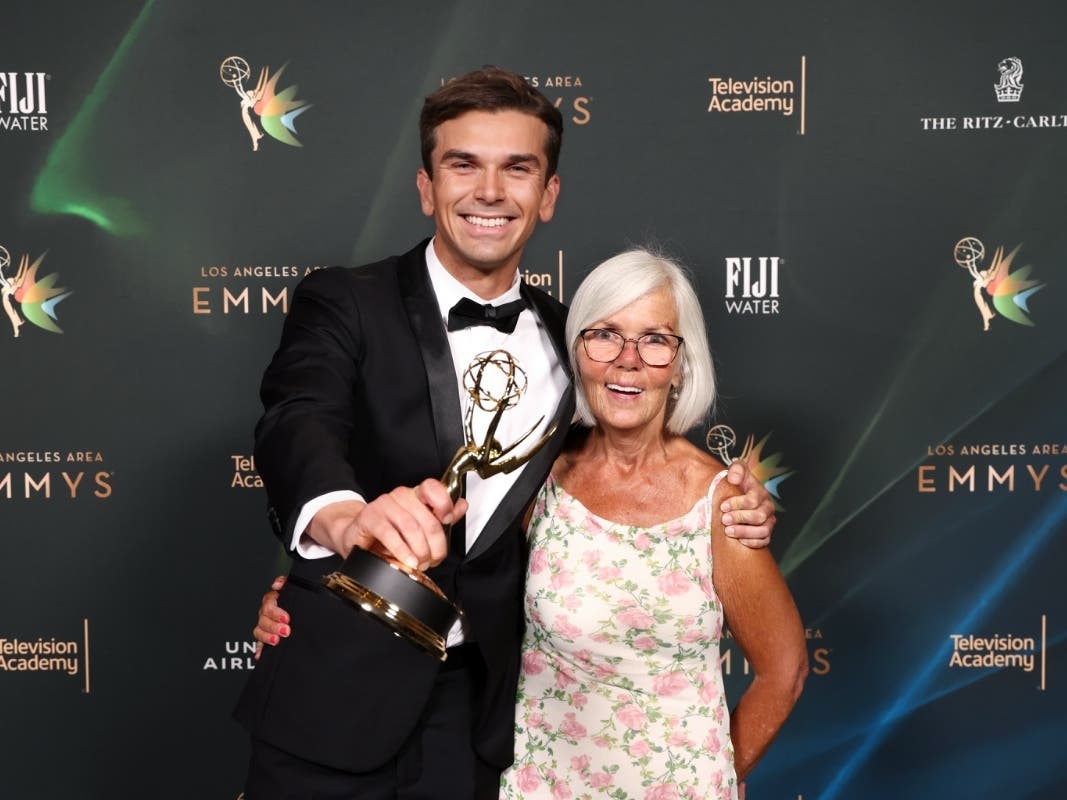
NOVATO, CA — Taylor Schaub was standing on a stage in Los Angeles this summer, accepting the first individual Emmy Award of his career for a story about one of the most famous athletes on the planet.
But Shohei Ohtani was not the person on his mind.
Neither were the Dodgers, Lakers, Rams or Chargers — the teams Schaub now covers as a sports anchor and reporter for Spectrum Networks in Los Angeles.
Find out what's happening in Novatofor free with the latest updates from Patch.
Instead, Schaub thought about three people, all tied to the place where his story began: Novato.
There was his mother, who survived a brain aneurysm and stroke when Schaub was a baby and spent years rebuilding a life that doctors once feared would be permanently altered.
Find out what's happening in Novatofor free with the latest updates from Patch.
There was his father, longtime Bay Area journalist Jeffrey Schaub, whose career gave his son a blueprint for one of his own.
And there was Craig Pitti, the beloved San Marin High School teacher, athletic director and basketball coach who sat down with a struggling 17-year-old student a decade ago and delivered a sentence Schaub has never forgotten.
“I think you might be the biggest waste of potential I've ever met,” Pitti told him.
It was harsh. It was also, Schaub told Patch, exactly what he needed to hear.
Less than a year later, Pitti was dead.
A decade after that conversation, Schaub is 27, an Emmy winner and a fixture in one of the country's biggest sports markets. He has covered World Series, Super Bowls and the World Cup. He has reported on stars including Ohtani, LeBron James and Luka Dončić.
Yet when Schaub talks about how he got there, his career milestones quickly become secondary.
“My mom is my heart, my dad is my head, and Craig Pitti is my will,” Schaub said.
A Newsroom Family
Schaub told Patch he has wanted to work in television since he was 2.
His earliest memory of the business came while his family lived on Saddlewood Drive in Novato. His father would sometimes be picked up for work in the enormous television news trucks of the era, and young Schaub remembers climbing inside one.
He didn't understand what he was seeing. He thought it was a spaceship.
The screens and equipment fascinated him. Ironically, he remembers being considerably less impressed by his father's role in the operation.
“I thought what my dad did was really dumb,” Schaub told Patch. “I was like, why are you just like putting on makeup and standing there?”
Eventually, he understood.
Jeffrey Schaub spent roughly two decades reporting and anchoring for KPIX before moving to KCBS Radio. His son watched him leave home each day to meet different people, go different places and tell their stories.
Other families in the neighborhood might have had bigger houses or swimming pools, Schaub told Patch, but people wanted to know about his father's work.
“I remember registering that from a really young age and being like, he does something that matters,” he said.
His mother's connection to journalism was more complicated.
When Schaub was 1, his mother suffered a brain aneurysm and stroke while working as an assignment editor in the KGO-TV newsroom.
Schaub was too young to remember his mother before the stroke. For virtually his entire life, he knew her as someone who had fought her way back from an injury that was expected to leave her completely paralyzed on her left side.
That made what happened earlier this year especially powerful.
For National Stroke Awareness Month and Mother's Day, Schaub produced a retrospective about his mother's survival. As part of the project, he dug through old family videos he had never watched.
The first image stopped him. It showed his mother holding him with both arms.
“I lived basically my entire life having no recollection of ever seeing my mom use her left arm,” Schaub said.
His mother calls what happened to her “a stroke of luck,” Schaub told Patch, because surviving it changed how she viewed life and the time she had with her sons.
For Schaub, her recovery became his earliest lesson in perseverance.

The Student Who Needed A Reason
Knowing what he wanted to do did not mean Schaub knew how to get there.
At San Marin High School, he was struggling academically.
Schaub is candid about it now. He was a good kid and got along with his teachers, but if he didn't see value in an assignment, he simply wouldn't do it.
“I was a really bad student,” he said. “I was just directionless.”
Pitti saw something else.
The basketball coach, athletic director and economics teacher knew Schaub wanted to become a sports broadcaster. Early in Schaub's senior year, Pitti summoned him to his office.
Then came the line about wasted potential.
Schaub remembers sitting stunned through roughly 12 seconds of silence.
But Pitti wasn't finished.
“I want to help you,” he told Schaub.
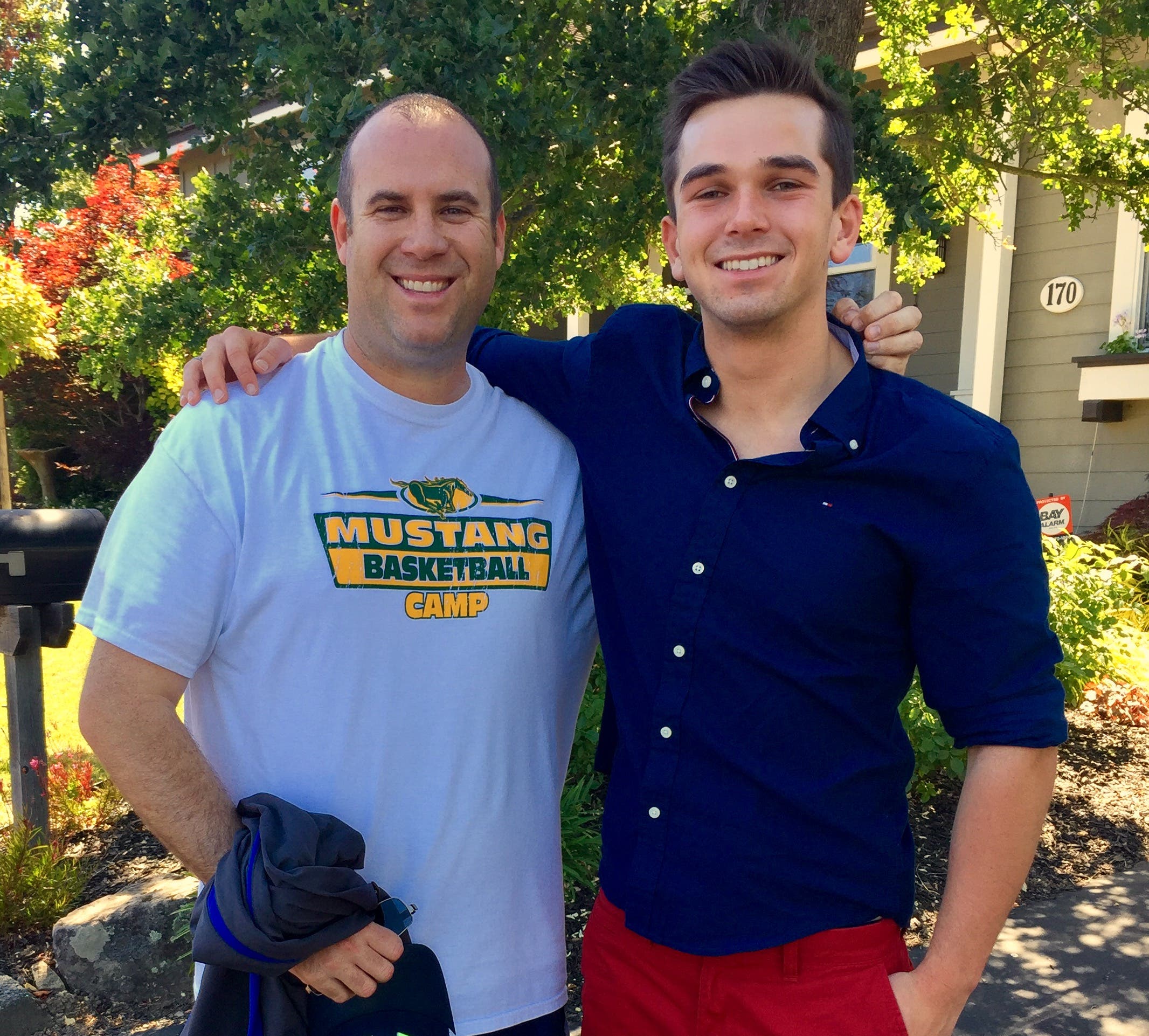
San Marin was starting a streaming broadcast for its football and basketball games called Mustangs Live. Pitti wanted Schaub behind the microphone, but there was a condition. Schaub would have to maintain his grades, finally take school seriously and become involved in activities that could help him get into college.
For the first time outside his family, Schaub felt that somebody had truly seen him.
“It was like rocket fuel,” he said.
He started calling games. At first, he was terrified.
“The first couple were horrible, and then the next couple were terrible, and then the few after that were awful,” Schaub joked.
But he couldn't stop.
He found his way onto Dominican University's radio station despite still being in high school, eventually hosting a Sunday sports talk show. He broadcasted Pacific's baseball games. And his grades climbed.
“It was like all I needed was somebody to tell me it was possible, and to give me a reason to care, and to give me a reason to value myself,” Schaub said. “And then I was off and running.”
Three Weeks
Just weeks after Schaub graduated from San Marin in 2017, Schaub said Pitti went in for his first colonoscopy.
Schaub told Patch that Pitti was diagnosed with stage four colon cancer at 40.
Schaub invited his former teacher onto his radio show, where the two talked about life, coaching, teaching and mentorship.
About a week later, Pitti died — roughly three weeks after his diagnosis, according to Schaub.
It was the first major death Schaub had experienced and his instinct was to tell a story.
He gathered photographs from Pitti's Facebook page, recorded a tribute and assembled a video honoring the teacher's life. It spread throughout Novato as students, colleagues and families mourned.
Pitti's family and Schaub's former teachers then asked the 18-year-old to speak at his funeral.
In front of a crowd Schaub remembers numbering in the thousands, he talked about the man who had changed his life less than a year earlier.
From then on, Schaub made himself a promise.
“The last thing I'm ever gonna do is be a waste of potential,” he said.
From Bakersfield To Los Angeles
The transformation happened quickly.
Schaub enrolled in the Dan Patrick School of Sportscasting at Full Sail University and said he was the first person to sign up for the new program.
The student who had struggled to pass classes in high school became salutatorian, according to Schaub.
Before turning 20, Schaub landed his first television job at KGET in Bakersfield.
He started in news, not sports, and soon found himself covering stories far removed from the games he had dreamed of calling.
But he eventually moved back into sports at the station and, at 21, was offered the sports director job.
At 24, Spectrum brought him to Los Angeles.
Making People Care
Moving into the country's second-largest media market brought a new problem: imposter syndrome.
Suddenly, Schaub was covering some of the world's biggest athletes alongside journalists with decades more experience.
Eventually, the feeling changed.
“I kind of looked around and I was like, I can do this,” he said.
He began pushing himself toward the kind of storytelling that had attracted him to journalism in the first place.
His guiding principle is surprisingly simple for a sports reporter: He doesn't make stories for sports fans.
“I do sports for my mom, who couldn't care less,” Schaub said. “If I can make her care ...then I've got you.”
That philosophy helped produce “Why You Should Care,” a series of essays designed to find the larger human meaning inside sports.
One installment compared Ohtani to a solar eclipse — something singular enough to make everyone stop what they're doing and look.
“Baseball's Solar Eclipse” ultimately earned Schaub his Emmy.
The comparison also reflects how he has come to think about sports themselves.
Schaub grew up a Giants and 49ers fan. Today, he says, his allegiance is different.
“I don't root for teams anymore,” he said. “I root for stories. I root for people, and I root most importantly for collective experience.”
Sports, he believes, may be one of the few remaining places where people with almost nothing else in common can share an experience.
“Sports is the last campfire we have,” Schaub said.
Coming Home
This year, those ideas about family, sports and shared experience kept colliding.
First came the Mother's Day story.
Then Spectrum asked Schaub whether his father might come out of retirement for Father's Day.
The answer wasn't difficult.
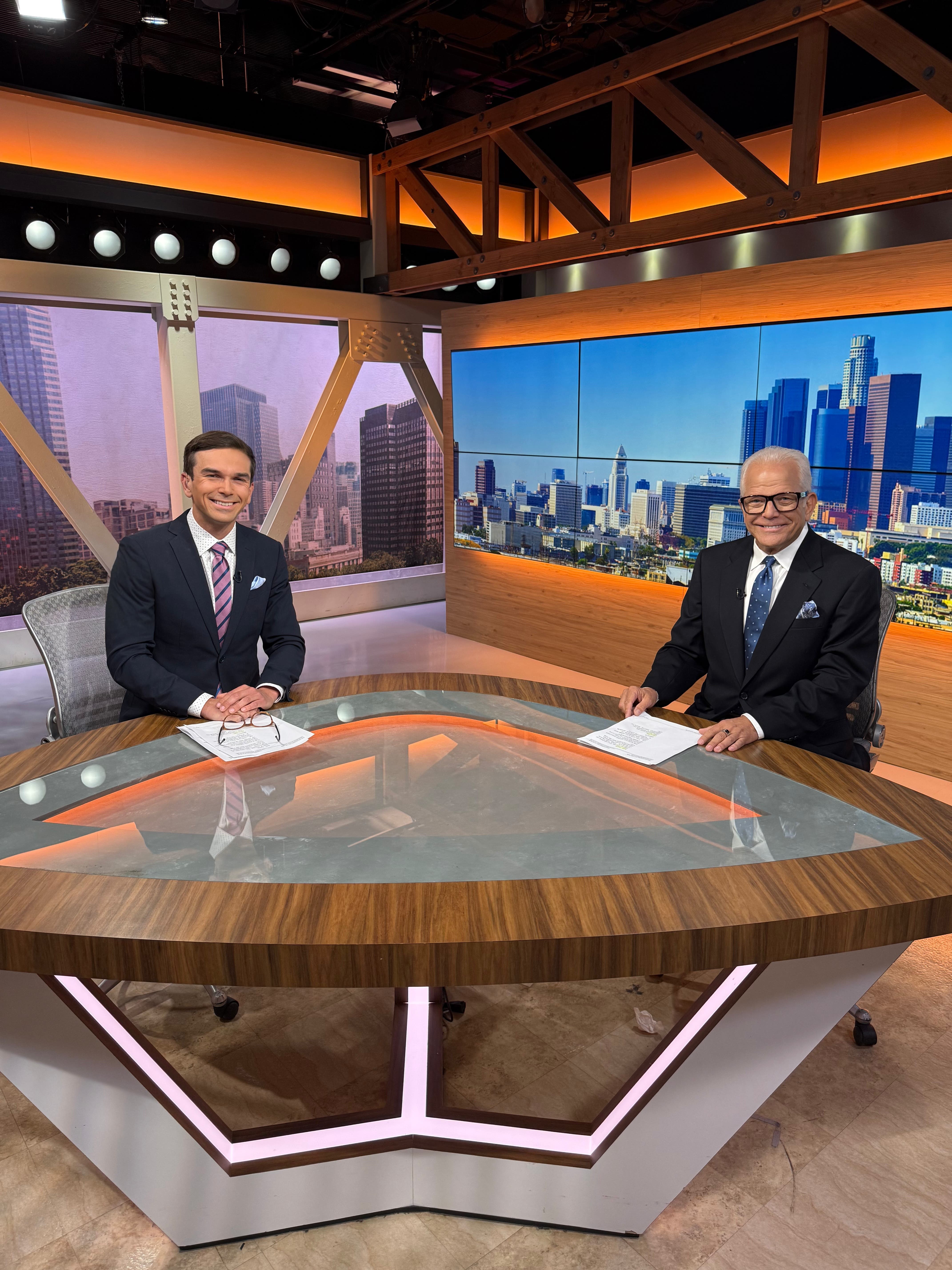
Anchoring a newscast together had been a father-son dream since Schaub was a child in Novato. Jeffrey Schaub flew to Los Angeles, sat beside his son and, for one show, the two generations shared an anchor desk.
“That’s been our dream since I was a kid,” Schaub said.
Then came the World Cup.
Schaub found himself on the field at Levi's Stadium after a U.S. victory, surrounded by roughly 60,000 people singing “Take Me Home, Country Roads.”
He began to cry.
The moment landed differently because he was back near home. It had been 25 years since his mother's stroke.
And 10 years since Pitti's death.
Then came the Emmy.
Schaub brought his mother to the ceremony. When “Baseball's Solar Eclipse” won, he walked onto the stage carrying, at least figuratively, all three people.
His mother was there to hear him thank her.
His father had finally shared a television desk with him.
Pitti wasn't there.
'The Job's Not Finished'
Schaub's connection to San Marin has found its way into his professional life, too.
While working in Bakersfield, he returned to cover San Marin's first state championship football game because the Mustangs happened to be playing a Bakersfield school.
More recently, Spectrum assigned him as a sideline reporter for the state basketball championships at Golden 1 Center in Sacramento.
San Marin happened to be playing for its first state basketball championship.
The Mustangs won.
Schaub interviewed the players and coaches professionally on camera. Once the broadcast ended, professionalism briefly gave way to something else.
He hugged them.
Players told him the championship was for Pitti.
Ten years after the teacher's death, Schaub can draw an almost impossibly straight line from that athletic director's office at San Marin to the career he has today.
He has wondered what Pitti would make of all of it.
Asked what he thinks his former teacher would tell him now, Schaub went quiet.
“No one's ever asked me that,” he said.
Then he answered.
“I think he would tell me he was proud of me,” Schaub said. “But I think he would tell me that the job's not finished.”
And then, imagining Pitti speaking to that 17-year-old student again:
“You are everything I think you could be, but you are not anywhere close to what I think you can be.”
Get more local news delivered straight to your inbox. Sign up for free Patch newsletters and alerts.