Travel
Early Morning Sonic Boom Rattles Southern California
The jarring boom could be heard for hundreds of miles during NASA's first medical evacuation from the International Space Station.


LOS ANGELES, CA — A sonic boom rattled Southlanders out of bed early Thursday morning as astronauts returned to Earth in NASA’s first medical evacuation from the International Space Station.
It could be heard across San Diego, Orange and Los Angeles counties.
The astronaut's return triggered the sonic boom shortly before 1 a.m. Thursday. SpaceX guided the capsule to a middle-of-the-night splashdown in the Pacific near San Diego, less than 11 hours after the astronauts exited the International Space Station.
Find out what's happening in San Diegofor free with the latest updates from Patch.
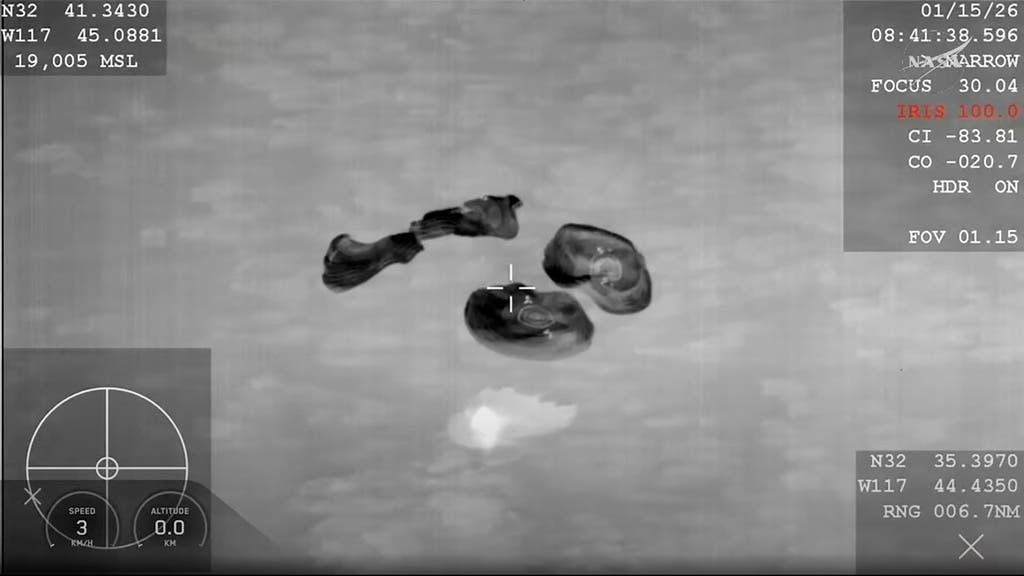
The return mission was part of an effort to help an ailing astronaut accompanied by three other astronauts Thursday, ending their space station mission more than a month early in NASA’s first medical evacuation
“It’s so good to be home,” said NASA astronaut Zena Cardman, the capsule commander.
Find out what's happening in San Diegofor free with the latest updates from Patch.
It was an unexpected finish to a mission that began in August and left the orbiting lab with only one American and two Russians on board. NASA and SpaceX said they would try to move up the launch of a fresh crew of four; liftoff is currently targeted for mid-February.
NASA’s Zena Cardman and Mike Fincke were joined on the return by Japan’s Kimiya Yui and Russia’s Oleg Platonov. Officials have refused to identify the astronaut who had the health problem or explain what happened, citing medical privacy.
While the astronaut was stable in orbit, NASA wanted them back on Earth as soon as possible to receive proper care and diagnostic testing. The entry and splashdown required no special changes or accommodations, officials said, and the recovery ship had its usual allotment of medical experts on board. It was not immediately known when the astronauts would fly from California to their home base in Houston. Platonov’s return to Moscow was also unclear.
SpaceX warned that the return would trigger a sonic boom.
"Dragon will announce its arrival with a brief sonic boom prior to splashing down in the Pacific Ocean," SpaceX tweeted.
Splashdown of Dragon confirmed – welcome back to Earth, @zenanaut, @AstroIronMike, @Astro_Kimiya, and Oleg! pic.twitter.com/2Yrgvy6DJO
— SpaceX (@SpaceX) January 15, 2026
"Sonic booms are caused by an object moving faster than sound — about 750 miles per hour at sea level. An aircraft traveling through the atmosphere continuously produces air-pressure waves similar to the water waves caused by a ship's bow," according to the Edwards Airforce Base website. "When the aircraft exceeds the speed of sound, these pressure waves combine and form shock waves which travel in all directions and eventually reach the ground. The sound heard on the ground is the sudden onset and release of pressure after the buildup by the shock wave."
NASA stressed repeatedly over the past week that this was not an emergency. The astronaut fell sick or was injured on Jan. 7, prompting NASA to call off the next day’s spacewalk by Cardman and Fincke, and ultimately resulting in the early return. It was the first time NASA cut short a spaceflight for medical reasons. The Russians had done so decades ago.

The space station has gotten by with three astronauts before, sometimes even with just two. NASA said it will be unable to perform a spacewalk, even for an emergency, until the arrival of the next crew, which has two Americans, one French and one Russian astronaut.
___
MARCIA DUNN AP Aerospace Writer contributed to this report.
Get more local news delivered straight to your inbox. Sign up for free Patch newsletters and alerts.