Travel
FAA Eases SFO Landing Restrictions With New Staggered-Arrivals Rule
The new rules will allow, weather permitting, up to 42 aircraft per hour, six more than before the change.
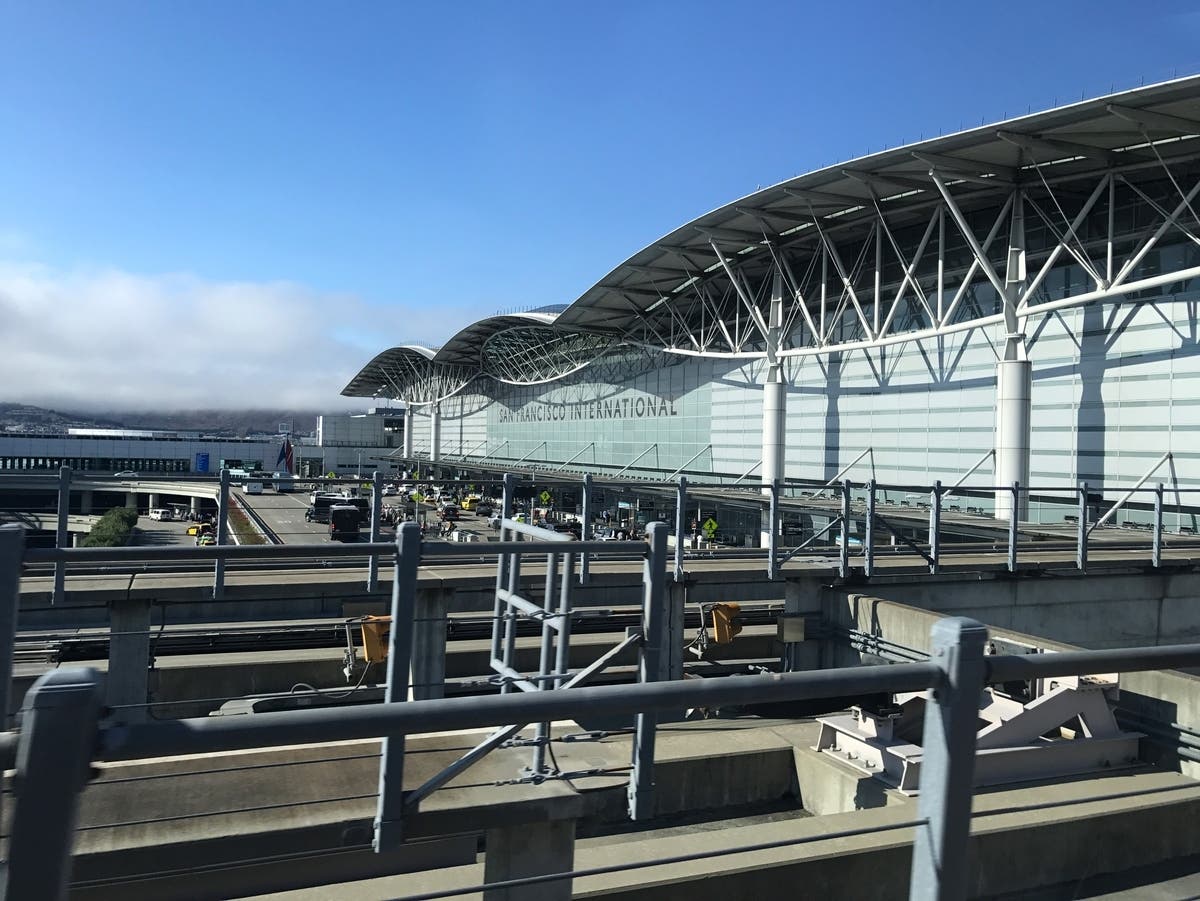
SAN FRANCISCO, CA — Restrictions placed on operating procedures at San Francisco International Airport will be revised by the Federal Aviation Administration on Wednesday, potentially increasing the number of aircraft that can be processed at one of the busiest airports in the country.
Officials at the FAA and at SFO confirmed a previous ban on parallel approaches will be "slightly revised" to now include staggered arrivals, to maximize the use of the airport's existing landing strips after losing the use of others to planned maintenance.
The new rules will allow, weather permitting, up to 42 aircraft per hour, six more than before the change, but still less than what the airport maintained with parallel landings. It comes at a time when SFO is operating with reduced capacity because of ongoing maintenance to its runways, with one currently being used as a taxiway while the others alternate between landings and takeoffs.
Find out what's happening in San Franciscofor free with the latest updates from Patch.
Doug Yakel, the airport's spokesperson, confirmed the new staggered arrivals procedure is starting Wednesday. Airplanes will be arriving at staggered times, alternating which runway they use, which will help increase the number of landings and takeoffs in a limited timeframe.
"While this will not fully restore the arrival rate we had when true side-by-side landings were permitted, this is nonetheless a step in the right direction," said Yakel.
Find out what's happening in San Franciscofor free with the latest updates from Patch.
SFO has two sets of parallel runways, with the center lines of each runway pair 750 feet from one another. According to the FAA, airports must ensure aircraft have a few thousand feet of horizontal separation for simultaneous operations. More steps are required depending on closeness, but no other airport in the U.S. shares the same frequency and distance of runways as SFO.
Prior to March 30, SFO operated for decades under an FAA-approved waiver. The "double landings" saw aircraft land close to one another, with some passengers being able to see others on the adjacent plane.
Pilots were instructed to carefully follow visual flight rules to maintain separation by watching neighboring airplanes and responding appropriately without air traffic control input. The practice became an iconic part of landing at SFO.
United Airlines, who is the largest single carrier at SFO, praised the move to increase the number of aircraft movements. The Chicago-based airline said it "appreciated the FAA's decision" and that the company had "been working closely with them to increase landing rates at SFO that safely make the best use of the airport's capacity."
While the FAA has stated aircraft accidents did not prompt the banning of the parallel approaches, officials say safety is paramount at busy airports like SFO. While the airport is now allowed to clear up to 40 aircraft per hour for landings, it may increase to 42 by the end of the month.
As of Wednesday afternoon, SFO remains capped at 36 arrivals an hour as a ground delay program is in place because of low visibility. Delays for flights from across the country and Canada are estimated to reach an hour.
Copyright © 2026 Bay City News, Inc. All rights reserved. Republication, rebroadcast or redistribution without the express written consent of Bay City News, Inc. is prohibited. Bay City News is a 24/7 news service covering the greater Bay Area.