Weather
3 Winter Snowfall Predictions For CT: What Will El Niño Bring?
A potentially historic El Niño could reshape Connecticut's winter. Here's what three forecasts say about snow, storms and temperatures.


Connecticut residents wondering whether to prepare for a snowy winter or a milder season are getting mixed signals from three major long-range weather forecasts.
El Niño is already underway and continuing to strengthen, according to the National Oceanic and Atmospheric Administration's October update. The agency said there is a greater than 83 percent chance that strong-to-very strong El Niño conditions will persist through January to March 2027.
El Niño happens when parts of the Pacific Ocean become warmer than usual. This can change weather patterns across the country, affecting temperatures, storms and how much rain or snow falls.
Find out what's happening in Across Connecticutfor free with the latest updates from Patch.
But that doesn't necessarily mean Connecticut will see more snow.
Federal forecasters are anticipating warmer conditions across much of the northern United States and wetter weather along the East Coast.
Find out what's happening in Across Connecticutfor free with the latest updates from Patch.
The Old Farmer's Almanac is predicting above-normal snowfall in parts of the Northeast, while AccuWeather expects much of the region to see less snow than usual.
Here's what three forecasters predict for the 2026-27 winter.
NOAA's Winter Outlook
The National Oceanic and Atmospheric Administration released its 2026-27 winter outlook on Oct. 15, predicting that a strengthening El Niño will have a significant influence on weather across the country.
The federal outlook favors warmer-than-average temperatures across much of the northern United States, with wetter-than-average conditions expected along portions of the Eastern Seaboard.
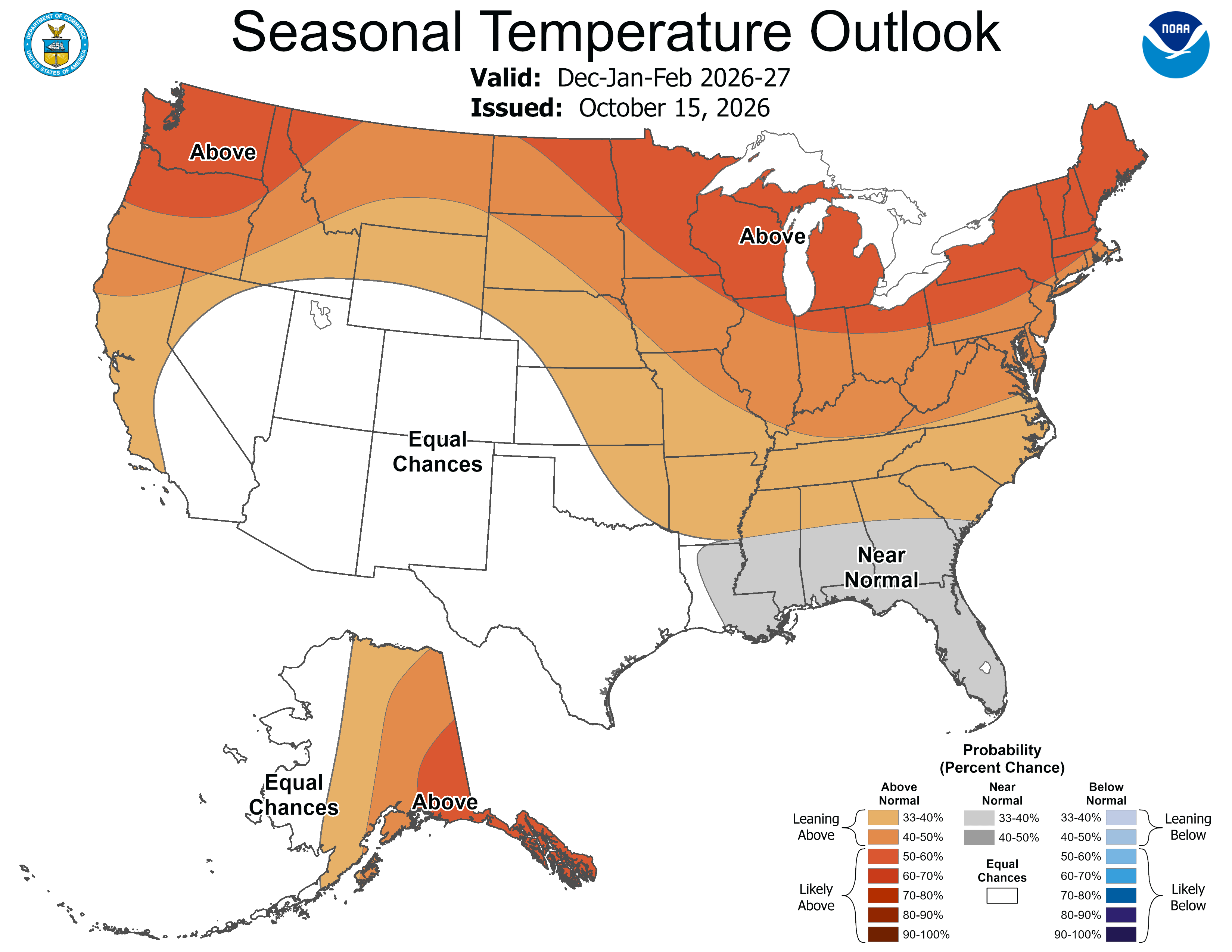
NOAA's winter outlook favors above-normal temperatures across much of the northern United States, including Connecticut, during the 2026-27 winter. (NOAA)
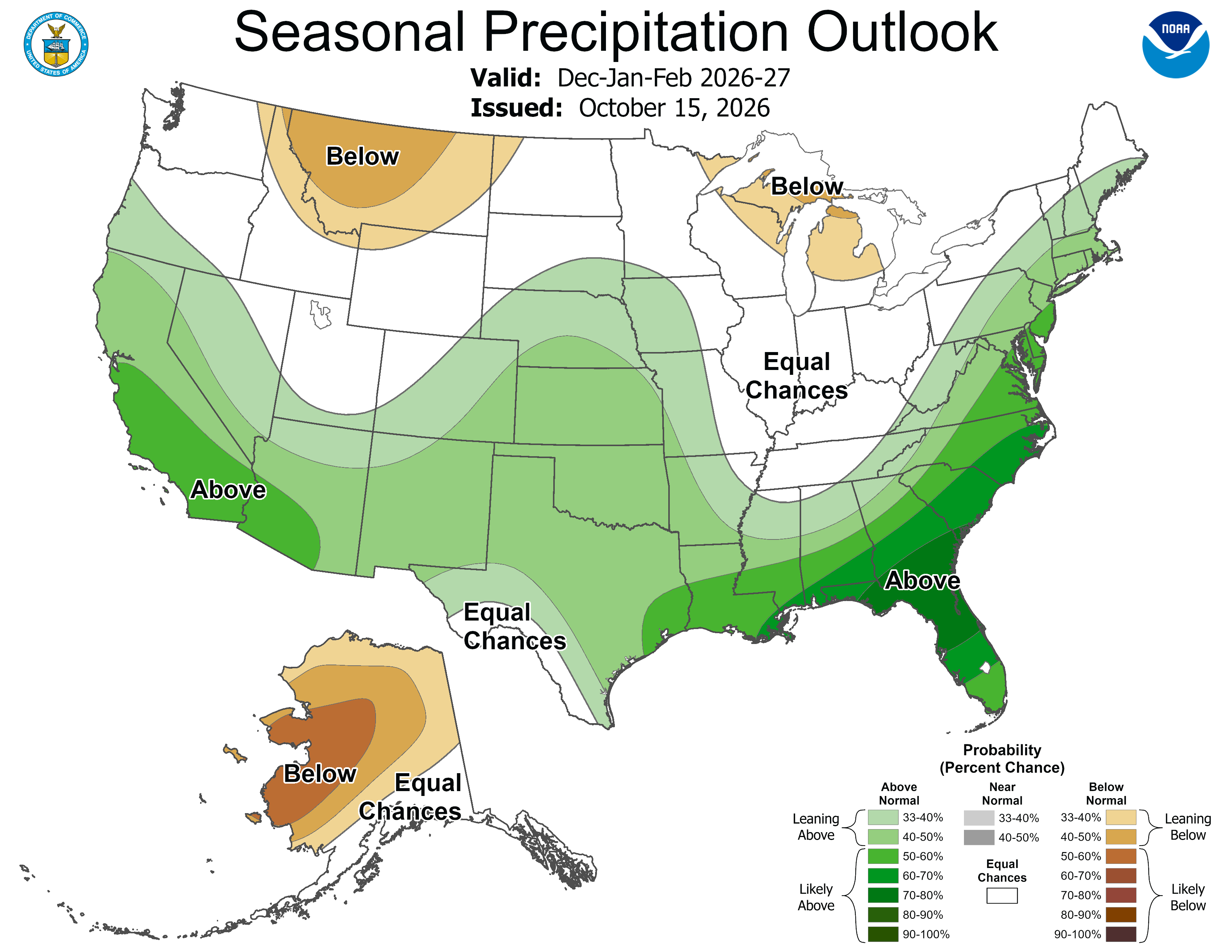
NOAA's winter outlook favors wetter-than-normal conditions along portions of the East Coast. Above-normal precipitation does not necessarily mean more snowfall in Connecticut. (NOAA)
During strong El Niño winters, the jet stream often shifts southward, increasing storm activity across portions of the southern United States and East Coast.
For Connecticut, the possibility of wetter weather does not necessarily translate into heavier snowfall. Above-normal temperatures could cause some storms to produce rain or mixed precipitation instead.
NOAA's seasonal outlook does not predict specific snowfall totals or individual winter storms.
AccuWeather's Winter Outlook
AccuWeather's 2026-27 winter forecast offers a less snowy outlook for much of the Northeast.
The forecasting company expects above-average temperatures and below-average snowfall across large portions of the region as El Niño influences storm tracks nationwide.
AccuWeather Long-Range Expert Paul Pastelok said the developing El Niño has the potential to become the strongest on record.
The company's meteorologists expect a relatively mild start to winter across much of the northern United States, with opportunities for significant Northeast snowstorms increasing later in the season.
Late January and February could bring some of the best chances for major snowstorms across portions of the East.
AccuWeather cautions that even a winter with below-average snowfall can produce a major storm. A single significant snowfall event could dramatically change seasonal totals.
The Old Farmer's Almanac Winter Outlook
The Old Farmer's Almanac is predicting a colder, snowier winter for the southern portion of its Northeast forecast region.
The publication expects below-normal temperatures and above-normal snowfall in the southern Northeast, while northern areas are forecast to see warmer-than-normal temperatures and less snow than usual.
Despite the potential for heavier snowfall in southern areas, overall precipitation across the Northeast is expected to be below normal.
The coldest periods are forecast for early and mid-January, while the snowiest stretches are expected in mid- and late December, mid-January, and early and late March.
The forecast suggests parts of the Northeast could see significant winter weather even as the region experiences below-normal precipitation overall.
What Does This Mean For Connecticut?
Although the forecasts differ on snowfall totals, they share one major theme: El Niño is expected to play an important role in shaping winter weather.
For Connecticut, that could mean periods of relatively mild weather interrupted by storms capable of producing rain, ice or snow, depending on temperatures and storm tracks.
The outlooks also leave room for considerable uncertainty. Seasonal forecasts describe broad trends over several months rather than predicting the weather on particular days.
More precise forecasts for individual storms and snowfall totals will become available as winter approaches.
Get more local news delivered straight to your inbox. Sign up for free Patch newsletters and alerts.