Community Corner
Latest Connecticut DEEP State Of The Bears Report: Where Stafford, Willington Rank For Sightings
The Connecticut DEEP has listed bear sighting statistics for Willington and Stafford and other towns.


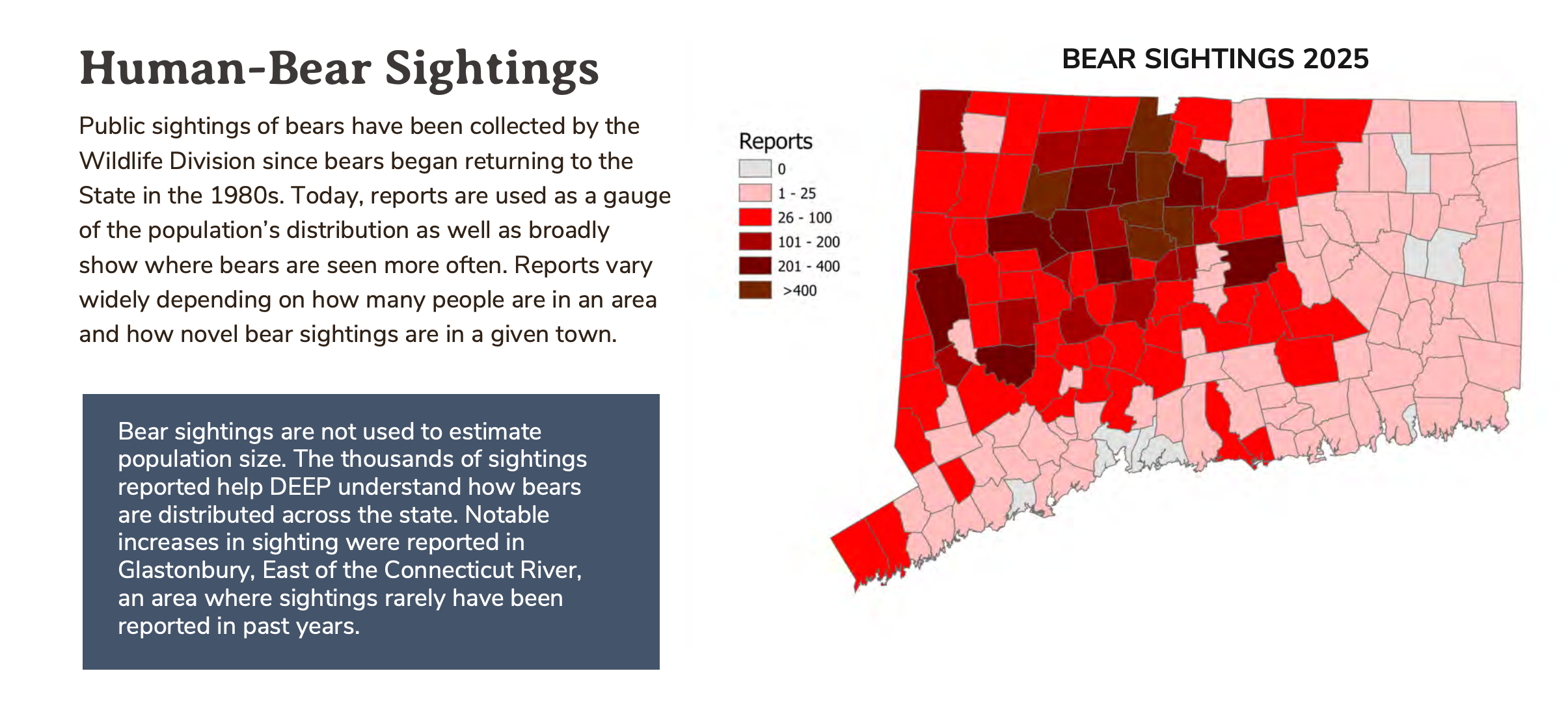
STAFFORD/WILLINGTON, CT — The Connecticut Department of Energy and Environmental Protection Wednesday issued its latest “State of the Bears” Report and Stafford was moderately placed and Willingtoin was on the low end in terms of public reported bear sightings.
"Now that bears are up and about, simple steps to avoid feeding bears — such as taking down bird feeders — will reduce the likelihood of conflicts that can lead to potential harm for both people and bears," DEEP officials said.
Human-bear conflicts continue to increase in Connecticut, DEEP officials added.
Find out what's happening in Across Connecticutfor free with the latest updates from Patch.
According to DEEP’s latest “State of the Bears” Report, in 2025 bears entered or broke into homes in 18 different Connecticut municipalities.
In terms of reported sightings, Stafford was placed in the 26 to 100 category. Willington, however, was low — in the 1 to 25 section.
Find out what's happening in Across Connecticutfor free with the latest updates from Patch.
Willington's sighting total could come with a caveat. In its limits are plenty of places for bears to peacefully exist:
- Nye-Holman State Forest: Roughly 786-818 acres total (parts in surrounding towns), managed by CT DEEP, used for hiking, hunting, and fishing.
- Moss Forest Tract: 333 acres, featuring public access via the Nipmuck Trail.
- UConn Forest: Includes parcels in South Willington among its ~2,100 total acres.
- Town Properties: The 138-acre Royal Knowlton Preserve and 28-acre Talmadge Tract are conserved town lands, not state forest, but offer recreational trails.
The root cause of most human-bear conflicts, DEEP officials said, is access to human-associated foods (birdseed, trash, pet food, etc.) that are calorie-rich and attractive to bears.
Once black bears start to consume these human-associated foods, they become habituated (comfortable near people) and food-conditioned (associate humans, houses, and neighborhoods with food), DEEP officials said.
The DEEP's State of the Bears Report reveals a "concerning decade-long rise in human-bear conflicts—not just in frequency, but in severity."
For example, over the past six years (2020-25), bears have entered homes 265 times and, in 2025 alone, 40 of these incidents were reported to the DEEP, according to the report.
"These numbers are a sharp contrast to a decade ago, when bears entered homes fewer than 10 times annually," DEEP officials said. "No matter where you live in Connecticut, you could encounter a bear, as sightings have been recorded in all 169 towns and cities."
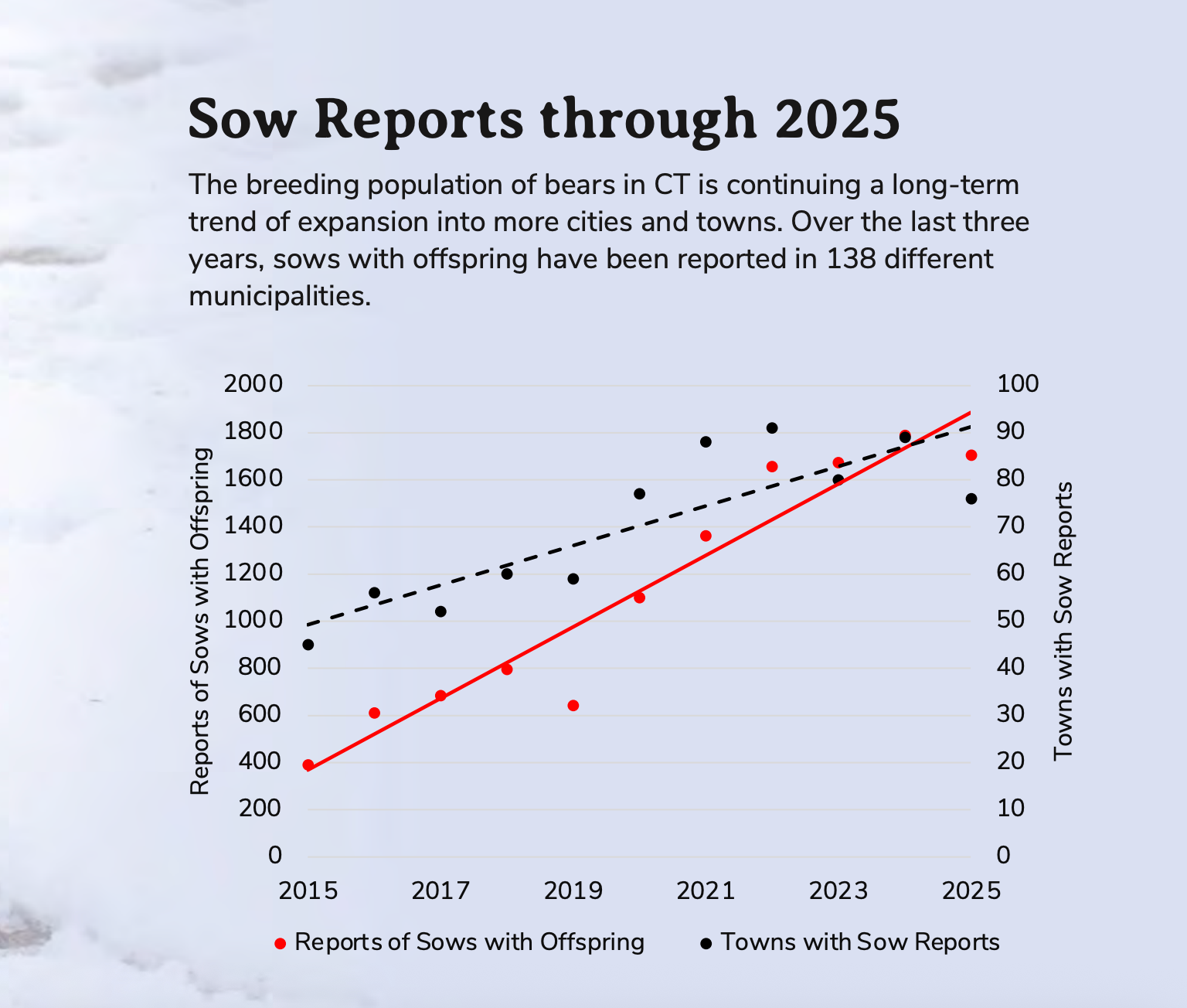
The reproducing portion of the bear population is also continuing a long-term trend of expansion into more cities and towns, the reports says.
Just 10 years ago, females with cubs were reported in fewer than 50 towns, while in the last three years, reports have been received from 119 different towns, according to the report.
"Human-bear conflicts continue a decade-long upward trend," DEEP Commissioner Katie Dykes said. "For the health of our bear population and the safety of Connecticut residents, it is critically important that people understand how to coexist with bears in our communities. Do your part to keep your backyard and neighborhood safe by taking advantage of the range of resources DEEP offers, including educational videos, public presentations, and electric fencing workshops."
Black bears should never be fed, either intentionally or unintentionally, said Jenny Dickson, the director of the DEEP's Wildlife Division.
"Our latest report shows that the vast majority of human-bear conflicts are caused by unsecured trash and bird feeders. Taking simple steps like removing bird feeders and securing garbage can significantly reduce these encounters and help keep your neighborhood safe."
The DEEP has several tips to help residents protect themselv=es, their neighborhoods and bears. They are available on DEEP’s “Living with Black Bears” webpage.
The DEEP has also created a video incorporating many of these best practices:
The DEEP is reminding residents that it is now illegal to intentionally feed bears. In 2023, the Connecticut General Assembly passed, and the governor signed into law Public Act 23-77, which bans the intentional feeding of potentially dangerous wildlife (such as black bears) and also provides additional ways to address increasing conflicts associated with Connecticut’s expanding black bear population.
Said DEEP officials, "If you encounter a bear while in your yard or hiking, make your presence known by yelling or making other loud noises. Use a bear whistle to let bears know you are nearby. Never attempt to get closer to a bear. If a bear does not retreat, slowly leave the area. If in your yard, go into your house, garage, or other structure. If the bear persistently approaches, go on the offensive—shout, wave your arms, and throw sticks or rocks. If your dog is hiking with you, it is imperative that you keep the dog on a SHORT leash and DO NOT let it roam free – this is for the safety of your dog, yourself, and the bear. If you are in close proximity to a bear, Do not try to first get a photo or video. Your first priority should be getting a safe distance between yourself and the bear."
In the rare instance when a bear appears to be aggressive toward people, residents should immediately contact the DEEP's 24-hour dispatch line at 860-424-3333.
Report Bear Sightings
Bear sightings reported by the public provide valuable information to assist DEEP in monitoring changes in the black bear population, officials said. Anyone who observes a black bear in Connecticut is encouraged to report the sighting on DEEP’s website or send an email to deep.wildlife@ct.gov.
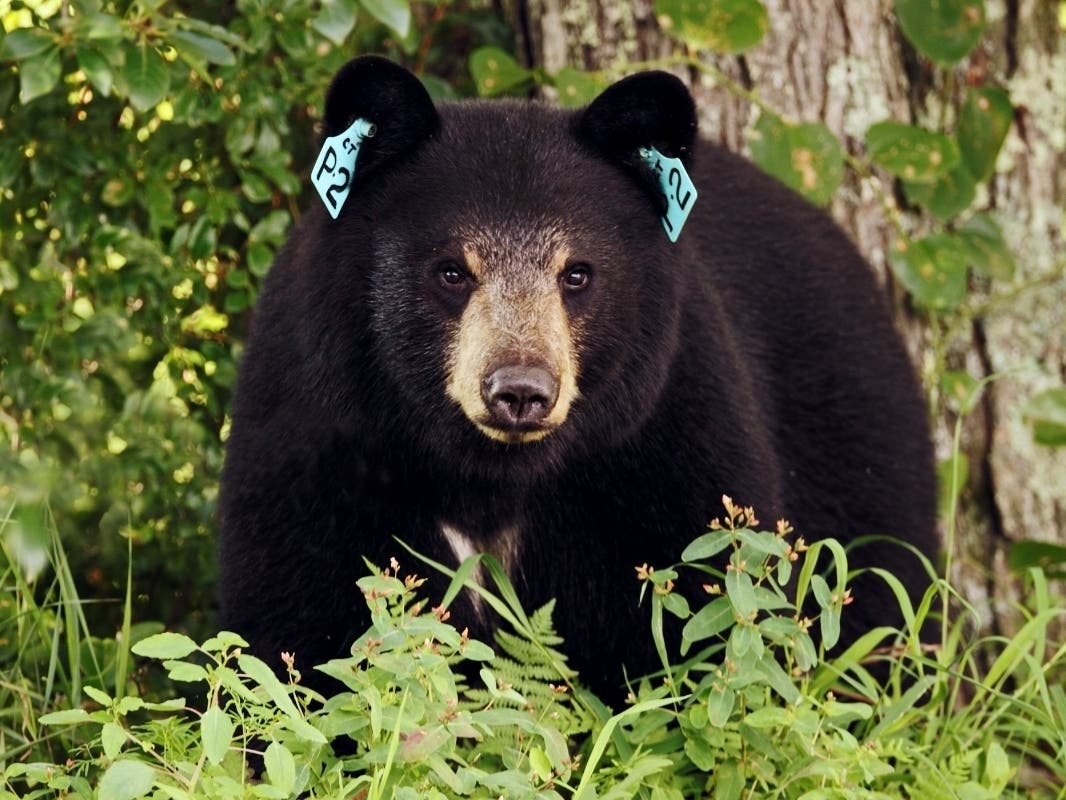
Information on the presence or absence of ear tags, including tag color and numbers, is particularly valuable.
"A common misconception is that a tagged bear in Connecticut has been involved in a human-bear conflict, and a bear with two ear tags was caught on two different occasions because of conflicts," DEEP officials said. "Actually, every bear receives two ear tags (one in each ear) the first time it is handled by DEEP, regardless of why it was tagged. Most tagged bears have been caught as part of a project to research the state’s bear population."
Get more local news delivered straight to your inbox. Sign up for free Patch newsletters and alerts.