Health & Fitness
Spotted Lanternflies Are Inching Closer To Georgia Crops. Here's How Experts Say You Can Help.
The invasive insect was first seen in Georgia in 2024 but has so far only been observed near Atlanta.

July 7, 2026
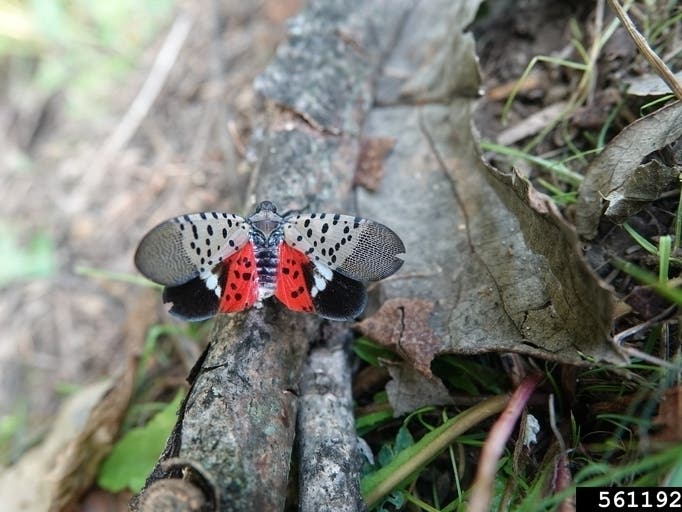
These invasive insects may not be a familiar sight yet, but researchers predict the spotted lanternfly population in Georgia will continue to increase in the coming years, which could spell trouble for the state’s fruit crops.
Find out what's happening in Across Georgiafor free with the latest updates from Patch.
Elizabeth McCarty, an associate professor at the University of Georgia who studies invasive insects, said the spotted lanternflies thrive while feeding on trees of heaven, a fast-growing and highly invasive tree in Georgia. She emphasized the importance of tracking the growing spotted lanternfly population.
The invasive insect was first seen in Georgia in 2024 but has so far only been observed near Atlanta.
Find out what's happening in Across Georgiafor free with the latest updates from Patch.
“Right now, it’s monitoring the population and looking for it,” she said. “Some agencies have monitoring programs where they’re looking for it in areas that are higher risk, closer to Atlanta. And so far, they have not found it outside the Atlanta area.”
But McCarty said the species’ confinement is likely to change based on its migration patterns in northern states.
Spotted lanternflies first arrived in the United States in 2014, but have rapidly spread from their initial sighting in Pennsylvania across much of the East Coast. Fulton County is the farthest south that the insects have been detected, according to an online mapping tool developed by UGA’s Center for Invasive Species and Ecosystem Health.
In June, the online map system reported 28 spotted lanternfly sightings in Fulton County, all verified by an expert.
“It seems that it’s most problematic on grapes,” McCarty said. “That’s the industry we expect to be most directly impacted, but it will also feed on things like peaches and plums, and potentially affect those crops as well.”
When you see a spotted lanternfly, McCarty and other invasive species experts encourage Georgians to smash the insects and report them.
A growing spotted lanternfly population threatens one of the Peach State’s top industries: agriculture, which brings in more than $70 billion annually. For farmers across Georgia, early detection of the invasive insects will be key, according to McCarty.
State Rep. Robert Dickey, who owns a peach and timber farm in Musella, said he’s aware of the risk that spotted lanternflies may pose to Georgia farmers.
“It will always be another pest to have to control during the growing season, and so it will be expensive and potentially an economic drain,” Dickey said.
But Dickey was optimistic, saying he thinks Georgia farmers are “resilient” and will be able to face spotted lanternflies along with other insects, disease and weather. He noted the importance of implementing both short-term prevention and long-term eradication programs, adding that UGA’s invasive species center has already started working on those efforts.
The Georgia Department of Agriculture advises people to follow the same prevention protocols that McCarty recommends when they spot the invasive insects: take a photo, smash the bug and report the sighting to the Georgia Invasive Species Task Force’s online tool.
“As time goes on, we are seeing the known population area expand,” McCarty said. “That’s where public education is important.”
The Georgia Recorder, an independent, nonprofit news organization, connects public policies to stories of the people and communities affected by them through a steady mix of in-depth reporting, blog posts, and social media updates on the latest news and progressive commentary. The Recorder is part of States Newsroom, a national 501(c)(3) nonprofit supported by grants and a coalition of donors and readers.