Schools
Welding Technology Program Sees Rapid Growth Over Past Decade
The program now serves more than 300 learners, positioning the program as a regional hub for workforce training.
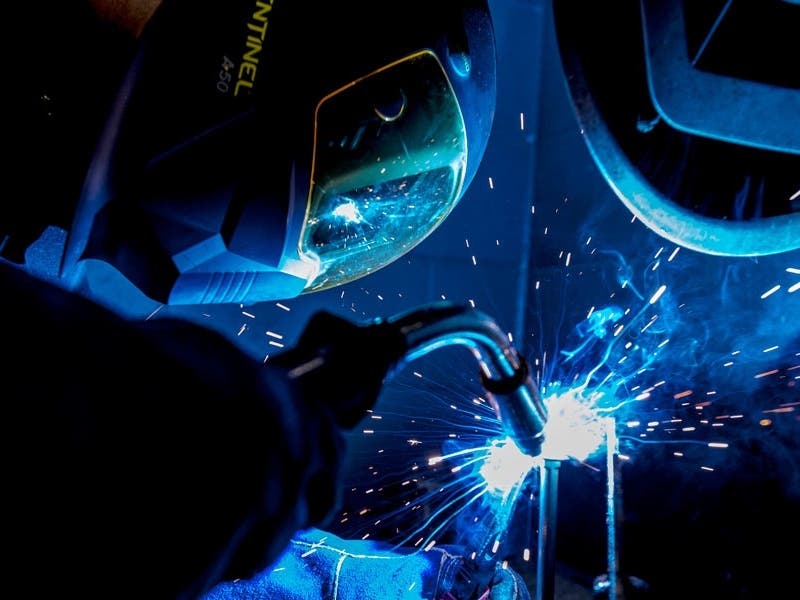
Enrollment in College of DuPage’s Welding Technology program has more than tripled over the past decade, fueling expanded program pathways, increased access for students and major investments in lab space and advanced welding technologies. What began with 80 students in 2013 now serves more than 300 learners, positioning the program as a regional hub for workforce-ready training in a flourishing trade.
"The numbers paint a clear picture of a trade in high demand,” said David Ellis, assistant professor of Welding Technology.
The program has seen a notable rise in women entering the trade. In 2013, there were four female students, making up 5% of the welding population at the College. Today, there are 48 female students, approaching 16% of the population.
Find out what's happening in Glen Ellynfor free with the latest updates from Patch.
In addition to student growth, nearly 50% of COD’s Welding Technology instructors are women. The program is looking to hire a third full-time faculty member this fall, adding to a team of two full-time faculty members and 16 adjuncts.
“The culture of the trade is changing, and our program reflects that,” said Ellis.
Find out what's happening in Glen Ellynfor free with the latest updates from Patch.
Dual credit opportunities have contributed to the program’s growth. The College’s partnership with the Technology Center of DuPage (TCD) has created a pipeline, with 63% of dual-credit TCD welding students matriculating to COD.
“A motivated high school student can now earn up to 27 college credits over four semesters. That is nearly a full year of college completed before high school graduation—a massive economic advantage for local families,” said Ellis.
As enrollment has grown, lab utilization has increased from 48 hours per week in 2014 to nearly 80 hours per week today, with classes running in multiple blocks Monday through Saturday.
To keep up with increased lab usage, the program is adding more labs at the College’s Technical Education Center (TEC), where welding classes are held. The program is executing a strategic plan to convert classrooms into a robotic welding lab featuring collaborative robots trained to assist with welding tasks, as well as a metallurgy and non-destructive testing (NDT) lab that will provide material analysis and quality control services.
“By giving students access to industrial-grade tools and education, we are producing graduates proficient in advanced automation, production engineering, material science and emerging technologies,” said Ellis.
Ellis said maintaining adequate faculty and resources is key to supporting students and preparing them for the workforce.
“We aren't just training welders; we are training the manufacturing leaders of tomorrow,” he said.