Community Corner
'A Fitting End': Beloved Family Farmhouse's Last Days Spent Training Firefighters As One Final Gift
The Kestel house served its final purpose this week, training 100 firefighters in live fire attacks, before being intentionally burned down.


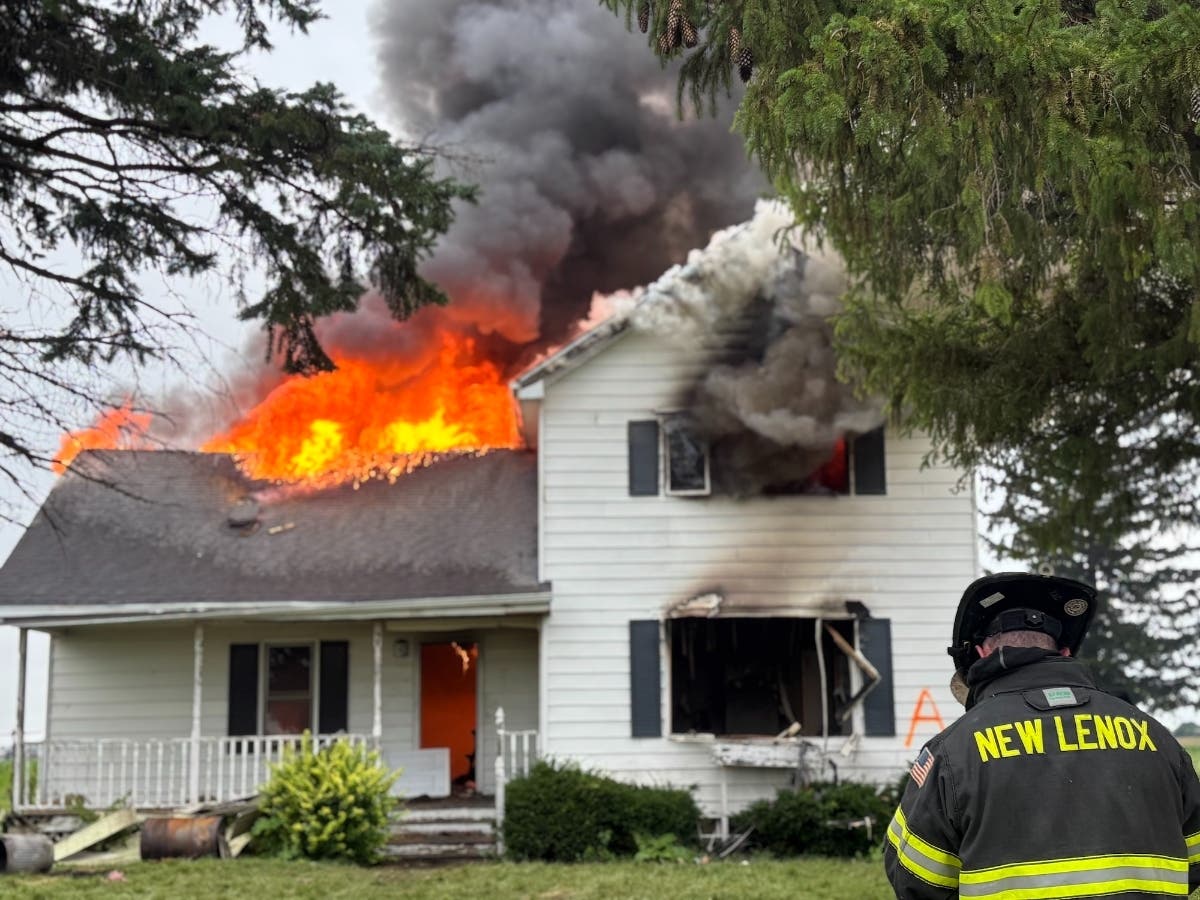


NEW LENOX, IL — Karen Kestel looked out across the massive front yard where her father had once hid hundreds of Easter eggs decades earlier—some tucked away so well, they couldn't be found for months.
"Of course, there's a million places to hide eggs in a yard this big," she laughed. "And my dad would find eggs for a year."
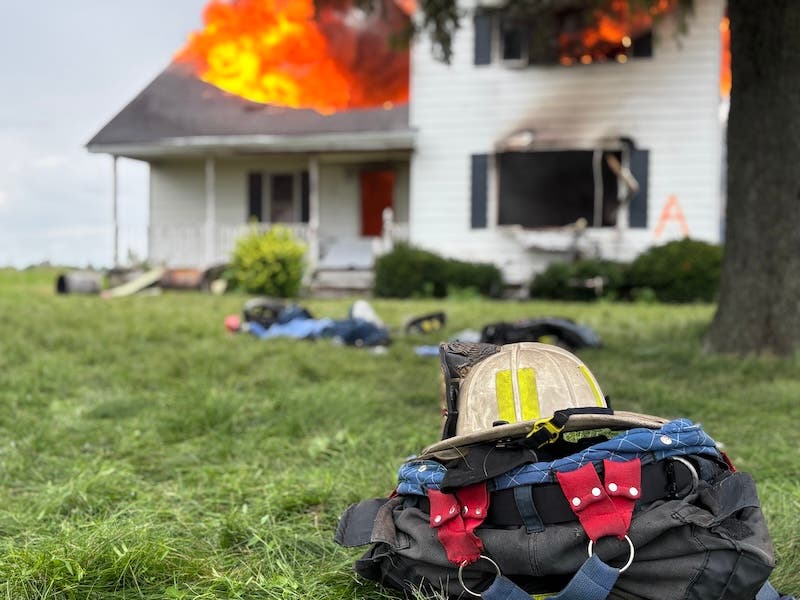
Just beyond the yard, her family's vacant farmhouse stood, battered by three consecutive days of training designed to enhance firefighters' skills in as realistic a scenario as possible. Set back down a gravel driveway on the 80-acre farm previously owned by the family, Kestel and her siblings decided together to donate the house for use by the New Lenox Fire Protection District for exactly this purpose—live training that allows crews to attack intentionally set fires, and learn from it. This week's sessions were the culmination of months' worth of training conducted on the property since March.
Find out what's happening in New Lenoxfor free with the latest updates from Patch.
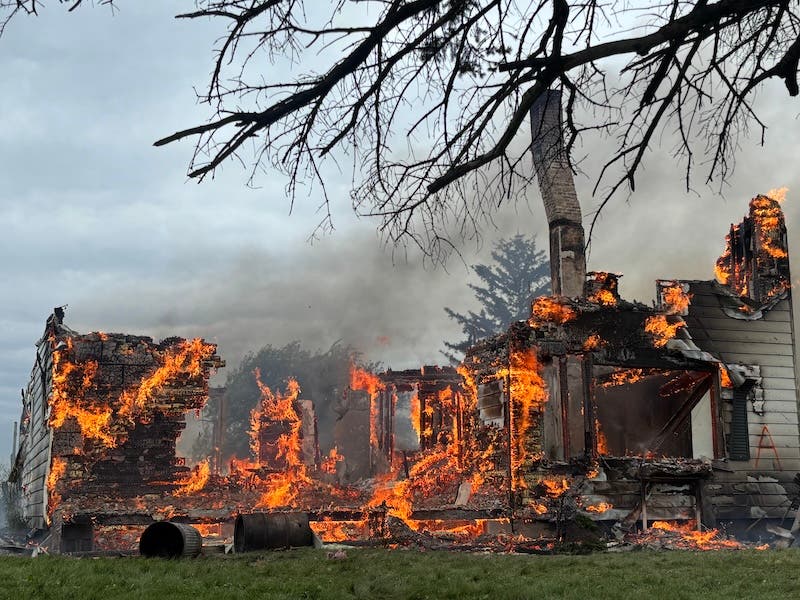
Ultimately, the house on Cedar Road just south of Laraway was allowed to burn to rubble Friday afternoon, as the firefighters who had just gone into its smoke-filled hallways stood down and watched.
"It's a lot of mixed emotions because, I mean, there's just so many memories and there's such a long history of all the people who lived in this house and farmed this land," Kestel said. "But seeing these firemen here today is helping because I feel so proud that my parents are giving them the opportunity to have this experience."
Find out what's happening in New Lenoxfor free with the latest updates from Patch.
A structure donation of this kind is rare, New Lenox Fire officials said, making the training even more essential for the roughly 100 firefighters participating. The training plays out from first call to extinguishing the blaze, with crews learning each developing detail as "dispatch" relays it.
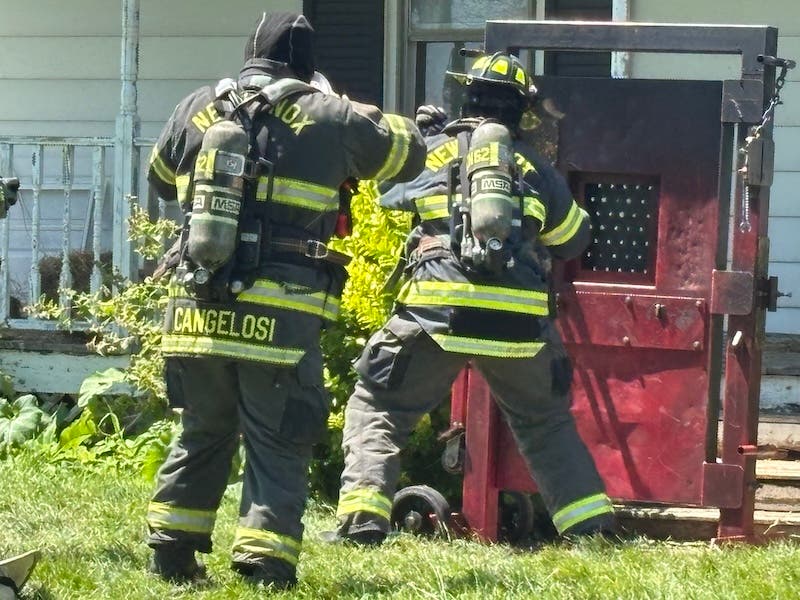
Firefighters most often train in metal structures made of stacked shipping containers. Use of a house allows firefighters to encounter fires in the same way they would at an actual scene.
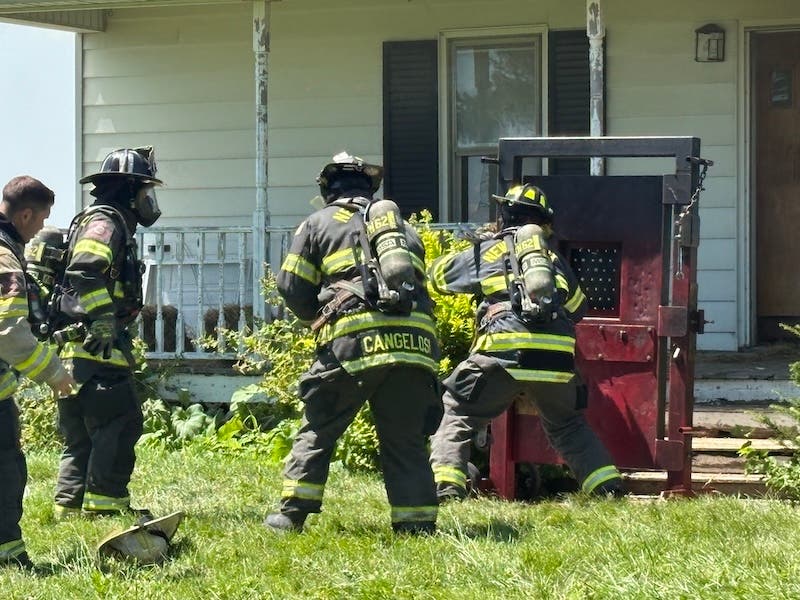
"It's a lot nicer to train in a house setting versus a metal building, because metal buildings typically react a lot different," said New Lenox Fire Protection District Deputy Chief Brian Applegate.
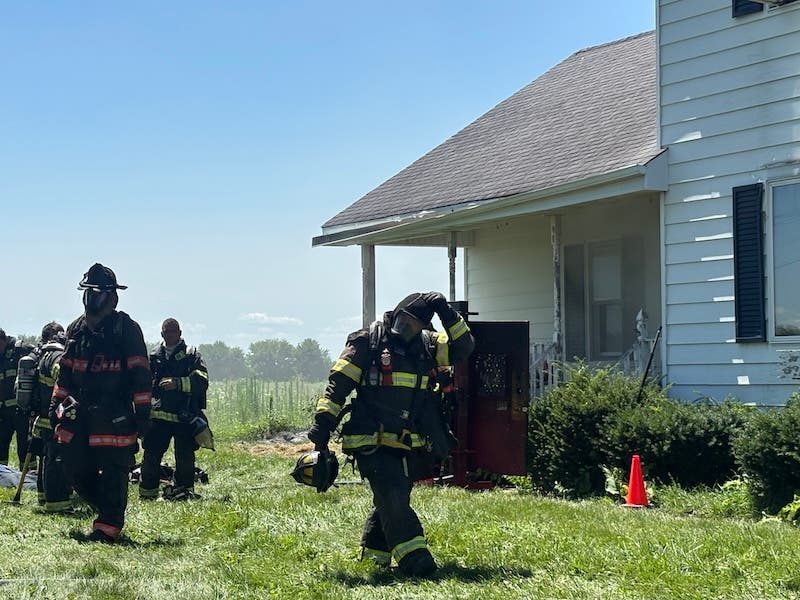
Crews from New Lenox, Manhattan and Frankfort all rotated through training sessions—or evolutions—over three days, totaling nearly 100 area firefighters. Fires were lit inside the house, in burn barrels and on hay bales stacked atop pallets. Applegate joined his crews, gearing up and going in.
Objectives included hose line deployment, ladder placement, and search and rescue. Mutual aid partners were also brought in to train, strengthening relationships and cooperation among the agencies.
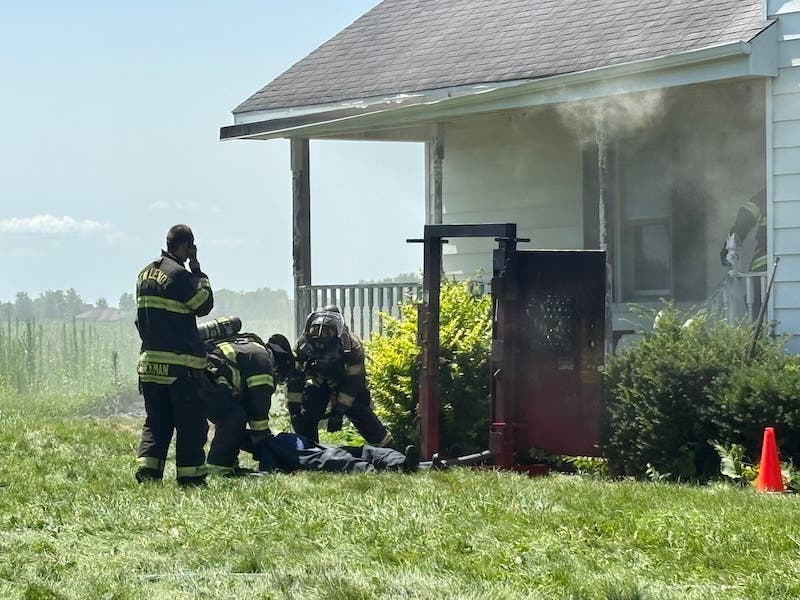
"We can also work with our mutual aid people—like Manhattan's here—so now we integrate better with one another," Applegate said. "So, all in all, the totality of it makes it so beneficial for when we get out on the street. It brings us all together, hones our skills, and now we're going to perform better on the street."
The Illinois Fire Service Institute oversees the training, creating the scenarios that will play out inside the building. IFSI is the statutory State Fire Academy for Illinois, and serves as the oldest continuous fire training institution in the United States. Since 1925, first responders from across the state, nation, and the world have relied on IFSI to deliver hands-on, innovative, and top-quality training, education, and research. The main campus is located in Champaign, but IFSI maintains an active fleet of mobile training resources that support hands-on and engaging educational efforts at locations across Illinois and the country.
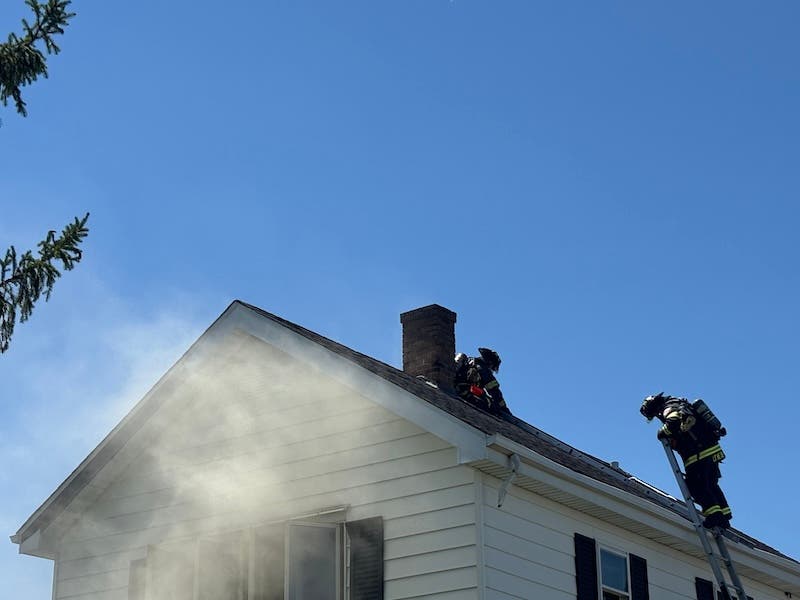
"They brought some of their resources and instructors out to give us some different perspectives on how we're doing things, where we can do better, and just giving us that feedback that normally we wouldn't get into," Applegate said.
New Lenox Fire Protection District Chief Adam Riegel stressed that IFSI does not clue in crews on the scenario until just before, mimicking the way things might play out on-scene. Local crews and members of IFSI totaled 300 at the sessions, IFSI staff said.
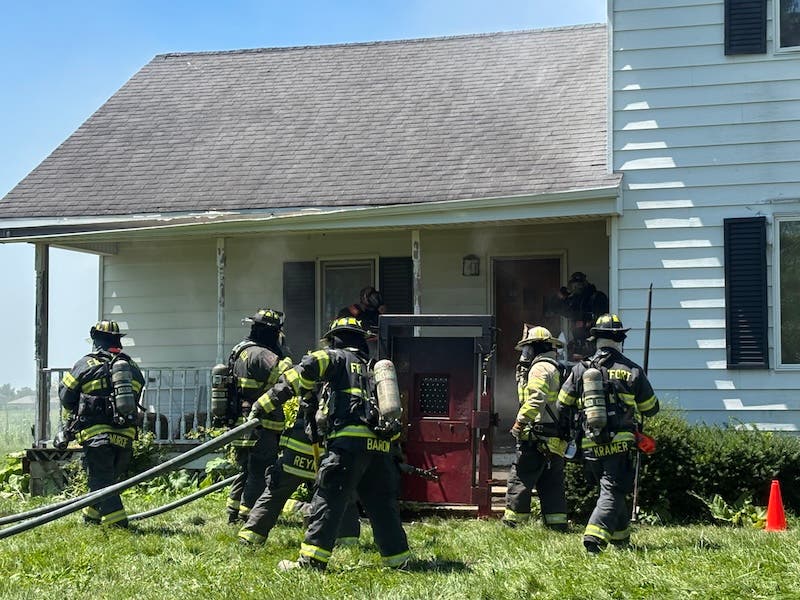
"You have crews going in to attack the fire, crews going in to search for the victims," he said. "They don't typically tell us what the scenario is until right before it starts, so we're even kind of surprised. They try to keep it as realistic as possible for the crews."
Riegel said they are so grateful for the opportunity to train in this setting.
"Any time we have an acquired structure like this, it's always good because it's the most realistic you can get to a real fire in a house," he said. "... It's training that we don't get very often anymore as the community keeps growing. Any time we get someone to donate a house like this, it's always beneficial for the guys to get that experience."
The end of a family's beginnings
The house on Cedar Road was built by Karen Kestel's great-grandfather, and had stayed in the family for four generations. Kestel's daughter Meghan Keating recalled how her extended family lived just further down the road, often all gathering at the house. The children would hop onto her grandfather's tractor—which they all lovingly referred to as "Schumanga," she said, laughing.
"This house was such an integral part of our family," Keating said. "Definitely a family affair."
Kestel's parents Gerald and Patricia lived in the home. Gerald died in 1992, and Patricia remained in the home until her death in 2012. The land had been a prolific producer of corn and soybeans over the years—and housed livestock including chickens, horses and cows, Kestel recalled.
Their farm became a staple of the community. Her father was a very proud farmer, Kestel said. She recounted a time he was hospitalized at harvest, and, without the family asking, a brigade of local farmers rolled up to complete the task. It was a memory that stayed with him for years, she said.
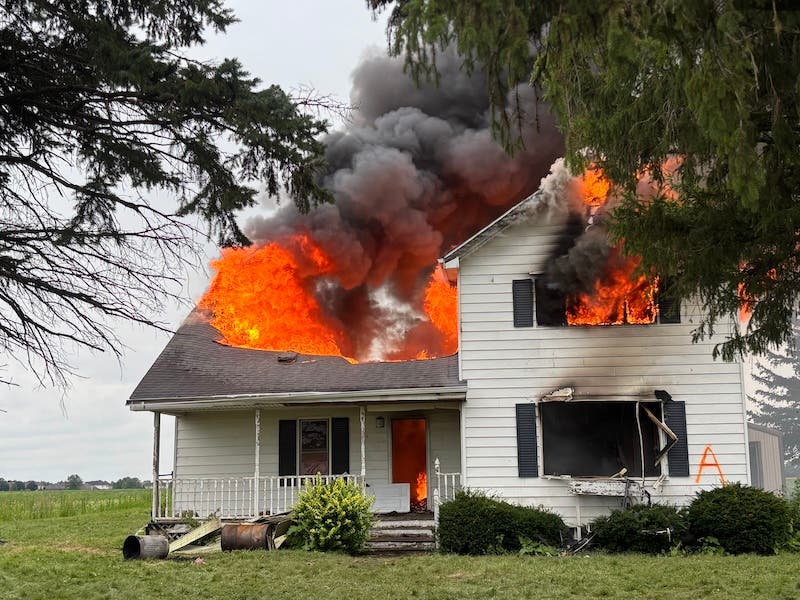
Gerald Kestel was born in the house, and left but came back to it later in life. Multiple generations of the family lived at the home, even after Patricia's death in 2012, Kestel said. The home had been vacant for at least 10 years.
The decision to donate the structure was one the Kestel siblings—Karen, Donald Kestel, Colleen Kestel-Branchaw—mulled for some time, Keating said, and both Keating and Kestel traveled from out of state to be there Friday.

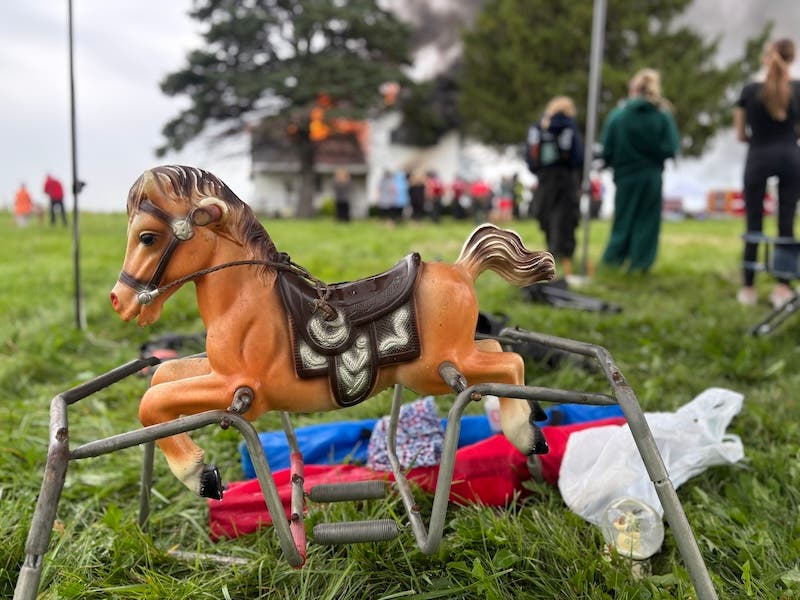
Before the final burn on Friday, crews took great care to show their respect for the family's history, pulling mementos from inside the house. A plastic rocking horse was retrieved and on Friday, a firefighter handed Keating a snow globe found inside the garage.
Drivers—some maybe aware of the farm's history, others likely not—paused along Cedar Road to watch as the smoke poured from the house. As the blaze began to consume the home, Kestel reflected on her mother's contributions to the community. Patricia had been an active volunteer locally and otherwise, specifically at St. Joseph's parish in Manhattan, where she helped prepare funeral meals. Her family's home, then, being given back to the community seemed fitting.
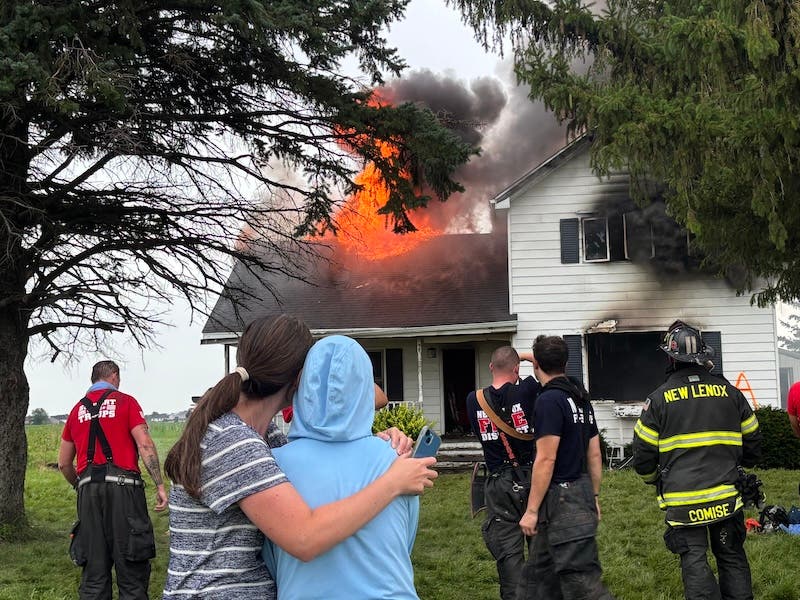
"This is definitely in the spirit of how she lived her life," Kestel said. "And that's what makes me feel good about doing this. ... A fitting end."
Keating said she was grateful to stand beside her own mother for the bittersweet occasion. The property has been purchased by developers, and if not burned down, the house would have been bulldozed.
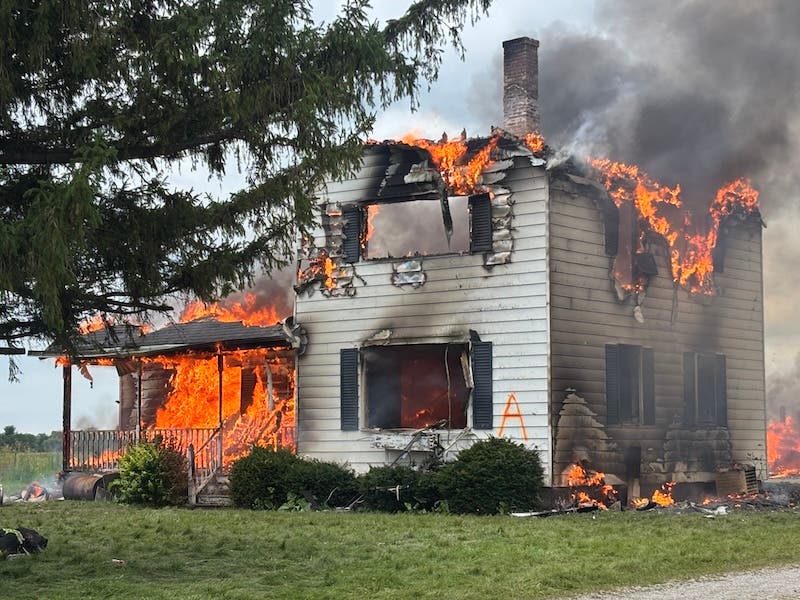
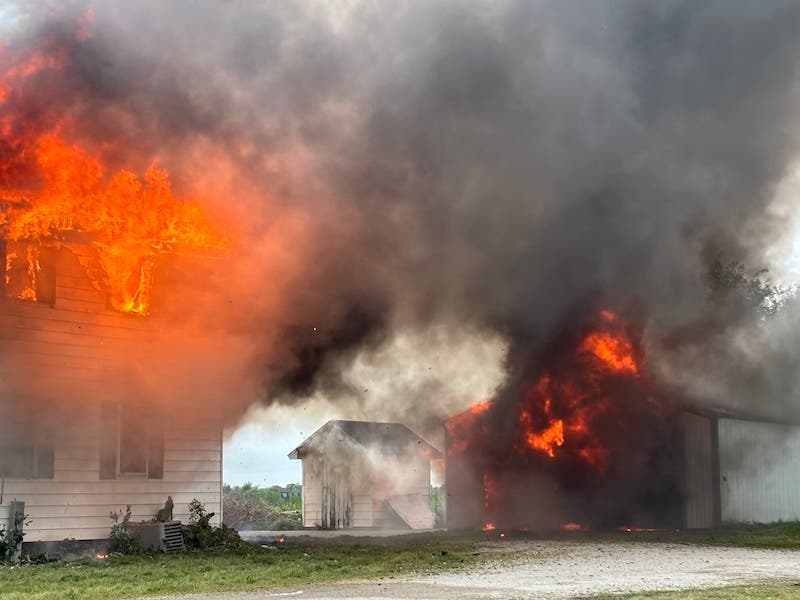
"It's just such a source of childhood memories for me," she said,"So I think it's really special that I can be here, not only to support my mom, but to experience the ending and the closure of the amazing beginnings of my family."
As Kestel and Keating looked on, a firefighter who had participated in the training approached. He had just started on the job Monday, and sought them out after learning they had been the ones to donate the house.
"I learned so much," he reassured Kestel.
"Thank you."
Get more local news delivered straight to your inbox. Sign up for free Patch newsletters and alerts.