Community Corner
Shape Oak Park: Everybody Can Put Down the Pitchforks
What Oak Park's ADU experiment, high construction costs, & other cities can tell us about what the proposed zoning changes might actually do

If you’ve been following the debate over Oak Park’s proposed zoning changes, you could be forgiven for thinking we’re choosing between two possible futures.
In one, developers descend on Oak Park, bulldoze our historic homes and replace entire blocks with apartment buildings (I’m looking at you, disinformative YouTube video 😉)
In the other, changing the zoning magically produces abundant affordable housing and fixes our property tax problem.
Find out what's happening in Oak Park-River Forestfor free with the latest updates from Patch.
I have some good news for everyone.
Neither one is particularly likely.
Find out what's happening in Oak Park-River Forestfor free with the latest updates from Patch.
I’ve been digging into Shape Oak Park, the arguments from Yes Oak Park and MIMBY, what other cities have experienced after changing their zoning, and, perhaps most importantly, the actual economics of building anything in Oak Park.
And I keep coming back to one thing:
Zoning determines what CAN be built. It does not determine what WILL be built.
That distinction matters a lot in Oak Park.
Where exactly would all this building happen?
Oak Park is 4.7 square miles, landlocked and essentially built out.
We aren’t Naperville in 1992 with cornfields waiting to become subdivisions. There simply aren’t many vacant residential lots sitting around waiting for four flats.
That means most new missing middle housing would require something else to happen first.
Someone has to sell an existing property.
Then a builder has to be willing to pay more for it than a homeowner or rehabber.
Then the existing house may need to be demolished.
Then the builder has to construct two, three or four new homes at today’s construction prices.
Then those homes have to sell or rent for enough to cover the land, demolition, construction, architecture, permits, financing, taxes, commissions and risk, with enough left over to make the entire exercise worth doing.
That is a pretty high bar.
Anyone who works in Oak Park real estate or who’s lived here long enough has seen what usually happens to a tired old house here.
It gets bought.
And rehabbed.
And somebody falls in love with it again.
That happens because Oak Park’s old houses have value. Even houses needing substantial work frequently command prices that make demolition an expensive proposition before a builder has driven the first excavator onto the property.
Ironically, the houses I’d watch most closely aren’t necessarily the giant Victorians or FLW homes everyone is picturing.
A small, deteriorated house sitting on an unusually valuable lot may be a much more logical redevelopment candidate.
And realistically? That’s probably where redevelopment SHOULD happen first.
We already ran a little experiment with ADUs
This may be the most useful reality check in the entire conversation.
Oak Park began allowing residential coach houses in 2017.
By May 2021, the Village had issued just ten (10!) ADU building permits.
Then Oak Park expanded its ADU ordinance in 2022.
Homeowners gained more options to create additional housing on their properties through basement and attic conversions, additions, converted garages and detached coach houses, subject to the ordinance’s requirements.
If zoning were the only thing preventing housing from being created, we should have seen an explosion of ADUs.
We didn’t.
Even several years later, we’re talking about a trickle of projects, not hundreds of new apartments scattered across Oak Park.
Why?
Because saying, “Congratulations, you’re legally allowed to build a coach house!” does not come with the $200,000+ it may take to actually build one.
A homeowner can love the idea of creating an apartment for Mom, giving an adult child a place to live, or generating rental income.
Then the bids arrive.
Suddenly the theoretical housing unit meets the very real cost of foundations, plumbing, electrical, HVAC, kitchens, bathrooms, architects, permits, and financing.
And remember, that homeowner ALREADY OWNS THE LAND.
A developer contemplating a new four flat may first have to spend $400,000, $600,000 or considerably more just to acquire the property.
That’s an important reality check for anyone envisioning bulldozers lining up on every residential block the morning after a zoning ordinance passes.
But that doesn’t mean changing the zoning does nothing
This is where I think some opponents go too far in the other direction.
Just because Oak Park probably won’t wake up five years from now covered in four flats doesn’t mean zoning doesn’t matter.
It matters enormously over time.
A large house may someday become two beautiful condos instead of remaining one increasingly expensive single family home.
A basement apartment may become legal.
A coach house may finally make financial sense for a family.
One of Oak Park’s many existing two flats may be easier to improve because it is no longer treated as a legal nonconforming use.
A truly deteriorated house may eventually become three homes instead of one.
An underused commercial property or giant parking lot may become dozens of homes.
Do that gradually for 20 or 30 years and Oak Park can accommodate more people without annexing a single additional acre.
That matters for a community that has nowhere else to grow.
What about our historic homes?
This is where I think we need more nuance than either “SAVE EVERYTHING” or “BUILD EVERYTHING.”
Oak Park’s historic housing stock isn’t an inconvenience standing in the way of progress.
It’s an asset.
It’s part of why people pay a premium to live here in the first place.
But preserving historic architecture doesn’t necessarily mean preserving single family occupancy forever.
Those are two different things.
One of the more interesting lessons from other cities is the idea of making preservation financially attractive.
Want to convert a large older house into two or three units while preserving its exterior?
Maybe Oak Park should make that easier.
Want to preserve the house and add a coach house?
Perhaps you get additional flexibility.
Want to demolish an architecturally significant but unprotected house?
Maybe that comes with additional review, fees or fewer incentives.
I’d much rather create an economic reason to save our beautiful old buildings than simply hope every future property owner loves them as much as we do.
And then there’s affordability
We need to be careful with this word.
A brand new four flat in Oak Park is not automatically “affordable housing.”
Land here is expensive.
Construction is expensive.
Financing is expensive.
Taxes are expensive.
A developer isn’t going to build four condos for $500,000 each if the project costs $2.5 million to complete.
That math doesn’t care what our zoning ordinance says.
But four homes sharing the cost of one piece of Oak Park land can still create housing at different price points than one enormous new single family home occupying the same property.
And increasing housing supply over time is different from creating housing affordable to a household earning 60% of area median income.
We need both conversations.
Zoning can help with housing supply and housing choices.
Affordable housing requires additional tools such as the Housing Trust Fund, inclusionary housing requirements, vouchers, subsidies and other programs.
One policy cannot do everything.
And no, this isn’t going to magically fix our property taxes either
More development can expand Oak Park’s tax base.
That’s good.
But scattered duplexes and four flats aren’t going to suddenly make everyone’s tax bill drop.
The much bigger opportunity may be our commercial corridors, transit areas, aging commercial properties and underused parking lots.
A substantial new development on an underutilized parcel can add millions of dollars in taxable value without Oak Park needing another square inch of land.
If we’re serious about growing the tax base, THAT conversation deserves at least as much attention as whether someone might someday build a triplex next door.
And even then, growing the tax base doesn’t eliminate the need to talk about spending. If taxing bodies increase their levies just as quickly, adding assessed value doesn’t magically make the property tax problem disappear.
So... is the sky falling?
Probably not.
Portland legalized substantially more missing middle housing and did not see the wave of demolitions many opponents feared.
Minneapolis legalized triplexes citywide and didn’t suddenly become a city of triplexes.
Oak Park legalized ADUs and most of us probably couldn’t point to five new ones.
There is an enormous distance between legalizing something and having the economics actually make sense to build it.
That doesn’t mean we shouldn’t ask hard questions about Shape Oak Park.
We absolutely should.
Which properties suddenly become more valuable as redevelopment sites?
What happens to teardown rates?
How many units actually get created?
At what prices?
Where?
How much new assessed value do they generate?
How many existing buildings are converted rather than demolished?
Those are measurable things.
I’d love to see Oak Park treat the first few years almost like a pilot, publicly track those numbers and adjust if reality looks different from the projections.
Because there’s something oddly reassuring about this whole debate once you strip away the rhetoric.
Oak Park isn’t going to be frozen in amber if we don’t change the zoning.
And it’s not going to become unrecognizable if we do.
Cities change slowly.
Buildings age. Families change. Housing needs change. Some houses get restored. Some get converted. Occasionally one reaches the end of its useful life. Commercial properties get redeveloped. New neighbors arrive.
The real question isn’t whether Oak Park changes.
It will.
The question is whether our rules give that change somewhere sensible to go while protecting the things that made people want to live here in the first place.
That seems like a much more productive conversation than arguing over whose backyard is winning.
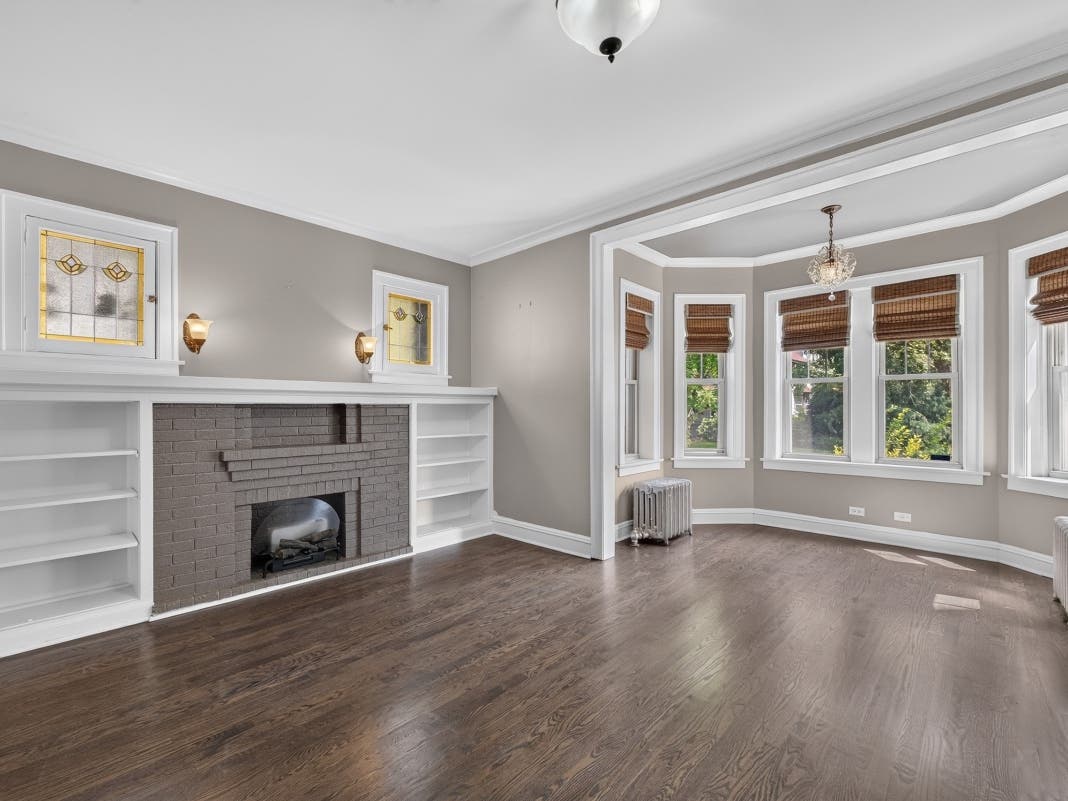
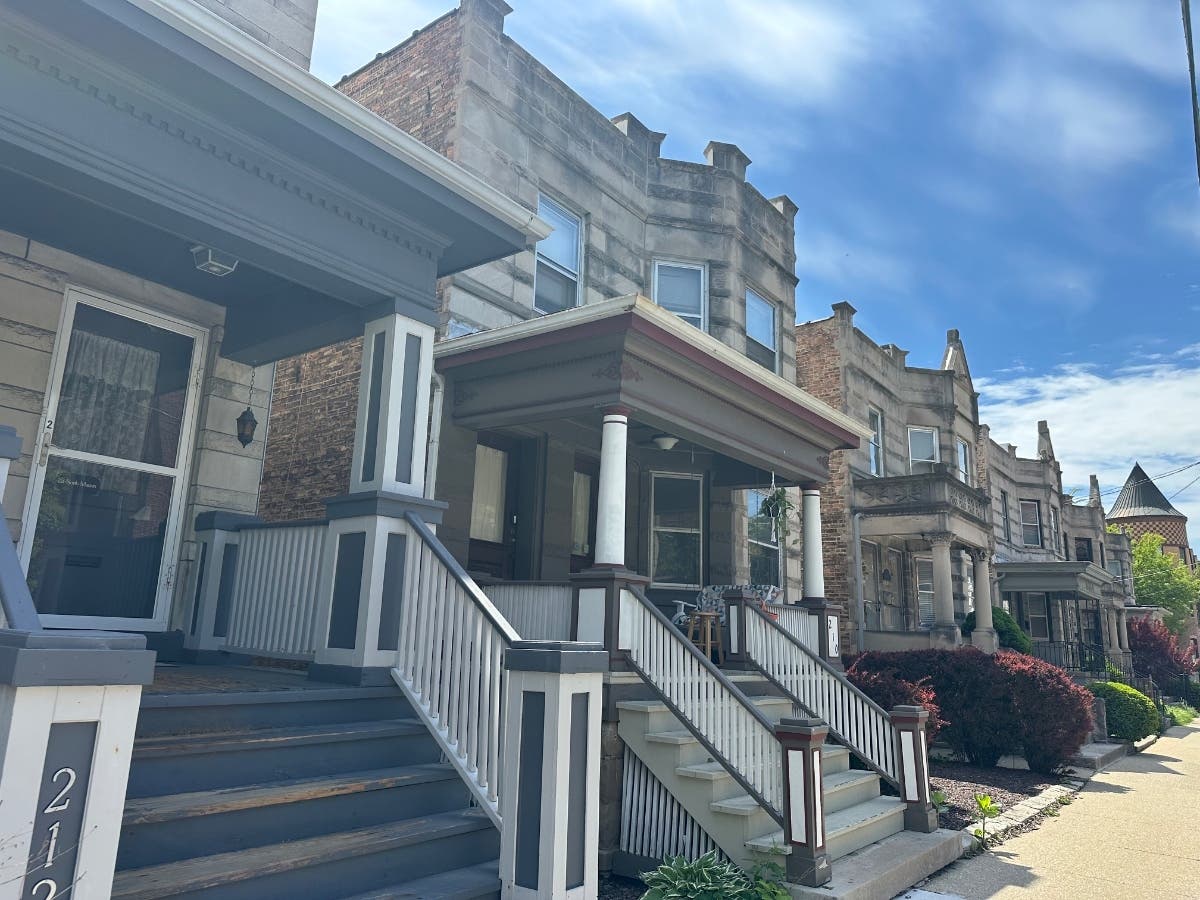
P.S. I live and work in Oak Park-ish for a reason. I LOVE our old houses. Give me original woodwork, art glass, built-ins, weird little butler’s pantries, two flats tucked between Victorians and streets where you can walk to coffee, dinner and the train. That whole historic streetcar suburb fabric is a huge part of what makes this little corner of Chicagoland special, and I’m deeply invested in preserving it. I also want Oak Park to remain a place where more than just increasingly wealthy households can find a way in. I don’t think those things have to be at odds. In fact, I think figuring out how we evolve without erasing what makes this place special is exactly the point.