Politics & Government
New Commission Works To Untangle Challenges At Health Licensing Boards
At the Monday meeting, executive directors of health occupational boards said IT challenges impede licensing approvals, among other issues.
September 15, 2026
When Marylanders go to the doctor or see a nurse, they expect the professionals treating them to have been properly vetted by state officials, and their facilities to meet health and safety standards.
Find out what's happening in Across Marylandfor free with the latest updates from Patch.
But after state audits reported inadequate response times by some licensing boards to complaints about licensees, and other boards that were behind on annual inspections of healthcare facilities, lawmakers responded with a new commission to iron out the challenges contributing to those oversight issues.
After an organizational meeting this summer, and a second where board directors laid out the issues they are facing, the Maryland Health Centralization Commission met Monday virtually to discuss the first of those issues, information technology challenges.
Find out what's happening in Across Marylandfor free with the latest updates from Patch.
The commission has until Dec. 1 to report on ways to improve “efficiency, transparency and accountability” of the occupational licensing boards, a report that will be required annually thereafter.
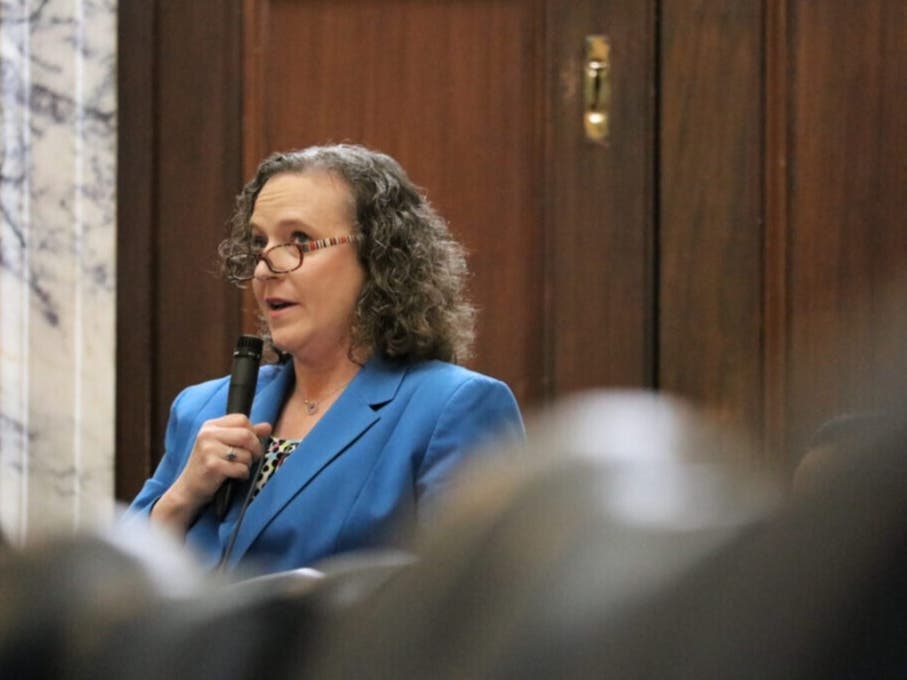
“Everyone comes into these commissions with the end goal of doing good and right … so far in our two meetings, I’ve learned a lot of positives,” said Del. Anne Kaiser (D-Montgomery), co-chair of the commission, which includes members of the state health department and executive directors of a number of licensing boards.
“I hope to get to a point where people are willing to share maybe some of the negatives … so there could be opportunities to learn best practices from each other,” she said. “But that will never happen if someone doesn’t say, ‘Hey, we’re struggling with this or that.’”
There are 20 state occupations boards overseeing health professions in Maryland, each operating differently and each facing their own set of problems and possible solutions. But common challenges involving information technology, inadequate staffing levels and other issues will help guide the commission’s work going forward.
Kaiser is currently the sole leader of the commission, as the Senate has not named a senator to serve as the other co-chair.
The commission was created this year under House Bill 1372 to improve operations at the state’s 20 health occupation boards, ensuring that boards issue licenses, respond to complaints and conduct required facility inspections in a timely manner. It’s related to a larger legislative push to crack down on audits that repeatedly identify the same issues in oversight and fiscal documentation of state agencies.
The fiscal note for HB 1372 cites a 2025 report by the Office of Legislative Audits that found several issues at various occupational boards, including delayed investigations of complaints against licensees and backlogs of annual inspections at various healthcare facilities.
The boards’ focus spans healthcare fields and related industries, overseeing the licensing of physicians, dentists, long-term care facility administrators, psychologists, morticians and funeral directors. Other boards cover fields such as social work, acupuncture, and occupational therapy, among others.
Over the next few meetings, commission members will discuss issues with staffing levels, bureaucratic hurdles and inadequate funds to address known problems.
During Monday’s meeting, Board of Nursing Executive Director Rhonda Scott noted that high educational requirements in Maryland, while important to ensuring that healthcare professionals create safe environments, can also slow down licensing approval.
Scott also referenced the FBI investigation of Project Nightingale, a Florida-based fraud scheme, announced in January 2023 by the U.S. Department of Health and Human Services Office of Inspector General. That probe said three Florida nursing schools were tied to bogus nursing degree diplomas and transcripts that were sold to aspiring registered nurses and licensed practical/vocational nurses so they could qualify for the national nursing board exam. More than two dozen nursing license applicants in Maryland were implicated.
“Yes, timeliness is important, but safety is paramount,” Scott said. “We have to make sure our review is conducive of public protection and ensuring these people are actually qualified to be licensed.”
Christine Farrelly, executive director of the Board of Physicians, said that communication challenges from the Maryland Department of Information Technologies has also contributed to delays in the computer systems, which can be “very, very frustrating.”
Tiffany L. Smith-Williams, executive director for the Maryland Board of Acupuncture, noted that some boards are working to improve their legacy computer systems, but need more funding to improve those antiquated technologies.
“Sometimes we stretch the dollar or the value of what we have, because it helps us control cost” Smith-Williams said.
Kaiser said in an interview last month that the work of the commission is needed.
“These professional boards have a great responsibility to ensure that our licensed medical professionals across the state meet certain standards,” she said in an August interview. “They also deal with discipline and other measures…. We, the legislature, can’t sit on the side when we’ve been told for years that the board needs better oversight.”
The issue of funding for occupational licensing boards and stagnant fee increases for licensing will be the focus of the next commission meeting slated for mid-October.
“Hopefully, I have a Senate co-chair by then,” Kaiser joked at the end of Monday’s meeting.
Maryland Matters is part of States Newsroom, a network of news bureaus supported by grants and a coalition of donors as a 501(c)(3) public charity. Maryland Matters maintains editorial independence. Contact Editor Steve Crane for questions: scrane@marylandmatters.org. Follow Maryland Matters on Facebook and Twitter.