Community Corner
Union Demands Beefed-Up Safety Efforts After Deaths Of Two Highway Workers
A meeting with state transportation leaders comes after two workers are killed in separate incidents this week.
May 1, 2026
Union officials expressed optimism that a meeting Thursday with state Transportation Secretary Kathryn Thomson will lead to improved safety for highway workers.
Find out what's happening in Across Marylandfor free with the latest updates from Patch.
The roughly hourlong meeting with leaders of the American Federation of Federal, State, County and Municipal Employees followed the deaths of two workers in separate incidents this week.
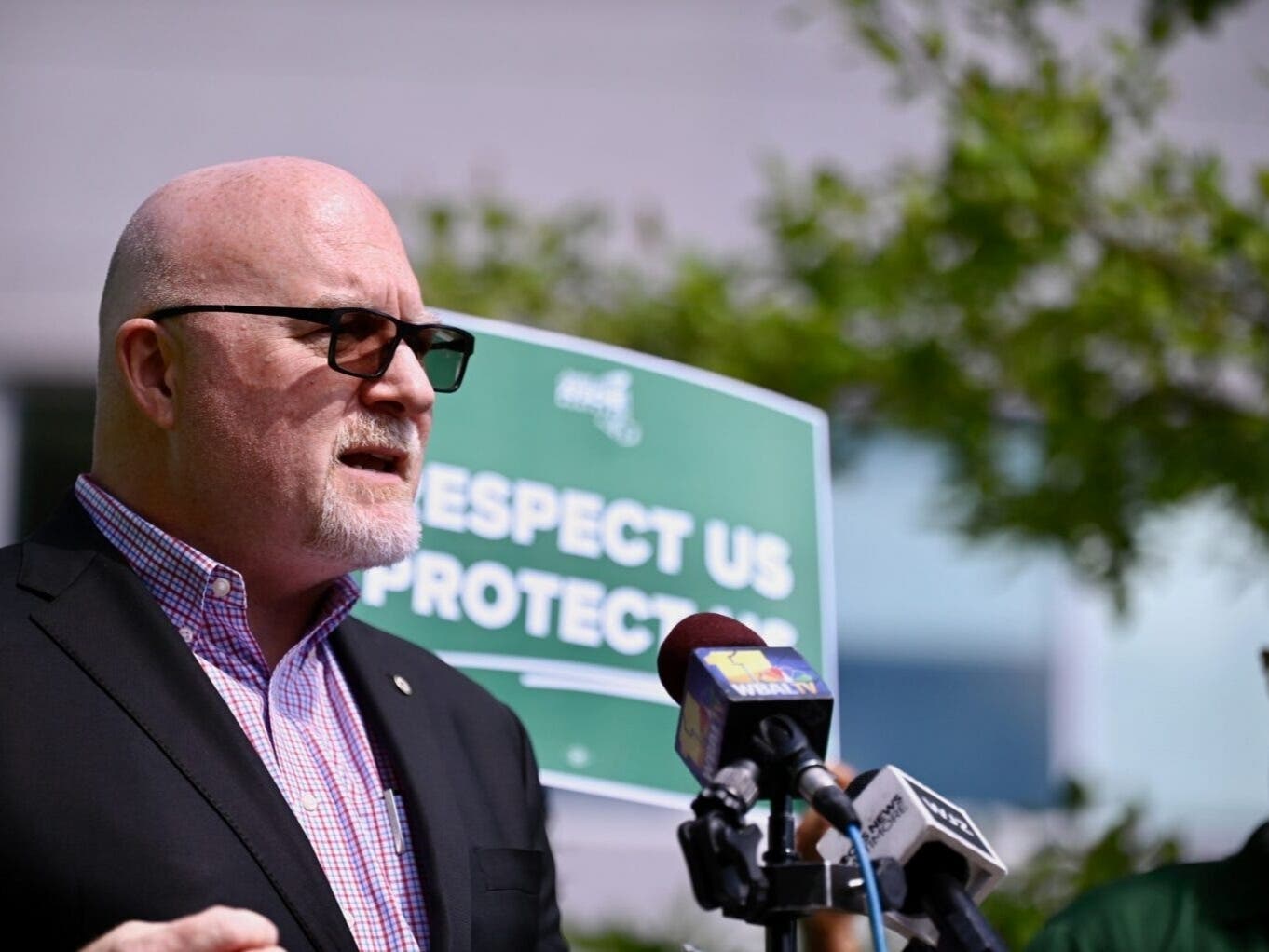
AFSCME Council 3 President Patrick Moran, speaking outside Maryland Department of Transportation headquarters in Hanover after the meeting, said more enforcement is needed.
Find out what's happening in Across Marylandfor free with the latest updates from Patch.
“That’s the biggest thing,” said Moran, who heads one of the largest unions in the stat,e with more than 50,000 members, including roughly 26,000 in state government
“People see a trooper on the side of the road and they get over. They see a road truck, a road crew … and it’s like, ‘Oh, it’s just a road crew. I can’t get a ticket from the road crew.’ So, they’re just barreling through, and then something bad happens.”
It comes as two State Highway workers have been killed in roadway incidents in the span of a little more than 72 hours this week.
Dipakkumar Patel, 70, was sitting inside his work vehicle on Route 13 in Somerset County just before 1 p.m. Tuesday when it was struck by a minivan. He died at the scene.
Robert Dempsey was setting up traffic cones on the Capital Beltway in Prince George’s County when he was hit by a car shortly before noon Saturday. He was 40.
“The Maryland Department of Transportation is outraged by the recent deaths of two dedicated public servants,” the department said in a statement Thursday afternoon. “No person – whether that be a road worker or traveler – should lose their life in a crash. All crashes are preventable, and the continued disregard for roadway workers is unacceptable. Drivers need to do better.”
Moran called the meeting with Thomson “very productive.”
“We laid down a number of things that we need to see in order to continue to move forward,” Moran said.
“We had her full attention on those issues, and she is more than willing to work with us on that, because she realizes the need for change in the way they approach things, especially in SHA [State Highway Administration] and especially out on the roads.”
Union and state transportation officials are expected to start meeting next week “to come up with a game plan on how to reduce fatalities, how to make a safer workplace,” Moran said.
Between 2020 and 2025, there were more than 7,800 work zone crashes — an average of more than 1,308 annually.
So far this year, there have been 253 total crashes in highway work zones, according to online data through April maintained by the State Highway Administration. Included in that are two deaths and 65 non-fatal injuries.
There were nine deaths last year. A dozen people lost their lives each year in work zone crashes in 2022, 2023 and 2024.
In March 2023, six workers including a father and son lost their lives while working on a stretch of Interstate 695 in western Baltimore County. The deaths, half of the total number of people who died in work zones that year, spurred the creation of a highway safety work group led by Lt. Gov. Aruna Miller (D), who is also a transportation engineer by training.
Recommendations from that panel led to new laws authorizing the use of automated speed cameras in work zones. Coupled with the new cameras were increased fines for speeding in those zones.
People see a trooper on the side of the road and they get over. They see a road truck, a road crew … and it’s like, ‘Oh, it’s just a road crew. I can’t get a ticket from the road crew.’ So, they’re just barreling through, and then something bad happens.
– Patrick Moran, president, AFSCME Council 3
In May 2024, the fines temporarily doubled from $40 to $80. Seven months later, a tiered system of fines kicked in based on vehicle speed. The new penalties range from $60 to $1,000. The fines double if workers are present.
Last year, Maryland State Police conducted more than 440 work zone enforcement initiatives. Troopers issued 9,345 warnings and 3,112 citations. Nearly 30 drivers were arrested for driving under the influence in work zones, according to the Maryland State Police.
Moran said more in-person training is needed for highway workers. Additionally, the union is calling for better equipment and protective gear, stronger barriers, more trucks and “better promotion and enforcement of the state’s Move Over law.”
One way, Moran said, is to add more automated enforcement using the same technology used to catch drivers who ignore school buses picking up students.
“They could put a camera on the side of an SHA vehicle,” Moran said. “If you are not out of that lane and you’re flying by then it’s going to take a picture of you.”
Moran said increasing the penalties — fines and jail time — for those convicted of killing a highway worker in a work zone is also needed.
Maryland Matters is part of States Newsroom, a network of news bureaus supported by grants and a coalition of donors as a 501(c)(3) public charity. Maryland Matters maintains editorial independence. Contact Editor Steve Crane for questions: scrane@marylandmatters.org. Follow Maryland Matters on Facebook and Twitter.