Politics & Government
Process And Policy Drove Three House Democrats To Dissent On Michigan's Budget
The Michigan Legislature pulled an all-nighter to pass its fiscal year 2027 budget, which finally passed at 9 a.m. on July 3.

July 9, 2026
The Michigan Legislature pulled an all-nighter to pass its fiscal year 2027 budget, which finally finished its journey through both chambers just before 9 a.m. on Friday, July 3 — two days after a statutory deadline for legislators.
Find out what's happening in Across Michiganfor free with the latest updates from Patch.
While both pieces of the budget — one covering K-12 schools, community colleges and higher education, and another covering the rest of the state government — passed with wide margins in both the House and the Senate, some legislators took issue with both the process and the content of the budget.
Among them is state Rep. Dylan Wegela (D-Garden City), who voted against both budget bills. Wegela, who has served in the Legislature since 2023, said the budget process gets worse every year.
Find out what's happening in Across Michiganfor free with the latest updates from Patch.
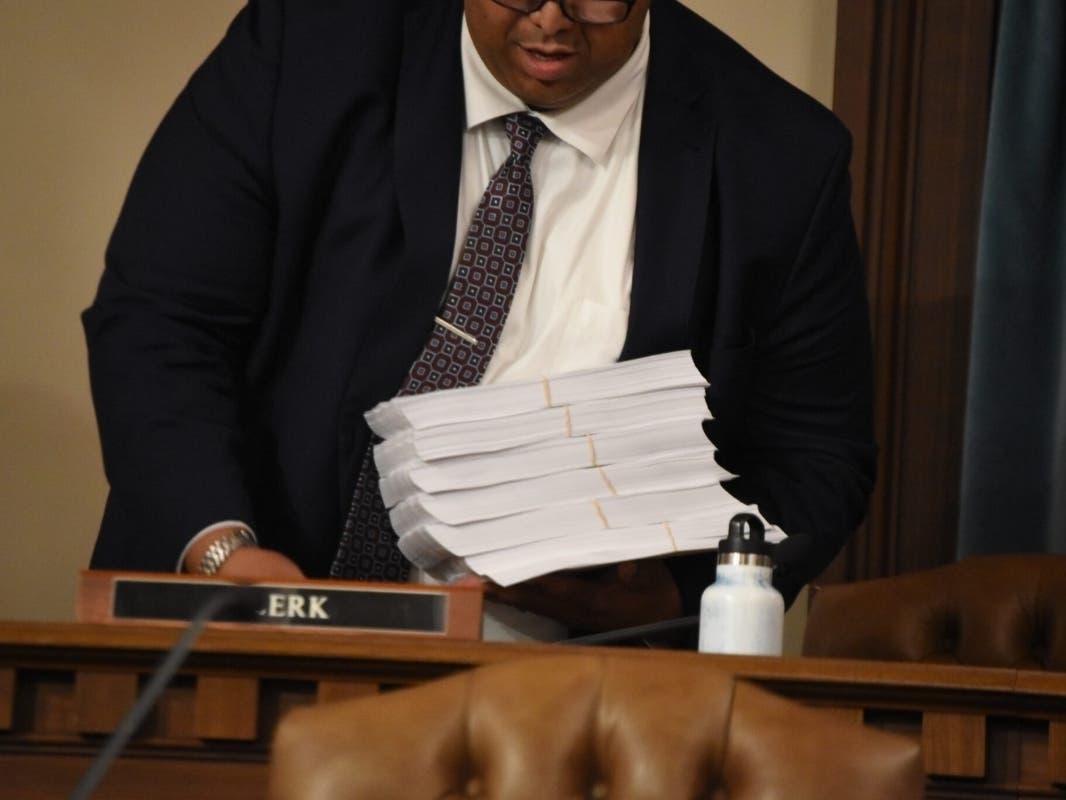
“We didn’t get the 1,000 plus page budget until about 90 minutes before we had to vote on it,” he said, noting that a significant portion of those 90 minutes were spent voting other policy bills through the chamber — time that could not be dedicated to reading the budget.
For Wegela, that’s an intentional strategy from leadership in both parties, as well as Gov. Whitmer’s team, to allow votes to be wrangled more quickly when legislators are tired and working late — the single House session where the budget was passed lasted around 21 hours.
“They do this on purpose,” he said. “I don’t think that that’s how democracy should work or function, and I think most people in the state of Michigan would agree with that.”
It also prevents, Wegela noted, any public input on the contents of the budget when the final versions of the bills are released at hours when most people are asleep and when the turnaround to a vote is so quick.
“Nobody is watching and nobody can have any input,” he said. “I don’t have time to go to my constituents, and after we finally get a budget, and say, ‘what do you think of this?’”
Wegela was joined in voting against both budget bills by fellow Democrat Rep. Regina Weiss (D-Oak Park), who shared similar concerns on the procedure of getting the budget bills passed — and noted that she and her peers did not receive the standard briefing from the House Fiscal Agency where they would be able to ask questions of the analysts.

On Feb. 25, 2025 State Rep. Dylan Wegela (D-Garden City) speaks in favor of two bills aiming to ban state lawmakers from signing nondisclosure agreements. | Kyle Davidson
“Voting against a budget is not an easy thing to do,” she said. “You have to make a decision in aggregate, really often very quickly without a lot of information, which I think in and of itself is a problem, and should not be the way we do that.”
This year, that included understanding a new funding mechanism that makes the budget look smaller than it actually is, because it excludes potential federal funding that lawmakers would be authorized to spend if and when it is received.
Leaders from Gov. Whitmer to House Speaker Matt Hall (R-Richland Twp.) touted the total budget as $75.2 billion — but in reality, it is about $85 billion.
Making the budget appear smaller than it actually is, both Wegela and Weiss emphasized, just furthered their concerns about having such a short time to review it — Weiss described it as “lying about what we are actually intending to do.”
Hall has been a major proponent of budget cuts, pushing for a smaller state budget and the elimination of what he often refers to as “waste, fraud and abuse” in state government. Senate Appropriations Chair Sarah Anthony (D-Lansing) acknowledged during the budget process, without naming Hall, the smaller topline number, regardless of the real budget outcome.
“I think that all is just trying to make it seem like you have some massive win with cuts, and I don’t know why appease somebody like Matt Hall through this process that way,” Wegela said. “I don’t think it’s a good thing for the public or democracy.”

Rep. Regina Weiss (D-Oak Park) speaks at a House Education Committee meeting at Sterling Heights High School on March 11, 2024. (Photo: Anna Liz Nichols)
And the tricky math around those federal dollars wasn’t just a concern on procedural grounds, but also around the actual content of how that funding process would play out over the next year.
“I was really concerned, hearing that we were doing that shortly before we were voting on it, and not actually having the opportunity to do research and run traps to verify that that was actually the case, that there wouldn’t potentially be any legal challenges to that, that we weren’t potentially putting those critical federal dollars for things like title dollars with special education and school lunches at risk,” Wegela said.
Concerns with the content of the budget did not end with the question of federal dollars. Both Wegela, a former educator, and Weiss expressed significant concerns about money being moved from funding K-12 education in the state to other purposes — including higher education and community colleges, as well as the state’s general fund.
Weiss noted that, for the school aid budget, which is shorter but still nearly 150 pages, legislators had around an hour to review that bill.
“We don’t have enough revenue for schools as it is, and because of a combination of the federal cuts, but also bad decisions that have been made at the state level in terms of revenue cuts that we’ve approved, and also continued increased spending that we’ve approved,” she said. “I’m also worried that the sustainability of what we’ve been doing just isn’t there, because once the school aid fund dollars go away, there’s going to be nowhere else to pull money from.”
Wegela said that last year, $1.3 billion was taken from the K-12 schools budget, and this year, that increased to $1.8 billion.
“Instead of Lansing lawmakers finding ways to deal with their budget shortfalls by finding new revenues, such as taxing the rich, or finding other ways to make up the revenue that’s lost from the federal tax cuts and the federal cuts to Medicaid and SNAP, we are instead balancing the budget on the backs of the schools,” he said.
While Wegela and Weiss were the only no votes on the general omnibus budget, Wegela noted that he thinks that their disappointments are much more prevalent among their peers as it might seem from their votes.
“I think we all know that this isn’t the way that things should be done,” he said. “To be frank, it’s frustrating to me how many of my colleagues are willing to give up their power to vote on some of this stuff and just accept that this is how it’s done.”
Weiss introduced a resolution on June 30, the day before the budget’s statutory deadline, which would dock the pay of the governor, the Senate majority leader and the House speaker if the July 1 budget deadline was not met. She said she was not surprised that the bill was not brought up for a vote by the very people who it seeks to penalize.
“I think if you put that up on the board without interference, which obviously it wouldn’t, because the speaker has to approve that, but if it got put up on the board without any interference from leadership on either side, I think it would pass easily in a bipartisan manner,” she said.

Democratic members of the Michigan House discuss on the House floor while they await votes on the state budget. July 3, 2026. | Photo by Katherine Dailey/Michigan Advance.
Rep. Veronica Paiz (D-Harper Woods) also voted against the school aid budget, which passed the chamber by a vote of 99-8 just after 6 a.m. on Friday, but in favor of the general omnibus budget, which passed 99-7 just before 9 a.m.
Paiz did not respond to repeated requests for comment on her decision to vote as she did.
In a video posted on Facebook about an hour after the final budget votes in the state House, Paiz said, “Session just ended, we finally signed off on the budget.” Paiz did not address her vote against the school aid budget, though she did repost a video from Wegela in which he called the budget the “worst budget that I have seen come through this chamber since I was elected” while discussing his concerns.
The Michigan Advance, a hard-hitting, nonprofit news site, covers politics and policy across the state of Michigan through in-depth stories, blog posts, and social media updates, as well as top-notch progressive commentary. The Advance is part of States Newsroom, a national 501(c)(3) nonprofit supported by grants and a coalition of donors and readers.