Politics & Government
Whitmer Proposes New Methods For Early Literacy Skills, Housing Reforms To Ensure Ownership
American students are falling behind, Whitmer said, and Michigan students were no exception.

March 3, 2026
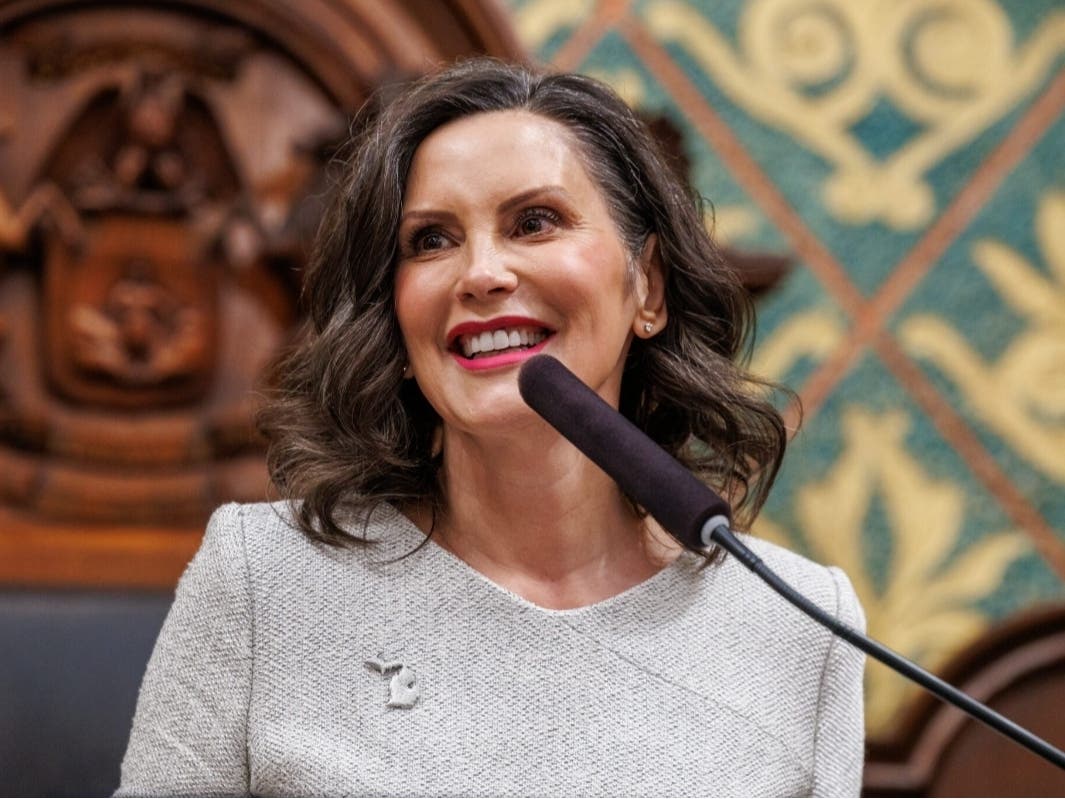
Gov. Gretchen Whitmer on Wednesday announced that her office will focus on childhood education and trying to put more money in Michiganders’ pockets during her final year in office, proposals that will include lifelong literacy efforts, increased school funding and what she called the “Every Child Reads” program.
Find out what's happening in Across Michiganfor free with the latest updates from Patch.
“We’ve been working together to make our schools safer, better places for kids to learn and grow,” Whitmer said. “This year, let’s build on that progress. I just released my final executive budget recommendation, which included the largest targeted literacy investment in Michigan history.”
The plan would include teaching reading skills earlier, and fully funding free, full-day pre-kindergarten for all children to set up that early success.
Find out what's happening in Across Michiganfor free with the latest updates from Patch.
Whitmer also wants to move the state to more proven literacy teaching practices for use in all Michigan classrooms.
Her proposal would also call for extra help in the classroom, more tutoring and small group support in class, at after-school programs, over the weekend, and during the summer too.
“Strong readers and writers grow up to be more confident speakers, better problem solvers, and great entrepreneurs. Illiteracy is a challenge that compounds over time,” Whitmer said. “How could anyone enjoy learning when you can’t read your textbook?”
American students are falling behind, Whitmer said, and Michigan students were no exception.
“There’s a gender gap here too. Boys are behind girls in reading at every age,” Whitmer said. “Michigan is 44th for 4th grade reading. Forty-fourth.”
She hoped her policies could address literacy head-on, but also the growing gender gap.
Whitmer directly addressed the strain Michiganders have felt due to President Donald Trump’s tariff policies, noting that many are still nervous about their standing in the national economy, which directly affects Michigan’s own economic standing.
“As everyone reels from national uncertainty, we must stay focused on growing Michigan’s economy,” Whitmer said. “This year, let’s stay competitive against our neighbors like Ohio and Indiana by equipping ourselves with the tools we need to create good-paying jobs and make it easier to develop and grow here.”
Whitmer’s office had previously told reporters that the governor would make medical debt a major priority this year. Whitmer indicated that Michiganders deserve access to quality, affordable health care, but that was getting harder and more expensive even to just get basic coverage, let alone the kind of specialized coverage some might need.
“Historic federal cuts to health care are destabilizing hospitals, raising premiums, and kicking Michiganders off their insurance,” Whitmer said. “We’re taking action to protect core Medicaid services, ease the burden of medical debt, and ensure every Michigander can see a doctor. We believe that getting sick or hurt shouldn’t also mean going broke.”
Whitmer noted that Republicans in Washington D.C. passed the largest cuts to Medicaid in the nation’s history, which raised premiums, reduced services, and ripped coverage away from Michiganders.
The federal cuts will ultimately make coverage more costly, she said, leading to accumulating medical debt.
Her plan to address that would cap interest rates on medical debt, prevent medical debt from showing up on credit reports, require hospitals to set up financial assistance programs for patients, and would ban liens or foreclosures on homes because of medical debt.
Whitmer’s 2026-27 budget recommendations propose to provide more critical investments to stabilize health care coverage for the 2.5 million Michiganders on Medicaid. It could also help ensure that their quality of coverage will not change by finding new, responsible sources of revenue and efficiencies in the program to save money.
The governor also called on Congress to extend the now-expired Affordable Care and Patient Protection Act subsidies that the Republican majority let lapse at the turn of the year. Whitmer has long said that doing so would lower costs and protect coverage for thousands of Michiganders, and reiterated that belief in her final address to the Legislature and state residents.
“Last year, the majority in Washington, DC voted to slash Medicaid and SNAP by $1 trillion, ripping health care and food away from millions of our neighbors, family, and friends,” Whitmer said. “They went home and did nothing and let premiums on the Affordable Care Act skyrocket.”
On housing, it was too hard for Michiganders to afford a home and gain access to one, even if they could, because of low housing stock.
“I want all our young people to succeed and put down roots in Michigan. They should be able to buy a house and start a family. They deserve a life that’s just as good and hopefully better than their parents'.
“Unfortunately, it’s too hard and too expensive to build new housing today. Tariffs sure haven’t helped,” Whitmer said. “We rely on Canadian lumber and Mexican drywall to build homes, and tariffs have raised the cost of a house by upwards of 17 grand, further exacerbating our housing shortage. We can’t change national tariffs — believe me, I’ve tried — but we can build more quality, affordable housing in Michigan.”
Whitmer was also concerned about a growing gender gap in home ownership: 25% of first-time buyers are single women, while just 10% are single men.
Her solution has been: “Build, baby, build.” Now, she’s focusing efforts on a new state-level affordable housing tax credit.
“There’s already a federal affordable housing tax credit, which incentivizes the construction of housing for working class families. With a state credit, we can build thousands more homes every year,” Whitmer said. “Michigan’s the only state in our region without this tool. And once we create one, it unlocks more federal dollars too.”
Whitmer is also proposing to “demolish nonsensical construction requirements,” and streamline zoning.
“Michiganders love the character of their communities,” Whitmer said. “Whether you crave the hustle and bustle of a busy downtown or the slower pace of a quiet main street, every community is different — and that’s a good thing. For too long, however, our laws have made it easy to expand suburbs but hard to build walkable downtowns and main streets or do more with your own property.”
As part of her gubernatorial highlight reel, Whitmer underlined that she has signed laws putting key parts of the Affordable Care Act in state law, including protections for those with pre-existing conditions, the ability to stay on a parent’s insurance until age 26, and the elimination of caps on annual or lifetime care.
She also touted her work to erase $144 million of medical debt for 210,000 Michiganders; negotiated and enacted a balanced, bipartisan budget to protect core health care services for 2.5 million Michiganders on Medicaid that will help hospitals in rural and underserved areas stay open; and became the first state in the nation to guarantee equal coverage for mental health and substance use disorder.
Whitmer also signed bills in 2020 to end surprise medical billing.
The Michigan Advance, a hard-hitting, nonprofit news site, covers politics and policy across the state of Michigan through in-depth stories, blog posts, and social media updates, as well as top-notch progressive commentary. The Advance is part of States Newsroom, a national 501(c)(3) nonprofit supported by grants and a coalition of donors and readers.