Neighbor News
UNLONGEVITY: Rethinking What It Really Means to Live a Long, Healthy Life
Ramona Römer and Andreas Heigl on moving beyond the culture of optimization, understanding the whole person, and finding a healthier approac
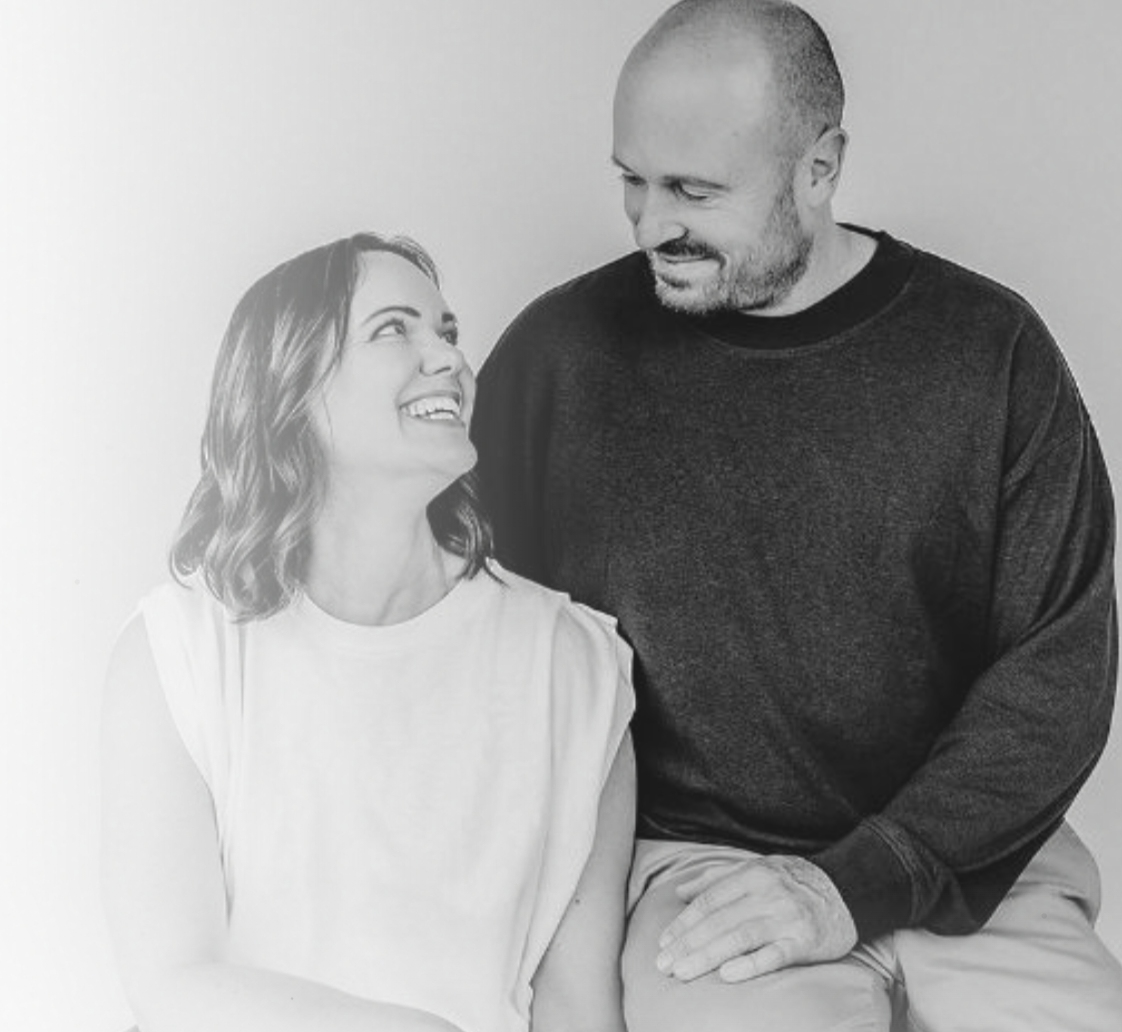
For years, the pursuit of longevity has increasingly been associated with doing more: more testing, more supplements, more technology, more interventions. But Ramona Römer and Andreas Heigl believe that lasting health requires a different way of thinking. In their new book, Unlongevity: Escaping Optimization Culture to Restore Health, Meaning, and a Life That Fits, they challenge the assumption that better health simply comes from accumulating more tools and strategies.
Their perspective grew out of years of working with individuals and observing that no two people respond to health challenges in exactly the same way. Biology is only one part of the picture. Life experience, relationships, emotions, purpose, energy, responsibilities, and stage of life can all shape what health looks like for an individual.
In this interview, Römer and Heigl, on their journey to Las Vegas, they discuss what led them to question conventional longevity culture, how optimization can become a source of pressure, why their five-axis approach looks beyond biology, and what they hope readers will reconsider about their own relationship with health.
Find out what's happening in Las Vegasfor free with the latest updates from Patch.
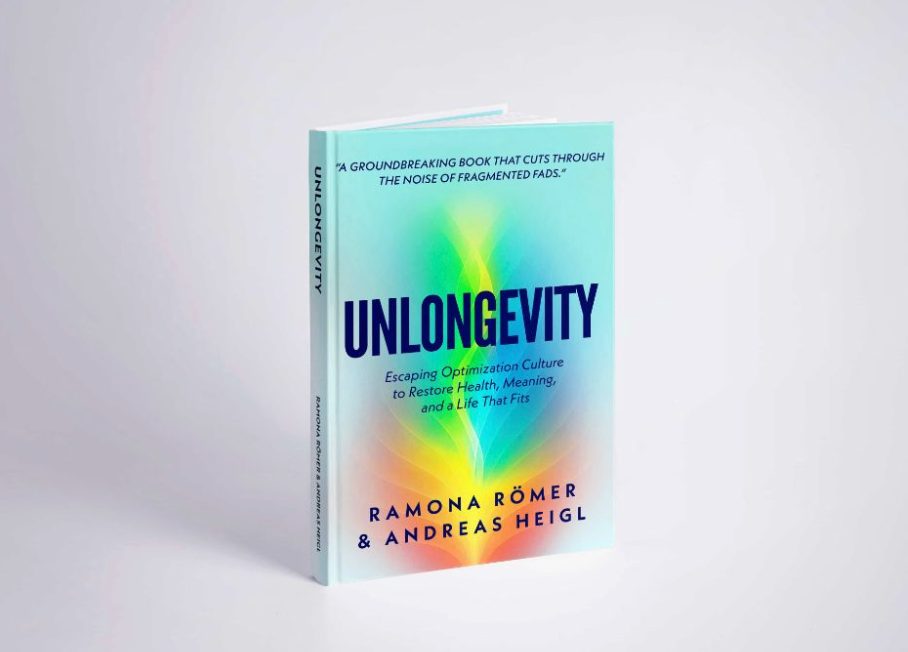
What inspired you to write Unlongevity and challenge the conventional wisdom around longevity?
The inspiration came from the work we had been refining in practice over many years.
Find out what's happening in Las Vegasfor free with the latest updates from Patch.
Every individual we had the privilege of working with refined our understanding a little further. As we continued developing and applying our approach, we repeatedly saw that lasting health was shaped by far more than biology alone. People with similar diagnoses often required very different paths because every individual brings a unique biology, life experience, responsibilities, relationships, and stage of life.
Those experiences gradually led us to question one of the central assumptions in modern longevity: that better health naturally comes from adding more interventions or following the same strategies that work for someone else.
“Unlongevity” grew from what we had already been putting into practice for many years. The book simply gives language to an approach that had already evolved through our work and invites a broader conversation about how longevity is understood today.
You argue that optimization can become a trap. When did you first recognize that this mindset was creating more problems than it solved?
Our thinking changed gradually through practice.
One experience has stayed with us for many years.
A guest arrived carrying more than sixty different supplements, carefully selected over many years. She had read extensively, followed respected experts, invested in advanced diagnostics, and was genuinely committed to her health.
As we looked at everything together, something became very clear. Each individual decision was understandable. The difficulty appeared when they were all combined. Some approaches overlapped, others no longer matched what her body needed at that particular stage of life, and together they had created far more complexity than clarity.
Over the years, we saw this pattern repeatedly. Intelligent, committed people naturally assumed that if one intervention was beneficial, adding another would naturally create even better results.
Our work gradually pointed us in a different direction. Lasting health was much less about accumulating more and much more about understanding what genuinely belonged for that individual, at that particular moment.
How has the conversation around health changed over the past decade, and where do you think it is headed next?
The conversation around health has changed enormously over the past decade.
One of the most positive developments is that people have become far more engaged in their own health. Advances in science, diagnostics, regenerative medicine, artificial intelligence, and technology have created possibilities that previous generations simply didn't have.
At the same time, this remarkable progress has brought a new challenge. Every year introduces new research, new technologies, new interventions, and new perspectives. People are no longer asking whether they should take responsibility for their health. They are increasingly asking how to navigate an expanding landscape of possibilities.
We believe that is where the conversation begins to evolve.
Looking ahead, we expect two broad directions to emerge.
One will continue moving toward greater technological precision. Artificial intelligence, continuous monitoring, predictive diagnostics, implantable technologies, and increasingly sophisticated interventions will help us measure, predict, and optimize human biology with growing accuracy.
Alongside that, we believe another direction will continue gaining momentum. More people will begin asking a different question: What genuinely belongs for me, at this stage of my life? They will become increasingly interested in understanding the human being more broadly, exploring how biology interacts with emotions, relationships, purpose, traditional systems of knowledge, energy, and the broader rhythms of life.
We don't expect these directions to replace one another. Many people will naturally draw from both. Perhaps the real opportunity lies in developing the wisdom to know which possibilities genuinely serve the individual, rather than assuming that more possibilities automatically create better health.
Your book introduces a five-axis framework for health. Why was it important to move beyond biology alone?
Throughout our work, we have always tried to understand what was actually driving a person's health challenge before deciding on any intervention.
Over the years, one observation became increasingly clear. Biology often tells us that something is happening, but not necessarily why it is happening.
Two people could arrive with very similar diagnoses, laboratory results, and even lifestyles, yet require completely different paths forward.
By the time imbalance appears in laboratory values, physical symptoms, or disease, the human system has often been communicating for a long time in other ways, through emotions, patterns of thinking, relationships, energy, life direction, and many other subtle signals.
That gradually shifted our perspective. We became increasingly interested in understanding the whole sequence rather than focusing only on its biological expression.
The five axes simply gave language and structure to what we had already been applying in practice for many years. They help us understand the many dimensions that influence health long before they become visible in biology alone.
Rather than asking which dimension matters most, we became increasingly interested in how they interact. Health rarely unfolds in isolated compartments. It emerges from the relationship between many different parts of a person's life.
What are some of the biggest misconceptions people have about living a longer and healthier life?
We believe one of the biggest misconceptions is that health only deserves our attention once symptoms appear.
Our experience has been very different. By the time imbalance becomes visible in laboratory values, physical symptoms, or disease, the human system has often been communicating for quite some time through emotions, patterns of thinking, energy, relationships, purpose, and many other subtle signals.
Another common misconception is that more automatically leads to better health. We often meet thoughtful, committed people who continuously add new supplements, technologies, and interventions, believing that more will naturally produce better outcomes. In our experience, lasting health is rarely created through accumulation. It emerges from understanding what genuinely belongs for the individual.
Perhaps the biggest misconception of all is believing that longevity itself is the destination. We see longevity as the opportunity to continue living a meaningful life. Health creates the freedom to contribute, to connect, to love, to remain curious, and to enjoy the people and experiences that matter most.
How can someone tell the difference between making healthy choices and becoming consumed by optimization?
One of the simplest ways to recognise the difference is to ask yourself a very honest question:
Is my health supporting my life, or has my health quietly become my life?
Healthy choices usually create more freedom, more energy, and a greater ability to enjoy the people and experiences that matter to us.
Optimization can gradually feel different. Health becomes another responsibility to manage, another standard to maintain, another source of pressure. Every new study, every new supplement, and every new technology can begin to feel like something we should also be doing.
We believe one of the healthiest moments is when people regain the confidence to pause before adding something new and simply ask, "Does this genuinely belong in my life?"
Health should quietly support the life we want to live. The moment it begins asking for more attention than the life it is meant to support, it is often worth stepping back and looking at the bigger picture.
What do you hope readers will rethink after finishing Unlongevity?
More than anything, we hope readers rethink their relationship with health.
Today, many people are trying incredibly hard to do the right thing. They are surrounded by advice, technologies, opinions, and endless possibilities. The intention is wonderful. Yet, for many, all those possibilities have gradually made health more complicated rather than clearer.
We hope Unlongevity helps people discover that clarity often comes before intervention.
When we become clearer about what genuinely belongs in our own life, many health decisions naturally become simpler. Not because there are fewer possibilities, but because we become more confident in choosing the ones that truly fit us.
If readers close the book with greater clarity, greater confidence in their own judgement, and a little less pressure to do more, then we feel the book has achieved exactly what we hoped it would.
If there is one habit or belief you wish more people would let go of, what would it be and why?
If there is one belief we hope people gradually let go of, it is the idea that doing more automatically leads to better health.
Modern health has given us extraordinary possibilities, and many of them have genuine value. The question is not whether more possibilities exist. The question is whether they genuinely belong to that individual, at that particular stage of life.
We have repeatedly observed that lasting health rarely comes from continuously adding more. It emerges from greater clarity, better timing, and understanding what truly matters at that particular stage of life.
Sometimes the most meaningful step forward isn't adding another intervention. It's creating enough space to hear what the human system has already been communicating.
Discover more about Unlongevity at unlongevity.com