Politics & Government
Live Free Or… Diet? SNAP Soda Ban May Come To New Hampshire
New Hampshire lawmakers are debating whether the Granite State bar sugary drinks and snacks from the federal food stamp program.

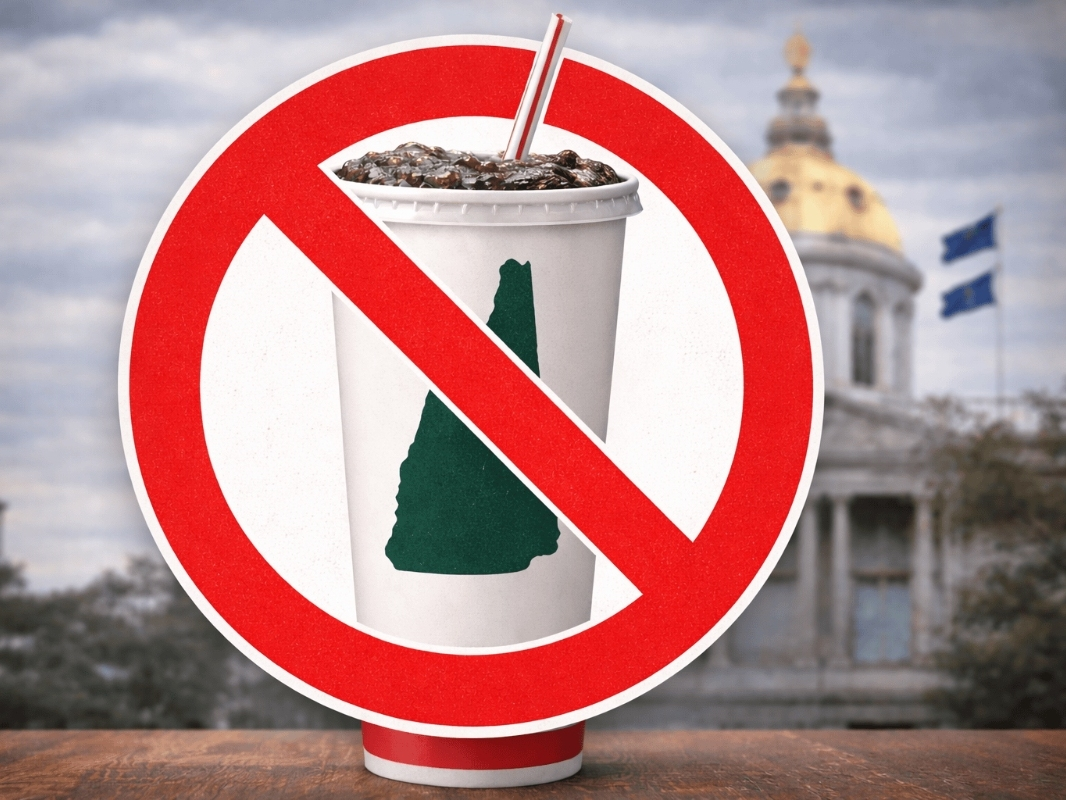
Live Free or … Diet?
New Hampshire may be known for its small-government, libertarian leanings on everything from taxes to guns to rejecting motorcycle helmet mandates, but some Granite State lawmakers appear ready to unleash their inner nanny state when it comes to sugary snacks.
Find out what's happening in Manchesterfor free with the latest updates from Patch.
As states across the country move to bar sugary drinks and snacks from the federal food stamp program, New Hampshire lawmakers are debating whether the Granite State should follow suit — drawing pushback from libertarians and industry advocates. At the same time, the movement is generating scrutiny of what the Supplemental Nutrition Assistance Program (SNAP) was meant to provide.
At least 18 states, including Arkansas, Colorado, Florida, Texas, Virginia, and Tennessee, have secured federal waivers allowing them to restrict “non-nutritious” items such as soda, candy, and energy drinks from SNAP eligibility. The moves come amid a broader “Make America Healthy Again” push championed by Health and Human Services Secretary Robert F. Kennedy Jr., who has urged states to submit a waiver to the Trump administration asking for permission to remove soda from SNAP.
Find out what's happening in Manchesterfor free with the latest updates from Patch.
Even boxing legend Mike Tyson — best known for biting off part of Evander Holyfield’s ear during a 1997 fight — has joined the cause, appearing in a Super Bowl ad Sunday night to lecture on the evils of processed foods.
At first blush, the effort appears to fly in the face of New Hampshire’s notoriously individual-liberty culture — the only state in the nation that refuses to mandate that adult drivers wear seat belts.
New Hampshire has not adopted a SNAP restriction and does not currently have a federal waiver. But legislation introduced this session would direct the state to pursue one, potentially banning SNAP benefits from being used to purchase sugary drinks, candy, and certain processed foods.
State Sen. Victoria Sullivan (R-Manchester) is leading the effort.
“SNAP is, by definition, a Supplemental Nutrition Assistance Program,” Sullivan told NHJournal. “When it was being drafted, the conversation around soda and candy did arise. Lawmakers thought banning them was unnecessary because families who relied on food stamps would not use them to buy such items. Today, that is just not true.”
Sullivan claims that soda — including diet soda — has no nutritional value and was never meant to be subsidized by taxpayers.
“Regular consumption of diet soda is linked to increased risks of metabolic issues, including Type 2 diabetes, weight gain, cardiovascular problems, dental erosion, and potential gut-brain effects,” she said. “Children on SNAP have higher obesity rates than children in the same income bracket who are not on SNAP. SNAP was not created to subsidize the soda industry. It was created to provide nutritious food to families in need. It is time to return it to that purpose.”
But public health experts point out that purchasing patterns for soda and candy are nearly identical between SNAP and non-SNAP families; therefore, targeting low-income families does not address the root causes of the obesity crisis.
And organizations like the New Hampshire Grocers Association say the bill would cause unintended consequences that would hurt small businesses and rural communities. Berlin Mayor Robert Cone agrees.
“In the North Country, particularly, local stores are community anchors and an important part of our regional economy,” Cone told NHJournal. “This legislation threatens that stability and could undermine the New Hampshire Advantage by driving cross-border shoppers back to Vermont and Maine, something our small businesses simply can’t afford.”
Not surprisingly, the American Beverage Association opposes the policy.
On a recent media call, ABA officials said SNAP reforms are a legitimate topic for policymakers but warned that singling out soda and other sweetened beverages misses the broader picture of diet and consumer choice.
“It’s important that, if we’re going to reform SNAP and ask tough questions about what should be eligible and what shouldn’t be, that we look at the totality of food and beverage options out there,” said Ed Patru, the association’s senior vice president for regulatory affairs.
A poll from Public Opinion Strategies, conducted last year on behalf of the association, found that a solid majority (64 percent) of Americans said SNAP recipients should be able to use SNAP benefits for soft drinks and other sugar-sweetened beverages. That included 58 percent of those who voted for President Donald Trump in the 2024 election.
The SNAP debate is also intersecting with renewed discussion over the use of sugar, artificial sweeteners, and food dyes.
Dr. Lyle Burgoon, president and CEO of Raptor Pharm & Tox Ltd., said critics often mischaracterize safety data by citing animal studies that rely on extreme doses.
“These studies are designed to elicit toxic reactions,” Burgoon said. “Those doses are not found in beverages, nor would humans be subjected to such overwhelming amounts of fructose and glucose.”
The shift on this issue among political conservatives, who not long ago mocked New York Democrats for banning Big Gulps, has been dramatic. Cone hopes his fellow Republicans will focus on the economic impact.
“Bills like SB 615 may be well-intentioned, but in rural communities like Berlin, they risk creating real economic harm,” Cone said. “Our small grocers and convenience stores operate on razor-thin margins, and asking them to police SNAP purchases or overhaul their systems could push some of them over the edge.”
(Jessica Towhey contributed to this report.)
This story was originally published by the NH Journal, an online news publication dedicated to providing fair, unbiased reporting on, and analysis of, political news of interest to New Hampshire. For more stories from the NH Journal, visit NHJournal.com.