Politics & Government
Bipartisan Audit Request Targets UNH Over Rising Costs And Falling Enrollment
Pols want the Joint Legislative Performance Audit and Oversight Committee to direct the Legislative Budget and Audit Division to eye data.

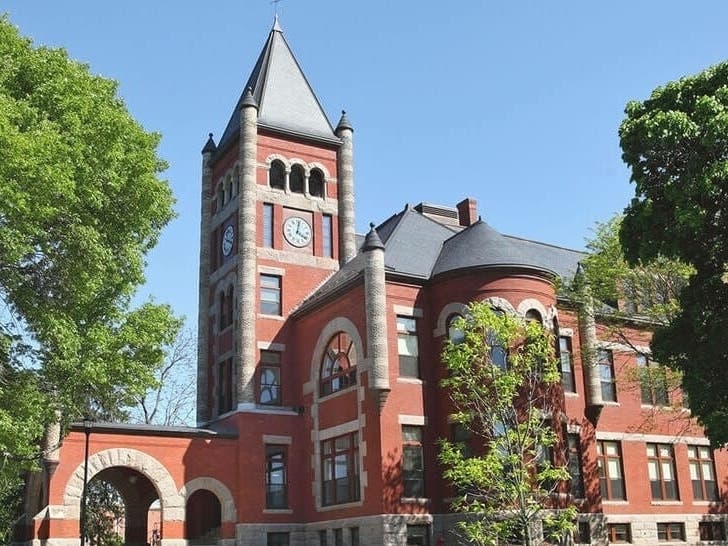
With enrollment plunging and costs rising, a bipartisan group of state senators is calling for an independent performance audit of the University System of New Hampshire as it considers consolidation proposals to confront difficult fiscal realities.
In a letter released Wednesday, Senate President Sharon Carson joined Sens. Tim Lang, Sue Prentiss, and Donovan Fenton in asking the Joint Legislative Performance Audit and Oversight Committee to direct the Legislative Budget and Audit Division to conduct the review.
Find out what's happening in Portsmouthfor free with the latest updates from Patch.
“The performance audit should include, but not be limited to, a review of the organizational staffing structure of the System and the proposed merger between the Chancellor’s Office and the Office of the President of the University of New Hampshire,” the letter reads.
Carson told NHJournal she wants “a more holistic approach” from this audit than reviews conducted in the past.
Find out what's happening in Portsmouthfor free with the latest updates from Patch.
“Every two years they come to the State House, and they want money, and we give them a lot of money. Now it’s time that we start taking a look at how they’re actually spending that money. Is what they’re spending the money on working for the students? For the employees who work there?
“We want to see everything,” Carson said.
The request comes as USNH faces a sustained decline in enrollment, rising operating costs and difficult questions about whether its existing administrative and academic structure remains affordable.
Enrollment at the three main campuses — UNH Durham, Keene State College and Plymouth State University — has fallen by about 4,500 students, from 24,394 in 2015 to just 19,915 in 2024. That’s a decline of more than 18%.
Meanwhile, operating expenses across the UNH system have risen from $811 million in 2016 to $925 million last year, an increase of more than 14%.
Opponents of consolidation say they fear the two smaller institutions will lose their unique identities if one administrator oversees all three campuses. Critics say the alternative is to lose the schools entirely as enrollment continues to plunge.
Since 2014, Plymouth State has lost more than 28% of its student body, while Keene State has suffered a massive decline of 35%.
The New Hampshire legislature has responded to the overall decline in enrollment by reducing state appropriations to the system. Taxpayer subsidies are projected to decline from $95 million in fiscal 2025 to $87 million in fiscal 2026 and $77 million in fiscal 2027.
And lawmakers say it’s time for the UNH system to do its part by cutting waste, including through consolidation.
“We entrust our University System with tens of millions of taxpayer dollars,” said Deputy House Majority Leader Joe Sweeney, who endorsed the audit request. “It is only right that we expect efficient and wise investments in return.”
An analysis distributed with Sweeney’s statement reported that direct instruction accounted for just $229.9 million, or 24.9 percent, of USNH’s $924.7 million in fiscal 2025 operating expenses.
USNH already undergoes an annual external financial statement audit, as the senators acknowledged in their letter. The requested performance audit would serve a different purpose: evaluating whether the system’s organization, staffing and programs are operating efficiently and effectively and identifying possible improvements.
Carson said the independent process would allow lawmakers, students, employees and residents of host communities to participate publicly rather than leaving major structural decisions to discussions “behind closed doors.”
She pointed particularly to the economic importance of Keene State and Plymouth State to their surrounding communities.
“You think about Keene, which is a fairly small town, but how much of their local economy is driven by the university system?” Carson said. “And the same thing with Plymouth. We need to understand what the impact is going to be on those communities as well.”
The audit request follows a June vote by the USNH Board of Trustees recommending that the positions of system chancellor and UNH president be combined beginning July 1, 2027.
Under the proposal, one person would serve both as president of the flagship university and leader of the statewide system. The presidents of Keene State and Plymouth State would report to the combined office.
Trustees approved the recommendation 20-5, but the change requires approval from the legislature and governor. System officials have argued that eliminating an executive layer would reduce costs, speed decision-making and allow Keene and Plymouth to use more of UNH’s administrative capacity.
UNH accounts for about 70 percent of system enrollment and approximately 80 percent of system costs, partly because of its research operation. USNH Chancellor Catherine Provencher has said standardizing business processes could strengthen administrative support at the smaller colleges. NHPR reported that trustees opposing the proposal raised concerns that Keene and Plymouth could lose their identities.
Supporters of the consolidation proposal say it is an administrative restructuring, not a full institutional merger. Keene State and Plymouth State would retain their names, missions, separate accreditation and presidents.
And with Keene State facing an operating deficit exceeding $3 million and collapsing enrollment, it could lose a lot more than its identity.
The senators’ letter asks auditors to study the proposed leadership merger and the broader staffing structure before lawmakers decide whether to authorize it.
Carson said the audit should examine not only where USNH can save money, but also whether the system needs to change how it recruits, educates and retains students. She pointed to efforts at Plymouth State to redesign programs and reach different types of learners.
“If they can do it, what about Keene State?” Carson said. “What about UNH doing it to attract more students? Are we stuck in a time where education has always been done this way?”
This story was originally published by the NH Journal, an online news publication dedicated to providing fair, unbiased reporting on, and analysis of, political news of interest to New Hampshire. For more stories from the NH Journal, visit NHJournal.com.