Politics & Government
'Jaws' Fears Worry Jersey Shore Mayor
Bay Head Mayor Bill Curtis said he is concerned a child swimming in the water could be mistaken for chum.


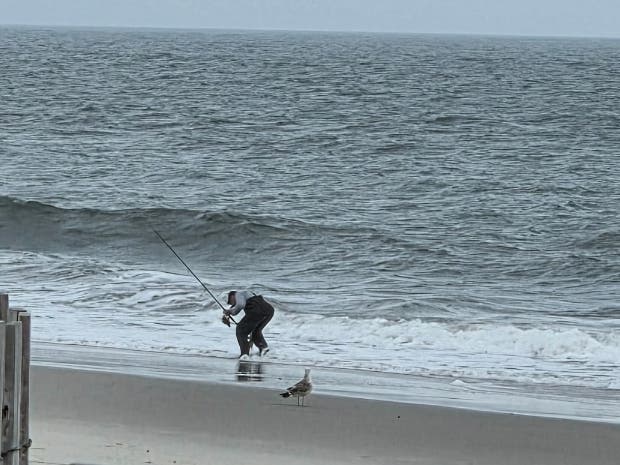
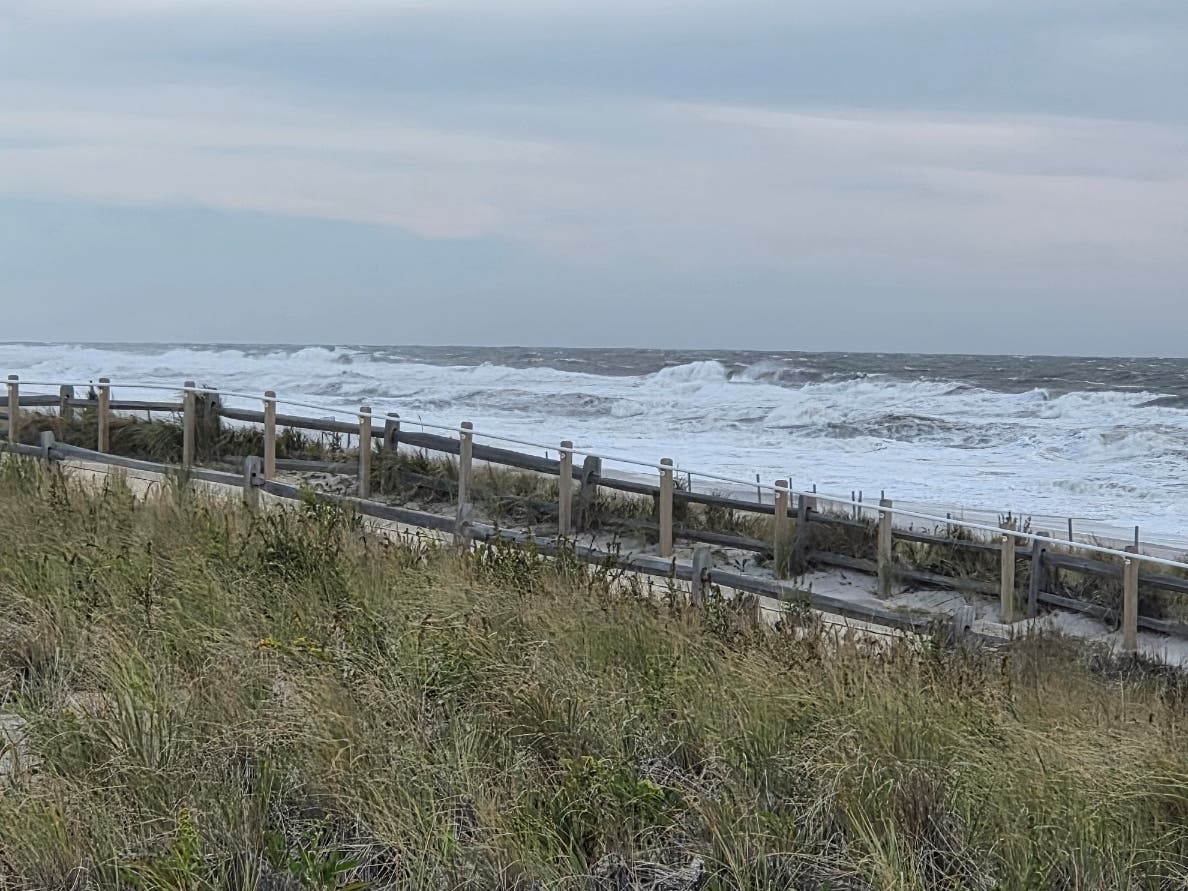
BAY HEAD, NJ — For decades, shark fishing from the beach has been a popular summer night activity at the Jersey Shore.
Anglers bait their hooks and cast them as far as possible into the Altantic Ocean aiming to reach the area of the coastal waters inhabited by sharks and many other species of fish.
This summer, that activity aided by advances in technology has sparked a conflict in the borough of Bay Head, where some beachgoers and Mayor Bill Curtis are raising alarms that surf fishing for sharks is creating a "Jaws-like" situation that puts swimmers at risk.
Find out what's happening in Brickfor free with the latest updates from Patch.
Curtis, in an interview with ABC News, said surf fishermen are using drones and kayaks to drop their hooked bait in the water, which Curtis called “chumming.” He expressed concern that it was drawing sharks closer to swimming areas, which could result in a shark mistaking “a child swimming frantically in the water … for chum” and attacking the child.
"The chumming is just unconscionable to me. It's luring predators close to shore, and they can't stop them," Curtis told ABC News.
Find out what's happening in Brickfor free with the latest updates from Patch.
Chumming is a specific technique anglers use to attract fish to an area in hopes of catching one, and involves dropping a steady stream of bits of chopped-up fish into the water, creating a “scented” trail that draws fish. Fishermen then drop their baited hooks into the stream of chum to catch fish.
Chumming is not a single baited hook dropped into the water, which is how people surf fish. Some anglers will have two rods baited at a time, but rarely more because they risk losing a rod if both hook fish at the same time.
A message left at Borough Hall for Curtis clarify what was being seen in Bay Head was not answered.
Shark fishing from the beach is legal in New Jersey and most coastal states around the country. At the Jersey Shore, it is primarily a dusk-to-dawn activity, as fishermen generally avoid beaches crowded with swimmers during the day for safety reasons. The use of drones to drop baited hooks — a very recent development — is legal as well.
Shore-based shark fishing has drawn more attention in recent years as people have become more aware not only of the presence of sharks off the Jersey Shore but also as more photos of sharks caught on the beach have been shared on social media.
The shark research organization, OCearch, has drawn widespread attention thanks to tracking tags it has implanted on multiple sharks; a 16-foot great white named Mary Lee was a media sensation from 2015 through 2017, until her tag stopped pinging.
In 2026, there have been multiple shark sightings and some large sharks caught at the beach, including a 12-foot tiger shark on Aug. 8 at Island Beach State Park. NJ.com reported that shark was caught about noon at a section of the beach that is not open for swimming.
Scott Thomas of Grumpy’s Tackle, a fishing tackle and bait shop in Seaside Park that has a strong customer base among surf fishermen, said shark fishing from the surf has become significantly more popular in the last three years because of an increase in the shark population off the coast.
The most common species caught in the surf at the shore are brown sharks, sandbar sharks and sand tiger sharks, but Thomas said spinner sharks also have been caught from the beach, along with the occasional tiger and bull shark.
He said anglers are catching three to seven sharks a night this summer because of the increased population. Fishermen are using drones to take baited hooks 200 to 300 meters off the beach – roughly two to three football fields – to the waters where the sharks are cruising for food.
The vast majority of sharks caught on the beach must be released, according to the New Jersey Department of Environmental Protection’s Division of Fish and Wildlife. Shark fishing is governed by both state and federal regulations, and those regulations say posing for photos on the beach with shark species that anglers are not allowed to keep is a violation, NJ Fish and Wildlife says.
“We have a sign on the (bait) freezer telling people the rules,” Thomas said. “We want them to be doing it correctly so these fish swim away.”
The shop also does not share anglers’ photos of beach-caught sharks to discourage people from taking them in the first place, he said.
The conflict in Bay Head began in mid-July, when an officer with the Bay Head Improvement Association, which manages the borough’s beach access and beach badges, posted concerns about shark fishing on the organization’s Facebook page. That led to significant pushback from fishing organizations, and the post has since been deleted from the Bay Head group’s page.
And while Curtis and others have raised the prospect of shark attacks, there have not been any shark attacks at the Jersey Shore in 2026. There have been 15 recorded attacks dating back to the 1800s in New Jersey, according to the University of Florida International Shark Attack File.
That includes the 1916 shark attacks in the Matawan Creek that are said to have inspired “Jaws.”
Those attacks were an anomaly, according to the Shark Research Institute at Princeton University. The last time someone was bitten by a shark in New Jersey was in May 2023, when a surfer was bitten in Stone Harbor, according to the institute’s Global Shark Attack File.
Bull sharks are a concern, and have been known to attack humans. Thomas said there have been an increase in bull shark sightings in New Jersey in 2026 in the area.
“There have been seven caught within casting distance” of the beach, including one caught in Barnegat Bay and one caught halfway up the Toms River, which he saw proof of, Thomas said.
Part of the reason sharks are coming in much closer, Thomas said, is because of the impact of the commercial reduction fishing boats that are collecting millions of pounds of menhaden just outside the three miles of ocean that New Jersey regulates.
Menhaden reduction boats are banned within New Jersey’s waters but reduction boats owned by Omega, the sole menhaden reduction fishing company still in operation, have been off the coast seeking the fish, also known as bunker, that are in short supply off Virginia, where Omega is based.
“The reduction boats have taken away all the bunker,” Thomas said, “so you have everything cruising the shoreline looking for something to eat.”
Thomas said he would like to see New Jersey implement rules similar to those in Florida, where he said fishermen who want to fish for sharks from the surf must take a test to certify they know the rules before they can target sharks.
Get more local news delivered straight to your inbox. Sign up for free Patch newsletters and alerts.