Neighbor News
JFK University Medical Center Reaches Milestone: 10,000 Robotic Surgeries
Robotic surgery offers the most advanced and minimally invasive surgical options, leading to better outcomes and faster recoveries.
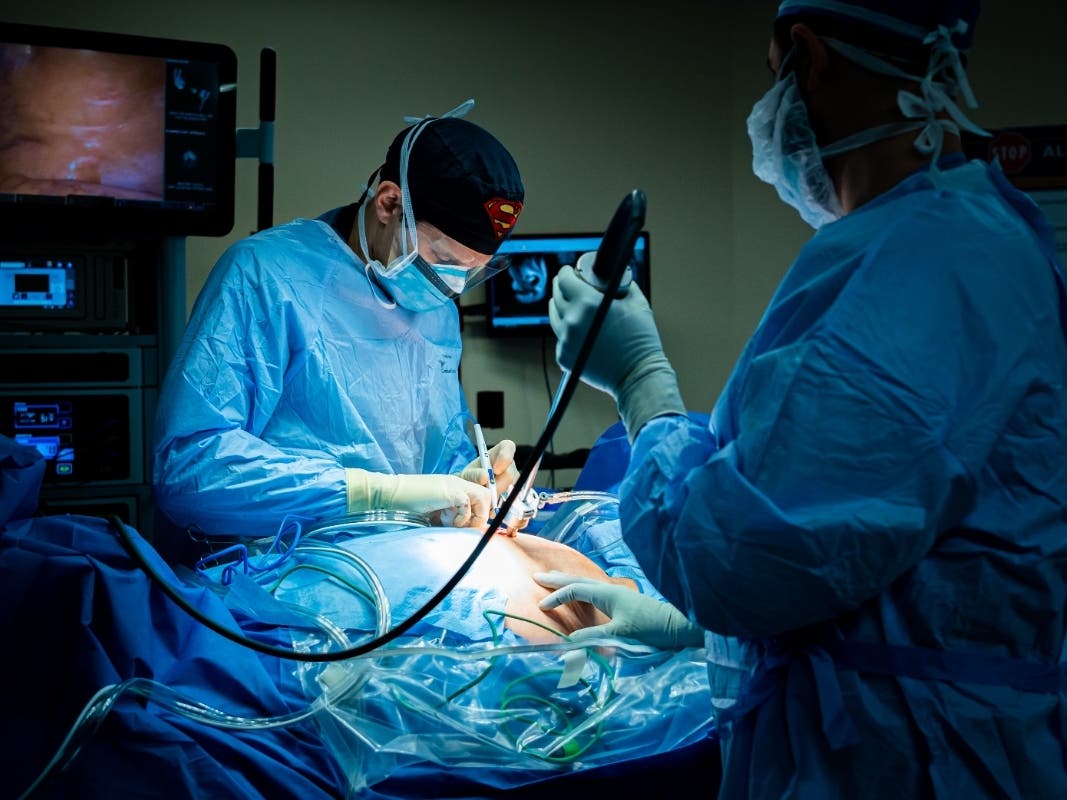
Edison, NJ – Just 10 years ago, a patient going in for surgery at JFK University Medical Center would have stayed hospitalized for about five days. Once home, the patient likely would have been on strong painkillers as they recovered.
Thanks to advances such as robotic surgery, now the vast majority of patients are able to return home the very next day and experience little post-operative pain.
JFK University Medical Center this month marked the completion of its 10,000th robotic-assisted surgery.
Find out what's happening in Edison-Metuchenfor free with the latest updates from Patch.
This achievement underscores the medical center's commitment to providing patients with the most advanced and minimally invasive surgical options, leading to better outcomes and faster recoveries.
“Over the years I have seen many subspecialties identify the benefits of robotic surgery and move towards its implementation,” says Dr. Michael S. Lasser, Medical Director of Robotic Surgery at JFKUMC. “For me, specifically, the technological advances that have been made as the surgical robot evolves has allowed me to migrate many complex surgeries from open surgery to a minimally invasive approach.”
Find out what's happening in Edison-Metuchenfor free with the latest updates from Patch.
“As a result we have 90% of our patients going home the day after surgery with minimal pain and excellent outcomes.”
For many patients, the prospect of surgery can be daunting. However, robotic surgery offers a number of significant benefits compared to traditional open procedures. The da Vinci surgical system–a technology utilized at JFK–for instance, allows surgeons to perform complex procedures through a few small incisions.
This minimally invasive approach translates into less trauma to the body, resulting in a host of benefits for the patient, including a quicker return to normal activities, minimal scarring, less blood loss and a reduced risk of complications and infection.
"I like to start by telling patients that the surgical robot is a tool," explains Dr. Lasser. "It allows surgeons to complete complex surgery that routinely requires a large incision in a minimally invasive manner."
"The smaller incisions, 10x zoom, 3D imaging, and manual dexterity it provides us as surgeons,” he adds, “allows for smaller incisions, less trauma to organs, less pain after surgery, less narcotic use, faster recovery, and overall shorter time to getting back to normal."
.jpeg)
The program, which began in 2016 with Dr. Lasser as its sole surgeon, has flourished into a robust team of 27 surgeons across all surgical subspecialties. This growth has established JFK as a regional hub for robotic surgery, treating some of the most complex cases with exceptional results.
"The fact that we are one of the fastest growing programs in New Jersey speaks towards our commitment to providing the most up to date and technologically advanced care while maintaining excellent outcomes,” Dr. Lasser says.
In 2025, of the approximately 10,000 procedures performed in JFKUMC’s main operating room, over 2,000 were done using robotic-assisted technology. This high rate of adoption is seen across various specialties.
For instance, within the Hackensack Meridian Health network, over 90% of lung cancer surgeries are performed robotically. JFK's expanding lung and airway center, led by Dr. Faiz Bhora, mirrors this trend, offering complex thoracic surgeries with excellent outcomes. This has positioned the center as a referral hub for patients with complex cases who may have been told at other medical institutions that they were not candidates for robotic surgery.
JFKUMC offers robotic procedures in a vast array of subspecialties such as general, thoracic, urology, gynecology, colorectal, surgical oncology, endocrine and ENT.
The hospital’s medical teams make it a point to keep patients informed every step of the way. For robotic surgery patients, Dr. Lasser and his team understand the importance of demystifying the technology.
“For the patient, robotic surgery offers a very similar preoperative experience as other forms of surgery,” Dr. Lasser notes. “The main difference is that they will see the robot in the room as they are put to sleep. The real difference is the added dexterity and precision during the surgery and the resulting improved postoperative course.”
Dr. Lasser, a urologic surgeon, utilizes robotic surgery for a variety of procedures, including those for cancer and obstructions of the urinary tract. His expertise is reflective of the broader team at JFK, where surgeons and nursing staff undergo specialized training and proctoring to master these advanced systems, ensuring the highest standards of patient safety.
“One key aspect of a robotic program is growing it safely,” Dr. Lasser says. “As we created and implemented the program, we created a pathway to ensure that only appropriately trained surgeons are able to perform robotic surgery. There is a specific training and proctoring pathway that exists for both surgeons, surgical assistants, and the Operating Room staff.”
“Overall this has been a huge improvement in patient care and I have been lucky to participate at every stage of the technological evolution,” Dr. Lasser says.
What does he see as the future of robotic surgery?
“I expect the technology to continue to progress,” he responds. “We will continue to see advances that further improve patient care and make it so that we can offer more procedures with shorter stays in the hospital and better outcomes. In my opinion we are at a very exciting point in the evolution of surgical care and I am looking forward to the future.”