Politics & Government
New Report Reveals Gaps In Services For Princeton's Low-Income Residents
Food, healthcare and transportation topped the list of needs in the town's first comprehensive assessment since 2014.


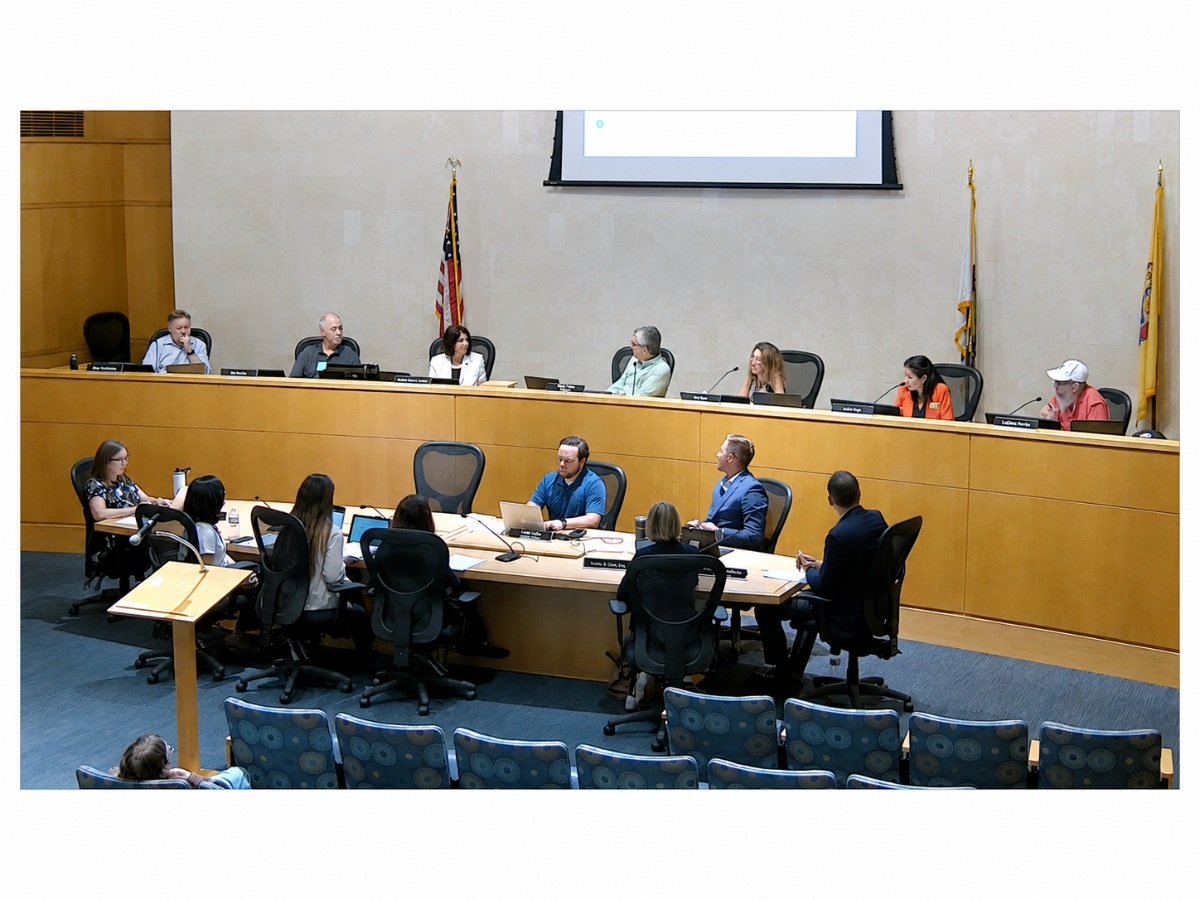
PRINCETON, NJ — Princeton's Human Services Department, along with the Center for Modern Aging Princeton (CMAP) and the Committee on Affordable Housing, Racial, Economic, Social Equity and Services (CARES), presented the findings of the 2025 Community Needs Assessment to the Mayor and Council on July 13 — the town's first comprehensive look at the needs of its low- to moderate-income (LMI) residents since 2014.
"This assessment set out to understand the experiences and needs of Princeton residents facing systemic barriers, in order to inform municipal priorities, planning, and service provision, to make sure that those are driven by data and evidence," said Subuhi Asheer, the research consultant who led the assessment.
The assessment surveyed 253 LMI households, representing 521 adults and 280 children, between August and December 2025, along with 17 listening session participants and 49 higher-income older adults to inform the town's age-friendly planning.
Find out what's happening in Princetonfor free with the latest updates from Patch.
Asheer cautioned the findings are not representative of the whole town but "offer a direct window into the experiences and priorities of the community's most underserved residents." Still, she said the overall picture was encouraging: "We have an active and supportive community, rich in resources ... but the data obviously also points to some specific gaps that are worth this group's attention."
A Gap Between Services & Awareness
The report's central finding was that many existing services remain unknown to residents who need them. "Roughly half or more of the respondents did not know that the service existed in Princeton," Asheer said, with awareness especially low for childcare, legal, job and financial assistance.
Find out what's happening in Princetonfor free with the latest updates from Patch.
Food assistance (47%) and transportation assistance (35%) were the most-needed services in the past year. "The key takeaway here is that while many of these services already exist in Princeton, the challenge is connecting people to them," Asheer said.
Food Insecurity Persists
Meal-skipping fell from 40 percent in 2014 to 23 percent in 2025, but 43 percent of respondents still worried food would run out before they had money to buy more.
"I work two jobs to support my family and I still can't afford food. I make too much money to get on food stamps," one single mother of three said. Residents also asked for more dignity in pantry models — one Spanish-speaking participant wanted "menos latas" (fewer cans) and more fresh produce; another wanted something "like a supermarket with low prices or free, to choose what we can cook."
Healthcare Costs Remain A Barrier
Nearly 30% of respondents postponed or skipped medical or dental care due to cost. "The doctors are all out different, farther away — 10 miles from Princeton. You have to have transportation or money in your pocket for a taxi or Uber," one older adult said.
Others called for care closer to home: "It would be great if you had medical services or mental health services that came here ... Something like a mobile van and is on site."
Housing: Long Waits, Fragmented Applications
Eighty-four percent of respondents were renters, and nearly half lived in subsidized or affordable housing. Listening session participants described waits of "about a year and a half to two years" and separate paperwork for every property.
"I was working hard and gathering all the paperwork, making phone calls, but in the end, I didn't accomplish anything. And I was anxious ... you feel anxious and you say, 'Why? Why always me?'" one participant said. Another described rising fees: "Almost $500 a month ... on top of my rent — parking, sewer, water, and trash. ... So where's the affordable housing aspect?"
The "Cliff Effect" On Employment
Employment was diverse — 38 percent worked for pay, 30 percent were retired, 10 percent were unemployed. Many described the "cliff effect," where earning slightly more disqualifies residents from benefits without covering Princeton's cost of living.
"Even though I earn around $100K, the cost of living in Princeton makes it hard to keep up. ... It's not just about employment — it's about sustainable living wages," one respondent said.
Belonging & Digital Access
Just over half of respondents (58 percent) said they felt connected to their community. "Princeton is a hard town. You have so many really smart people here and it's very hard to relate to people that are like that," one participant said.
About a quarter of respondents lacked reliable home internet. During the council presentation, a council member connected that to broader coordination struggles, and a presenter clarified: "That 26 percent is a combination of people who said that they have no internet, as well as those who said they have no reliable internet. ... There is this hunger for information and services ... to come to them."
Older Adults: Transportation Tops The List
Among 162 older adult respondents, transportation was the most requested service. "Transportation is the biggest thing. ... We need 'day-of' transportation," one respondent said. Another described walking over an hour to reach a shuttle pickup: "I would have to leave at six thirty in the morning to walk here."
A council member raised concerns that disability accommodations don't always meet real needs: "If you are truly disabled and you cannot get in and out of your wheelchair, there's very little that either we or the county offer."
Recommendations
The report outlined four priorities: strengthening community coordination and navigation, expanding outreach, improving transportation coordination, and promoting affordability. "Princeton doesn't necessarily need more services; it needs stronger connection between the many excellent resources that already exist," a presenter told the council.
Have a correction or news tip? Email sarah.salvadore@patch.com
Get more local news delivered straight to your inbox. Sign up for free Patch newsletters and alerts.