Politics & Government
Summit Passes AI Data Center Ban, But Many Say It Falls Short
The ordinance was approved at the June 16 Common Council meeting after debate over its scope.

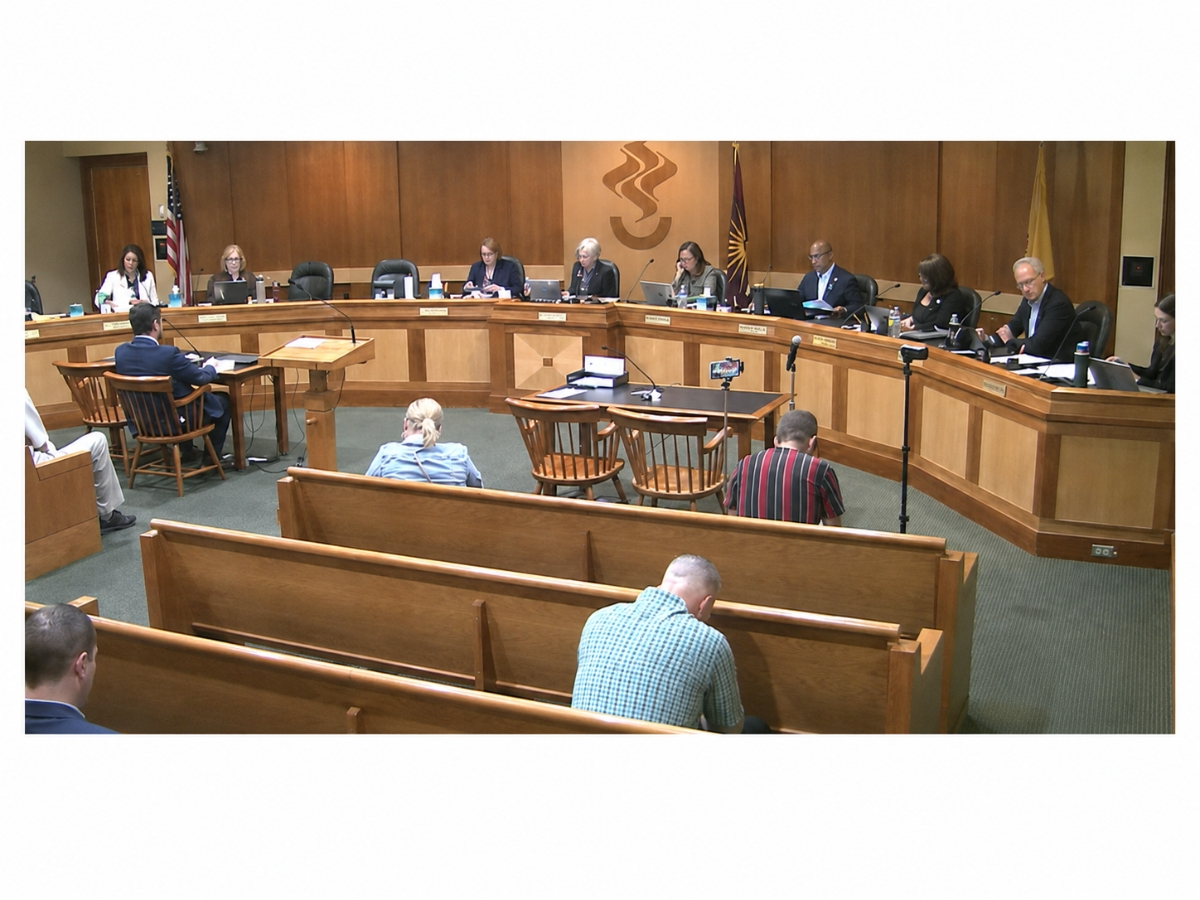
SUMMIT, NJ — Summit now has a ban on AI data centers in place, following approval by the Common Council at its Tuesday meeting, though much of the discussion around the ordinance focused on whether it goes far enough to prevent future development.
The ordinance was adopted by the council and is aimed at keeping large artificial intelligence computing facilities from being built in the city, including on major vacant properties like the former Bristol Myers Squibb campus.
At the core of the rule is how the city defines what an AI data center is. The ordinance uses a combination of factors, including what the facility is primarily used for, the type of technology involved, and how much it draws on local utilities.
Find out what's happening in Summitfor free with the latest updates from Patch.
One of the key triggers is power use. Any facility that hits 20 megawatts or more—or has a significant impact on municipal water use—would be classified as an AI data center and would not be allowed in town.
City Land Use Manager Augusto Delmaso said the goal was to draw a clear line so the city isn’t left guessing when applications come in. He also noted Summit doesn’t really have the land or infrastructure needed for large-scale data center projects anyway.
Find out what's happening in Summitfor free with the latest updates from Patch.
During the meeting, many residents, along with one council member, said they were concerned the 20-megawatt threshold may not go far enough to prevent smaller projects that could still have a significant impact.
John Hung, a Summit resident who works in AI infrastructure, said newer cooling systems could make the water limits less meaningful in practice.
“Because the fluid is sealed inside a closed loop, the facility consumes zero municipal water,” Hung said. “They can only rely on high-powered external radiator fans to do that. So a developer can technically build a 19-megawatt zero water facility that is perfectly legal under your ordinance, but the 24/7 low frequency humming and noise of these fans will be in our backyards.”
Residents also pointed out that 20 megawatts is enough electricity to power about 15,000 homes.
Aaron Cohen, who lives near the former BMS site, said he could see a situation where a large property gets broken up into smaller facilities.
“These would be each technically compliant, collectively catastrophic,” Cohen said.
Delia Hamlet, a resident and planning board vice chair, said neighbors are already familiar with noise from equipment at the site.
“The question is simple: Do we really believe 19-megawatt data would be quiet, but a 20-megawatt data center would be not? Of course not,” Hamlet said. “If the intent is a true ban, then say that. Ban the use.”
Councilman Jamel Boyer raised similar concerns during the meeting, saying the ordinance may not fully address the growing number of smaller, modular data centers being built in other places.
“The threshold is set at exactly the top of the category that is growing the fastest, and we would be banning the rare giant and leaving the door open for the common kind,” Boyer said.
Other council members supported moving forward, saying waiting could leave Summit open to development proposals while other towns are already seeing similar projects move ahead.
“We cannot allow perfection to be the enemy of the good,” Councilmember Chantal Landman said. “We can and we will improve upon this ordinance.”
The ordinance passed by majority vote, with Boyer casting the lone dissent. City officials said the language may still be revisited as the policy develops over time.
Get more local news delivered straight to your inbox. Sign up for free Patch newsletters and alerts.