Neighbor News
Calls For New Jersey Residents To Pay Reparations Is Both Misguided And Vague
Too many unanswered questions remain before reaparations, especially from the Union New Jersey, can even be seriously discussed.

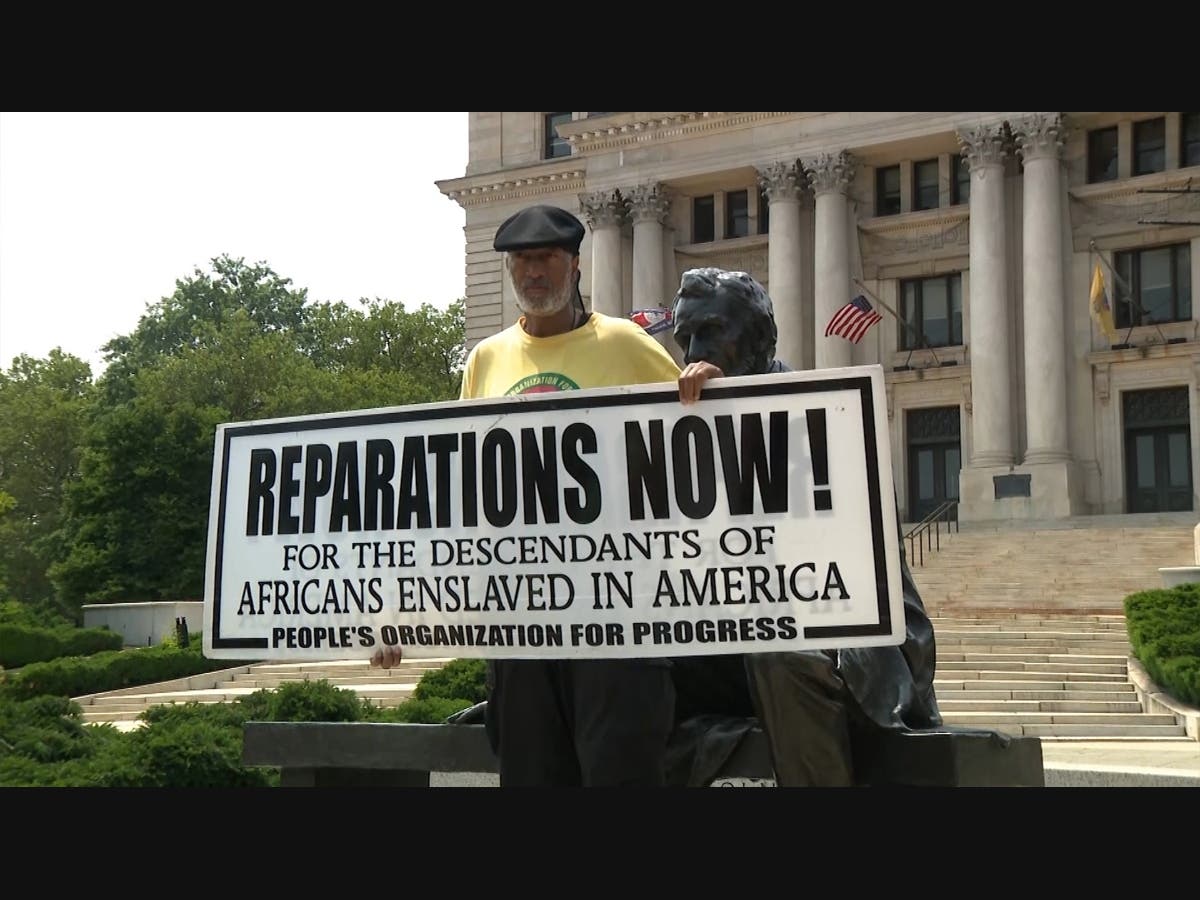
In a recent letter to the Leader, the board of Social Justice Matters, Inc. uses Juneteenth to champion the New Jersey Reparations Council’s agenda and legislation A1665/S2838. They cite New Jersey’s share of Northern enslaved people in the 1830s and point to the Council’s 244-page report demanding “repair” for a claimed $642,800 racial wealth gap through policy changes and wealth transfers.
I’ll leave ethicists to debate the fairness of coercing one generation that committed no wrong—and unrelated to those who ever did—to compensate people against whom no wrong was committed. Rather, I propose a simpler question: Who would be the payors and payees? Would a white person whose ancestor never owned slaves and even died wearing Union blue be exempt? Or would the Reparations Council simply decree that whiteness itself is sufficient culpability?
The problem is that reparations require neat racial bookkeeping at a time when America has become anything but neat. Since Loving v. Virginia in 1967, interracial and interethnic relationships have become commonplace. Today, roughly one-quarter of Americans in a relationship or marriage have a partner of a different race or ethnicity, while an estimated 11 to 15 million American children have mixed-race parentage. As many as five million of them have a black parent. In a nation where racial lines grow blurrier with each passing decade, reparations advocates rarely explain who qualifies, who pays, and who collects. Does a half-white new Jerseyan like Halsey pay…himself?
Find out what's happening in Westfieldfor free with the latest updates from Patch.
And who pays? The report simply demands that “New Jersey” pay hundreds of billions of dollars in reparations — $178,000 to each black person or $642,800 to each black family — without clearly explaining how such payments would be funded or where Hispanics, Indians, Asians, Middle Easterners, recent African immigrants, and other nonwhite residents fit into this racial accounting.
Nor does it offer a workable definition of “white” in a state where race and ethnicity so often overlap. Such nebulous yet essential questions reveal the deeper problem: morality aside, the sheer complexity, subjectivity, and administrative arbitrariness of any reparations program make it untenable on its face.
Find out what's happening in Westfieldfor free with the latest updates from Patch.
As if national reparations were not already burdened by enough moral, legal, and practical difficulties, targeting New Jerseyans is especially strange. During the Civil War, New Jersey sent more than 88,000 citizens to fight for the Union, not the Slave-Holding Confederacy. More than 6,000 died in service to the cause—mostly boys and young men. Adjusted for population, that would be the equivalent of nearly 90,000 New Jerseyans dying today, a figure larger than the entire number of male high-school seniors in the state. One would think that a state sacrificing the flower of its youth upon the altar of emancipation would constitute a rather substantial atonement.
Nor is slavery’s history nearly as simple as modern activists often suggest. From time immemorial, people of every color enslaved people of every color whenever they possessed the power to do so. From 1530 to 1780, North African Barbary corsairs enslaved some 1.25 million Europeans. Boston University Historians John Thornton and Linda Heywood estimate that 90 percent of Africans shipped to the New World were first captured by other Africans. As Harvard’s Henry Louis Gates (of Obama "beer summit" fame) grudgingly admitted, “The sad truth is that without complex business partnerships between African elites and European traders and commercial agents, the slave trade to the New World would have been impossible.”
Gates further estimates that of the 20 million Africans shipped west into bondage, some 330,000, 1.7 percent, arrived in North America. If historical complicity is the standard, why is New Jersey the target rather than the successor states of African slave-trading kingdoms—Congo, Angola, Nigeria, Senegal, Benin, and others—or even Brazil, where roughly 45 percent of enslaved Africans brought to the Americas landed?
**And I will not even get into what the Arab states should owe the millions whose ancestors were shipped east rather than west by North African slavers...who often castrated the males, so you can throw a genocide onto that as well. That's an entire other chapter in slavery's history never taught to Western students.**
No matter, says Social Justice Matters, Inc. In the 1830s New Jersey held “more than two-thirds of all enslaved Black people in the North.” But two-thirds of what? Notice the familiar rhetorical move: percentages instead of raw numbers. This is intentional, of course, as “Two-thirds of all Northern slaves” sounds far more damning than 2,200—the actual number still held in bondage in New Jersey in the 1830s. And I say “still” because that figure had fallen from roughly 12,400 in 1800, a decline of more than 82 percent. Slavery remained technically legal, but the institution was rapidly withering. By Juneteenth 1865, the Garden State could count exactly eighteen remaining elderly slaves. That figure puts our state’s wartime sacrifice into perspective. For each of New Jersey’s remaining black slaves freed at the end of the Civil War, some 350 white New Jerseyans gave their lives in the struggle that ended their bondage.
Was the United States, and to a lesser extent New Jersey, guilty of participating in slavery? Absolutely. Did slavery create disadvantages that lingered for generations? No doubt. But each year those injustices recede farther into the rear-view mirror. And today's New Jersey bears little resemblance to the Antebellum state. Millions of current New Jersey residents descend from families who arrived decades after Appomattox, often penniless and facing discrimination themselves. Indeed, one-in-four New Jerseyans today are recent immigrants. It’s difficult to see how they bear moral or financial liability for a long-abolished institution.
Reparations discussions are not merely misguided; they distract from challenges far more relevant to minority advancement today. The Reparations Council draws a “direct line” from slavery to modern disparities. Some of that legacy undoubtedly mattered. But Jews, Asians, Indians, and other minorities could also draw a direct line from persecution, discrimination, exclusion, and even genocide to present circumstances if they so choose. Instead, they moved forward—and many now rank among America’s most successful demographic groups. How is that possible?
The answer may lie in the massive sociological elephant in the room that activists largely ignore.
Among Asian-Americans, only about one in six births occurs outside marriage, and among Indian-Americans and practicing Jews, the figure is lower still. And for generations, roughly three-quarters of black children were born to married parents. In 1965—one hundred years after emancipation—the out-of-wedlock birth rate remained steady, below 25 percent. But today that number is a catastrophic Seventy-two percent.
That dramatic change occurred not between slavery and the end of Jim Crow, but within living memory. Something more proximate is at work. And it is having a far more immediate and enervating impact on minority progress than the lingering effect of poll taxes or segregated lunch counters. Consider that nearly 40 percent of black single-mother households live in poverty today, compared with only about 7 percent of black married-couple families. More telling even, thirty percent of white single-mother households live in poverty as well, suggesting pigment may not be the prime culprit of economic distress.
Entire volumes have documented the connection between family structure and life outcomes. And yet, nowhere in the Council’s 244-page report is out-of-control fatherlessness even addressed. You can demand more and more bandages all you want, but if you neglect to suture the wound itself, you’re going to keep bleeding.
So what should those who sincerely care about uplifting the downtrodden of any hue be promoting? Institutions ranging from Brookings to the Heritage Foundation have identified a remarkably consistent formula for avoiding long-term poverty, regardless of race:
- Finish high school.
- Get a job and keep it.
- Do not commit crimes.
- Avoid drugs and alcohol.
- Most important, do not have children out of wedlock.
No doubt the legacy of slavery and the very real bigotry that followed weighed heavily on black progress for generations. But as other historically persecuted groups have demonstrated, family stability, education, and personal responsibility remain the surest safeguards against poverty. But for activist groups like Social Justice Matters, Inc., there is little profit, prestige, or political leverage in telling people hard truths. Thus they will continue to do harm to the very people they claim to represent.