Politics & Government
NYC Ballot Proposals 2026: What All 5 Questions Mean For Voters
From outdoor dining and bike lanes to construction permits, here's what voting Yes or No would mean on Nov. 3.


NEW YORK CITY— Voters will decide five ballot proposals in the Nov. 3 general election, weighing changes to outdoor dining permits, city contracting, street safety projects, construction approvals and the City’s rainy day fund.
The proposals would change the New York City Charter, the legal framework that sets the rules for how City government operates.
The charter defines the powers and responsibilities of the mayor, City Council and municipal agencies, and establishes procedures for decisions involving public services, spending and city property.
Find out what's happening in Brooklynfor free with the latest updates from Patch.
Amending it can alter how City agencies approve projects, award contracts and manage public funds.
Voters can approve or reject the proposed changes through ballot questions.
Find out what's happening in Brooklynfor free with the latest updates from Patch.
Mayor Zohran Mamdani’s Commission on Government Efficiency developed the measures after holding public hearings and gathering feedback from New Yorkers.
Here’s what each question would mean for New Yorkers:
Question 1: Streamline Process for Using Public Space for Uses like Ramps,Benches, and Cafes
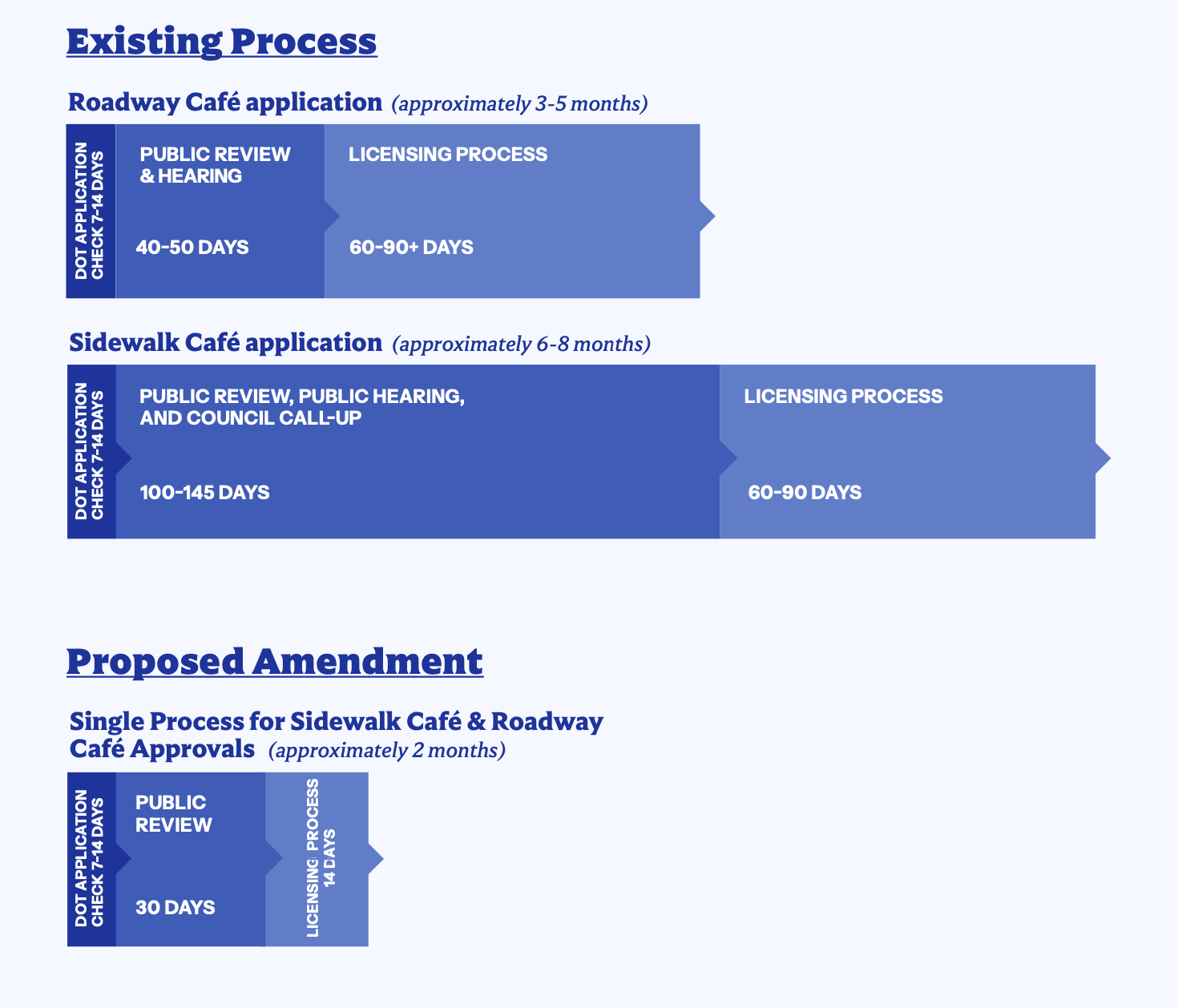
Currently, businesses seeking permission to install sidewalk cafes or roadway dining areas can face lengthy applications, public hearings and fees. The process can take up to eight months, according to the commission.
The proposal would make public hearings optional in certain cases, eliminate required newspaper advertisements before hearings and remove the City Council’s veto power over sidewalk cafe applications while preserving opportunities for community input.
The commission estimates the changes could reduce the outdoor dining approval process to about two months and save businesses up to $1,800 in fees.
The measure follows years of changes to the City’s outdoor dining rules.
During the COVID-19 pandemic, thousands of restaurants expanded outdoor seating under temporarily relaxed regulations.
The City later reinstated restrictions, and the City Council subsequently approved changes allowing year-round outdoor dining.
Restaurant owners and several civic and government reform groups support the proposal.
Common Cause New York opposes it, arguing the changes could reduce meaningful opportunities for residents and elected officials to influence decisions about public space.
Voting Yes: Support the proposed changes. Approve faster permits for outdoor dining, benches, ramps and other uses of public space by eliminating mandatory public hearings and City Council veto power over sidewalk cafe applications.
Voting No: Leave the existing rules in place.
Question 2: Reform the Contracting Process to Improve Small Business and Nonprofit Opportunities to Work with the City
The City relies on outside contractors to provide services ranging from early childhood education and after-school programs to construction and shelter operations. But complicated paperwork and approval requirements can delay contracts and payments.
The proposal would authorize the Procurement Policy Board, the body responsible for establishing City contracting rules, to simplify the questionnaire businesses and nonprofits must complete to qualify for contracts. It would also require the board to meet at least once every three months.
The measure would allow the Mayor to delegate approval authority for certain contracts worth more than $5 million to senior City agency officials. It would also replace some required public hearings with written public comment periods.
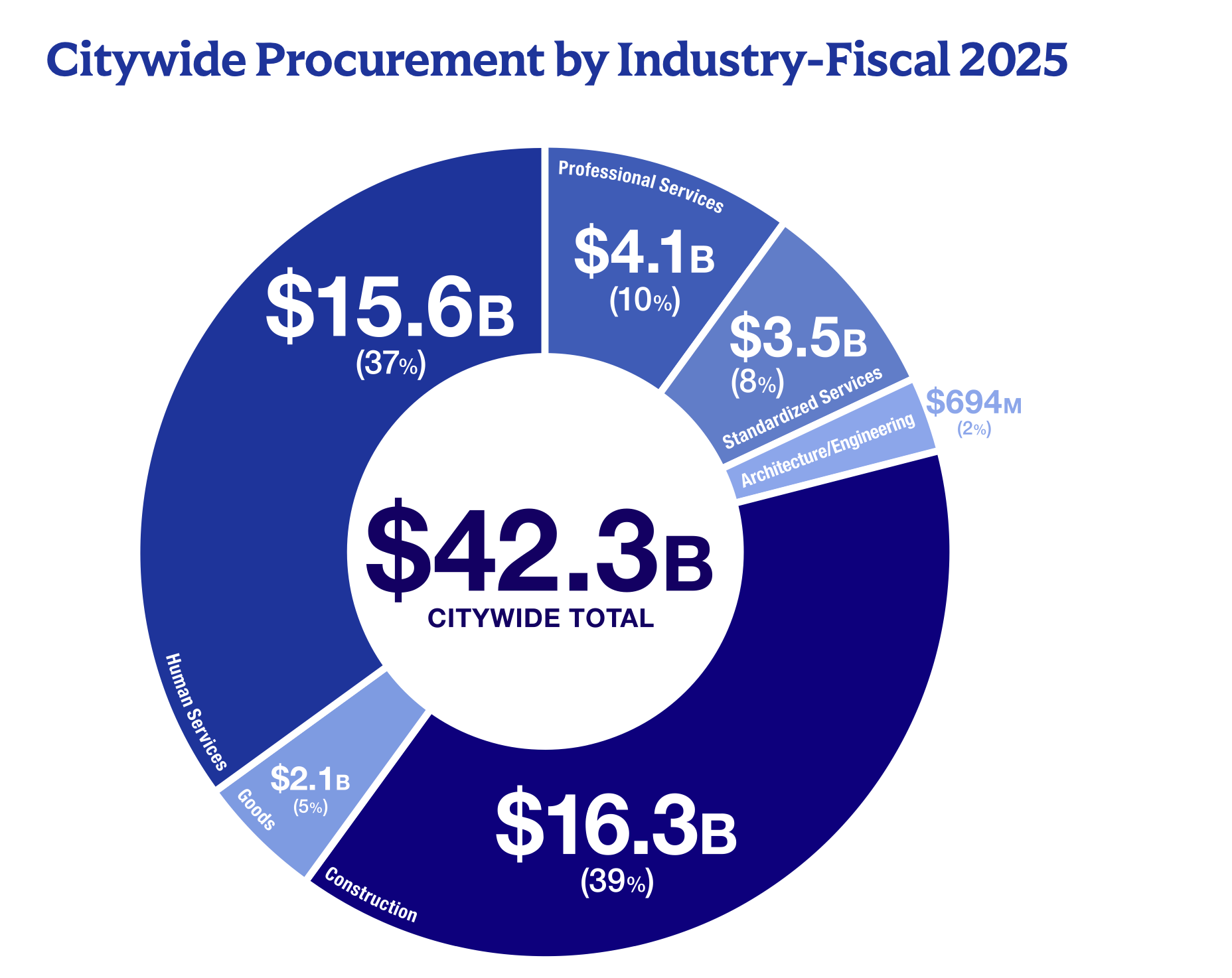
The commission estimates the changes could reduce the time needed to award contracts by 12 percent.
The proposal has support from government reform organizations, including Common Cause New York, Reinvent Albany and Citizens Union.
Some nonprofits and City officials have questioned whether the changes would substantially reduce the delays that affect organizations providing public services.
Voting Yes: Support the proposed changes. Simplify contractor paperwork, require quarterly meetingsof the Procurement Policy Board and allow certain contract approvals to be delegated to senior Cityofficials.
Voting No: Leave the existing contracting rules and approval requirements in place.
Question 3: Speed up Street Safety Projects, Office Leasing, and Activation of City Land
The third proposal would streamline approvals for street safety projects, including bike lanes, bus lanes, pedestrian islands and other roadway improvements. It would also change procedures for disposing of certain City-owned properties and leasing office space for municipal workers.
Under current rules, the Department of Transportation must coordinate with multiple City agencies on major transportation projects. The process can involve several layers of internal review, along with consultation with the New York Police Department, the Fire Department and local community boards.
The City Charter classifies certain projects affecting 1,000 feet of roadway or four consecutive blocks as major transportation projects.
Bike lanes qualify regardless of their length.
The proposal would eliminate some internal agency reviews and change the process for advancing projects intended to improve street safety. The commission estimates the changes could shorten project timelines by 33 percent.
Faster approvals could affect how quickly the City installs protected bike lanes, creates dedicated bus lanes and redesigns intersections where crashes threaten pedestrians, cyclists and drivers.
The proposal also covers City-owned land and office leases. It would shift some reviews of smaller property dispositions from the City Council to the City Planning Commission and remove certain hearing and approval requirements for office leases.
The combination has drawn criticism from some civic groups, including Reinvent Albany, which questioned why the City bundled property and leasing changes with street safety reforms. The organization later supported the overall proposal.
Groups opposed to bike lanes have also raised concerns about reduced oversight.
Voting Yes: Support the proposed changes. Speed up approvals for bike lanes, bus lanes and other street safety projects while streamlining procedures for selling or leasing certain City-owned properties and office space.
Voting No: Leave the existing project review, property disposition and office leasing requirements in place.
Question 4: Simplify Building Permitting
The proposed hub would bring about 40 construction permits from 18 offices and agencies into one place. Individual agencies would retain their existing responsibilities, but applicants would have a centralized point of entry for the permitting process.
Currently, developers and property owners may need approvals from numerous City agencies before they can begin construction. A project can require applicants to navigate separate procedures, applications and reviews.
The measure would also transfer responsibility for waterfront construction permits from the Department of Small Business Services to the Department of Buildings, consolidating oversight of waterfront development under one agency.
Additionally, more senior Department of Buildings officials could approve certificates of occupancy, which confirm that buildings meet applicable requirements for occupancy. Current rules limit the number of officials authorized to issue those approvals in each borough.
The commission says the changes would make the permitting process easier to navigate. The centralized hub would have until 2030 to become operational.
Voting Yes: Support the proposed changes. Create a centralized construction permitting hub, transfer waterfront permitting to the Department of Buildings and allow additional officials to approve certificates of occupancy.
Voting No: Leave the existing permitting system and approval responsibilities in place.
Question 5: Require Contributions to the Rainy Day Fund to Ensure Sufficient Budgetary Reserves
The fifth proposal would establish a target for the City’s rainy day fund, which provides money for unexpected financial pressures, including economic downturns and other emergencies.
New York City created the fund after voters approved a charter amendment in 2019. It currently holds about $2 billion, but the City has no binding target for its size and no requirement to make regular deposits.
The proposal would set a target equal to 12 percent of the City’s tax revenue from the previous year. Based on the figures cited during the charter revision process, that would amount to roughly $10 billion.
The measure would direct the mayor’s budget office and the city comptroller to develop a formula for determining deposits. The formula would need to be updated at least every four years, and the mayor would have to certify an immediate fiscal need to authorize withdrawals exceeding 50 percent of the fund.
However, the proposal would not require the City to make deposits whenever the fund falls below its target.
That provision has divided government watchdogs. The Citizens Budget Commission and Reinvent Albany oppose the proposal, arguing the target and deposit rules do not provide sufficient protection for the City’s finances. Both organizations have called for stronger requirements.
Citizens Union and Common Cause New York support the measure, although they acknowledge it does not go as far as some fiscal experts recommend.
New York City Comptroller Mark Levine has advocated a target equal to 16 percent of tax revenue, above the proposal’s 12 percent benchmark.
Voting Yes: Support the proposed changes. Set a target for the City’s rainy day fund at 12 percent of annual tax revenue and establish a formula for calculating deposits and rules for large withdrawals.
Voting No: Leave the existing rainy day fund rules unchanged.
Get more local news delivered straight to your inbox. Sign up for free Patch newsletters and alerts.