Politics & Government
East Harlem Waterfront Project Scaled Back
Here's what residents are losing after years of waiting.


HARLEM, NY— For years, East Harlem residents were told a long-neglected stretch of waterfront would receive the same level of investment seen elsewhere along Manhattan's shoreline.
Now, city officials say the money will not stretch far enough.
The New York City Economic Development Corp. and Parks Department plan to move forward with sections of the East River Esplanade and Bobby Wagner Walk reconstruction while postponing full rebuilding of other portions because of rising marine construction costs.
Find out what's happening in Harlemfor free with the latest updates from Patch.
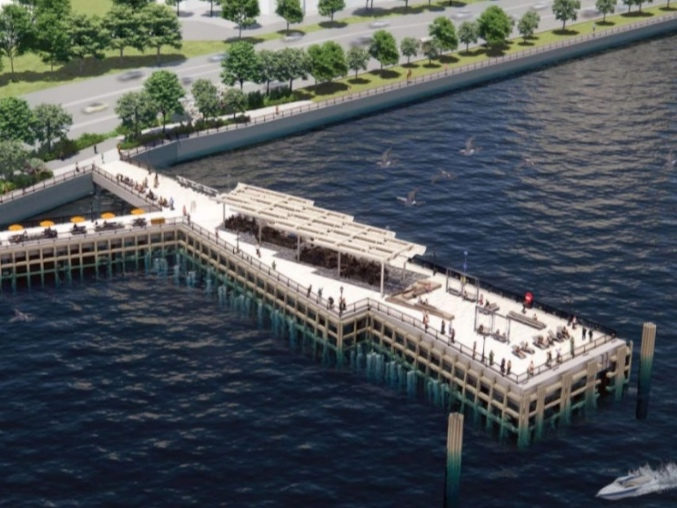
The revised plan preserves full reconstruction between East 105th and East 107th streets, including Pier 107, and between East 117th and East 124th streets.
Crews also will repair sinkholes between East 94th and East 105th streets instead of carrying out the full reconstruction originally proposed.
Find out what's happening in Harlemfor free with the latest updates from Patch.
"The City is committed to delivering new and improved greenways to the East Harlem community," NYCEDC wrote in a statement. "We are working with our partners to begin construction as quickly as possible to deliver the first tranche of work using the funding available and explore options to bridge the funding gap."
Officials said approximately $294 million remains allocated for the Bobby Wagner Walk project.
They attributed the shortfall to increased marine construction costs and difficult construction conditions along the waterfront.
What Will Residents Still Be Missing?
Pier 107, envisioned as a gathering space for recreation and events, still has no planned restroom.
The City said installing one directly on the waterfront would require raising the structure above flood elevations and extending sanitary sewer lines beneath the FDR Drive, making construction prohibitively expensive.
Instead, officials said they are exploring restrooms near entrances to the esplanade.
A restroom is already planned near East 127th Street as part of the Manhattan Greenway Harlem River project, and an existing restroom operates in Carl Schurz Park near East 96th Street.
When the City announced funding in 2021, residents expected reconstruction from East 94th Street through East 124th Street, along with improvements farther north.
After completing design work, officials determined construction costs had outpaced available funding.
Under the revised plan:
Fully reconstructed
- East 105th to East 107th streets
- Pier 107
- East 117th to East 124th streets
- Overlooks at East 119th and East 120th streets
Receiving repairs instead of reconstruction
- East 94th to East 105th streets, where crews will repair sinkholes and stabilize existing infrastructure
Still under evaluation
- East 107th to East 114th streets
City officials said an updated inspection found deteriorating conditions between East 107th and East 114th streets and that engineers are still developing cost estimates for that segment.
Why Did Costs Increase?
The narrow waterfront leaves little room for construction equipment.
Contractors must work from barges and temporary in-water platforms while protecting traffic on the FDR Drive above.
Portions of the highway also require additional structural support during construction.
The City also said flood resiliency regulations require new structures to be built higher than previous elevations, increasing complexity and cost.
Nicholas Alexander, a CIVITAS board member and co-chair of its Land Use Committee, said civic organizations learned about the reduced scope only last week.
"The city parks and EDC has known about it for over a year now," Alexander said.
He said neighborhood organizations were never invited to discuss the funding gap before officials revised the project.
Why Do Advocates Say This Is Bigger Than One Project?
Alexander said the issue extends beyond construction budgets.
Alexander pointed to waterfront investments across New York City while arguing East Harlem repeatedly receives fewer improvements.
"The Brooklyn waterfront is beautiful. The Lower East Side has had billions of dollars of investment. The West Side waterfront has been beautiful for many decades," Alexander said. "It just seems like East Harlem consistently gets left behind."
Sharon Pope-Marshall, executive director of CIVITAS, described the latest decision as part of a longer history.
"It continues a historical disenfranchisement of East Harlem," Pope-Marshall said. "We're angry about it."
She said community organizations spent nearly two decades advocating for the waterfront improvements.
How Does This Compare To Other NYC Waterfront Projects?
East Harlem's waterfront is not the only complex marine construction project the City has tackled.
Several comparable projects also required years of planning, construction over water and work alongside major roadways.
The difference is that those projects largely moved forward without reducing their scope after funding was secured.
East Midtown Greenway (East 53rd to East 60th streets)
The East Midtown Greenway offers one of the closest comparisons.
Like Bobby Wagner Walk, the project required building a new esplanade over the East River next to the FDR Drive while maintaining traffic and navigating complex marine construction.
Construction began in late 2019, and the greenway opened in December 2023.
The project added a new waterfront promenade, separate bike path, pedestrian bridge and nearly 3 acres of public open space.
Pope-Marshall and Alexander point to that timeline as a benchmark.
Bobby Wagner Walk received funding in 2021.
Five years later, construction has not begun, and officials have reduced the project's scope because of rising costs.
Lower Manhattan East River Waterfront Esplanade
The City also spent years transforming the Lower Manhattan waterfront into a continuous public promenade with landscaped walkways, recreational spaces, seating and fishing piers.
The first section opened in 2011, with additional phases completed over the following several years.
East Side Coastal Resiliency Project
Following Hurricane Sandy, the City launched the multibillion-dollar East Side Coastal Resiliency project, rebuilding approximately 2.4 miles of waterfront while raising park elevations to protect neighborhoods from future flooding.
Although the project faced engineering challenges and rising costs, construction continued with additional funding rather than scaling back the overall vision.
What Happens Next?
The City expects design work for the Bobby Wagner Walk project to finish this fall before beginning procurement and construction.
Officials estimate construction will take about three years.
Meanwhile, work continues on several nearby projects, including:
- East River Esplanade reconstruction between East 114th and East 117th streets.
- The 7-acre Manhattan Greenway Harlem River park between East 125th and East 132nd streets, expected to open in 2029.
- Ongoing sinkhole repairs along the southern esplanade.
The City said it will continue seeking funding to complete the remaining unfunded sections.
Alexander said residents are looking for more than another promise.
"I think it's twofold," he said. "[We] need to get the word out. Somebody from the city needs to take responsibility and actively manage this over the finish line."
Get more local news delivered straight to your inbox. Sign up for free Patch newsletters and alerts.