Community Corner
Helping Long Island's Struggling Veterans
The Levittown Historical Society hosted a speaker from the Veterans Health Alliance of Long Island.




We have all seen the movies-- the soldier's plane finally touches down and he jumps into the arms of his teary-eyed loved ones who have been waiting to take him home.
Unfortunately that isn't the scene awaiting all soldiers, not even in Levittown, the town built for veterans.
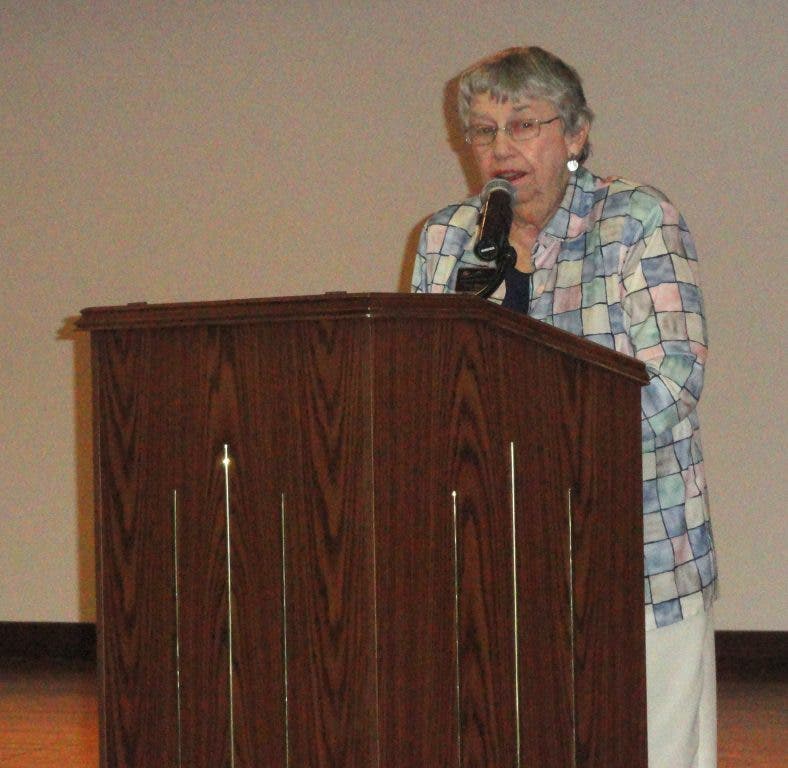
That was John Javis' message Monday night, as he stood before the Levittown Historical Society at the Levittown Public Library explaining just how important his job is.
Find out what's happening in Levittownfor free with the latest updates from Patch.
Javis is the director of special projects for the Veterans Health Alliance of Long Island, a project of the Mental Health Association of Nassau County (MHA), and the facts he shared would make any patriot cringe.
Javis explained how common Post-Traumatic Stress Disorder, Traumatic Brain Injury, alcohol abuse and chronic pain are among veterans and why many do not get the help they need.
Find out what's happening in Levittownfor free with the latest updates from Patch.
"A lot of veterans don't know the benefits and services they are entitled to," Javis said. "We're always out there trying to get the word out."
VHALI hosts stand downs, veterans benefits/job fairs and other events to educate veterans and their families about what is available to them.
Many, however, are reluctant to ask for help.
"Veterans openly admit to not being honest on post-deployment mental health surveys," Javis said. "They just want to get home; they fear being looked down upon by their fellow soldiers. If people don't get help early, things can spiral out of control."
There are more than 152,000 veterans on Long Island, giving it the second highest percentage of veterans in the country after only San Diego. About 5,500 Long Island veterans do not have a permanent place to live and are considered homeless, and 76 percent of homeless veterans have a mental health and/or substance abuse problem, according to the National Coalition for Homeless Veterans.
The risk of suicide is also twice as high for male U.S. veterans as it is for non-veterans, Javis said, and it is estimated that 18 veterans commit suicide daily across the nation.
"It is tragic that some of our veterans are homeless, but we're happy to know some groups are helping as much as they can," Levittown Historical Society President Polly Dwyer said.
As some veteran services are downsized due to today's unfavorable economic situation, VHALI is advocating the protection of these services. They are also providing treatment for mental health issues that were ignored in servicemen in the past. Post Traumatic Stress Disorder, called everything from 'shell shock' to 'battle fatigue', was not diagnosed until 1980.
About 6,000 Long Island residents have served in recent ventures Operation Enduring Freedom, Operation Iraqi Freedom and Operation New Dawn, Javis said, and this generation is becoming homeless more quickly than the Vietnam generation.
Many are coming home to no jobs and some have become homeless in as little as 18 months. Transitional housing is often offered for assistance, but for many this ends up being more than just a transition. "There's a great lack of affordable housing on Long Island, and with the difficulty of finding employment in the bad economy, many get stuck in the transitional phase," Javis said.
The Department of Veterans Affairs launched a five year plan to end veteran homelessness by 2015, however, and the number of homeless veterans has dropped from 195,000 in 2005 to 76,000 in 2011.
The next VHALI outreach event will be at Hicksville's Broadway Mall on May 21.
For more information, visit the VHALI website. To join the Levittown Historical Society, visit their website.
Get more local news delivered straight to your inbox. Sign up for free Patch newsletters and alerts.