Real Estate
NYC Home Values By ZIP: New Data Reveals Divide
Pied-à-terre, a controversial tax proposal, returns to budget talks. Search Patch's NYC Home Value Tracker to explore home price changes.


NEW YORK, NY — City and state officials revived a long-stalled tax on high-value second homes, advancing a pied-à-terre surcharge that would apply to properties valued above $5 million and owned by nonresidents.
Scroll down to search the interactive table below and explore NYC home value changes by zip code.
What Is The Pied-A-Terre Tax Proposal?
The measure, now folded into budget negotiations, would impose an annual charge on one- to three-family homes, condominiums and co-ops where owners maintain a primary residence outside of the City.
Find out what's happening in New York Cityfor free with the latest updates from Patch.
Roughly 13,000 units could be affected and projected at least $500 million in recurring revenue, according to state officials.
Mayor Zohran Mamdani framed the proposal as part of a broader effort to shift the city’s tax base toward high-end property owners who do not live full time in New York.
Find out what's happening in New York Cityfor free with the latest updates from Patch.
Gov. Kathy Hochul supports the measure, which builds on earlier versions introduced in the State Senate more than a decade ago.
“If you can afford a $5 million second home that sits empty most of the year, you can afford to contribute like every other New Yorker,” Hochul said.
Earlier versions were introduced in 2014 and revived again in 2019, but failed amid opposition from the real estate industry and technical disputes over valuation and enforcement.
Analysts report incorporating the measure into the state budget process increases its chances of passage, since lawmakers often negotiate tax provisions in closed-door budget talks rather than bringing them to separate votes.
How Is The Real Estate Market Already Changing Under Tax Pressure?
Dolly Hertz, a luxury real estate broker at Engel & Völkers in New York City, described a market already divided between tiers of demand and pricing pressure across income levels.
She said New York has broadened its real estate transaction taxes, pointing to the long-running “mansion tax” that she said once applied to homes starting around $1 million, but now extends to lower price brackets, including properties near $500,000.
She said the change adds roughly $7,000 to $14,000 in costs for some buyers depending on price tier, and argued that it reaches into what she characterized as the entry level of the City’s housing market.
According to Hertz, the upper end of the market remains active, while lower segments have stalled under broader affordability constraints.
"So what's been driving real estate in New York for the past 12 to 18 months has been this kind of wealthy buyer," she said, warning that the proposal would add new costs to that segment of buyers. "Basically Kathy Hochul will achieve stifling the very demand that's driving the market."
What Does The Data Show About Luxury Vs. Non-Luxury Growth?
Market segmentation further reinforces this divide, according to a Patch analysis of Zillow housing data.
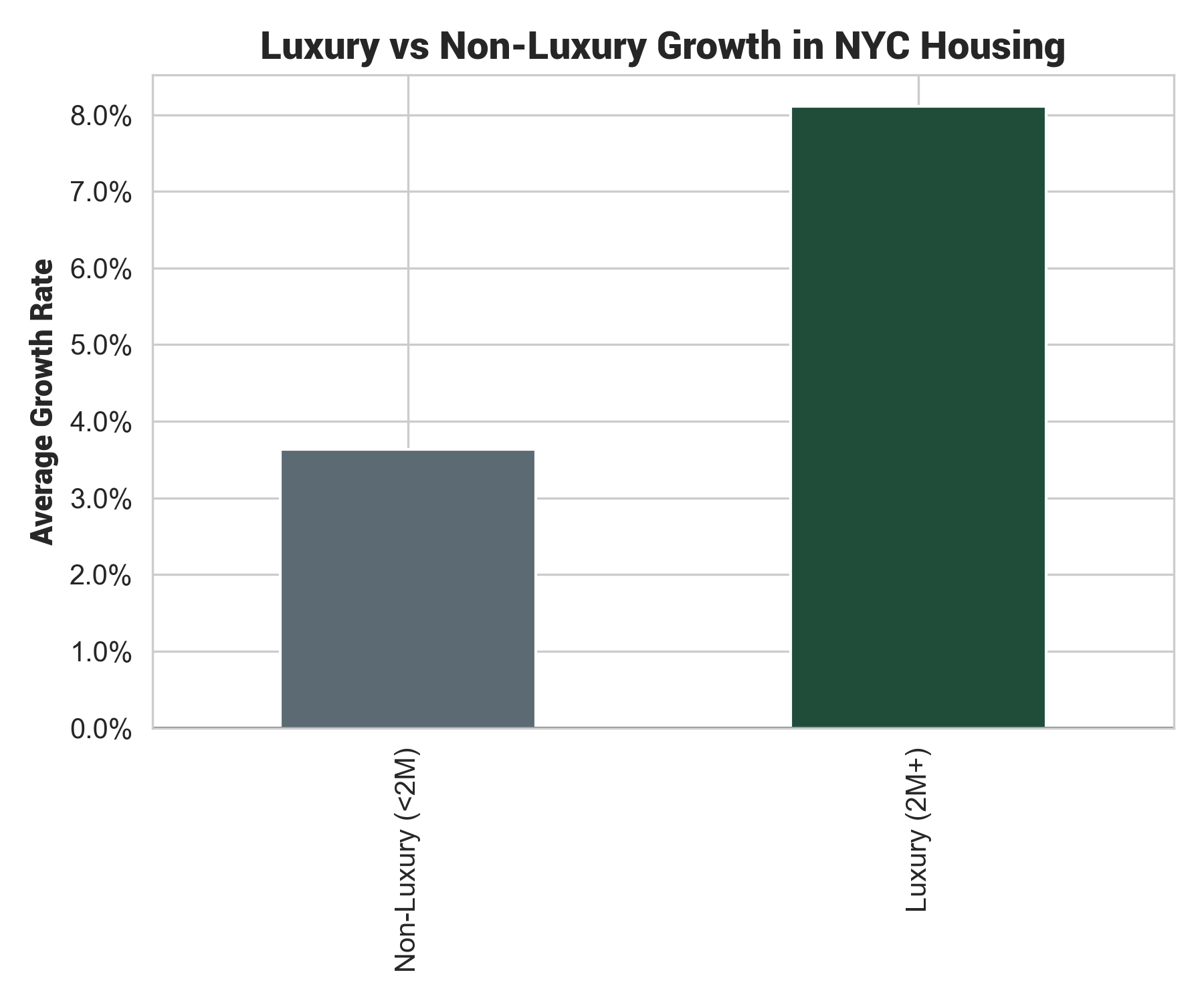
ZIP codes classified as “High-End Markets,” homes above $2 million, showed average growth of 8.11 percent, compared to 3.72 percent in entry-level markets and 3.52 percent in mid-tier markets.
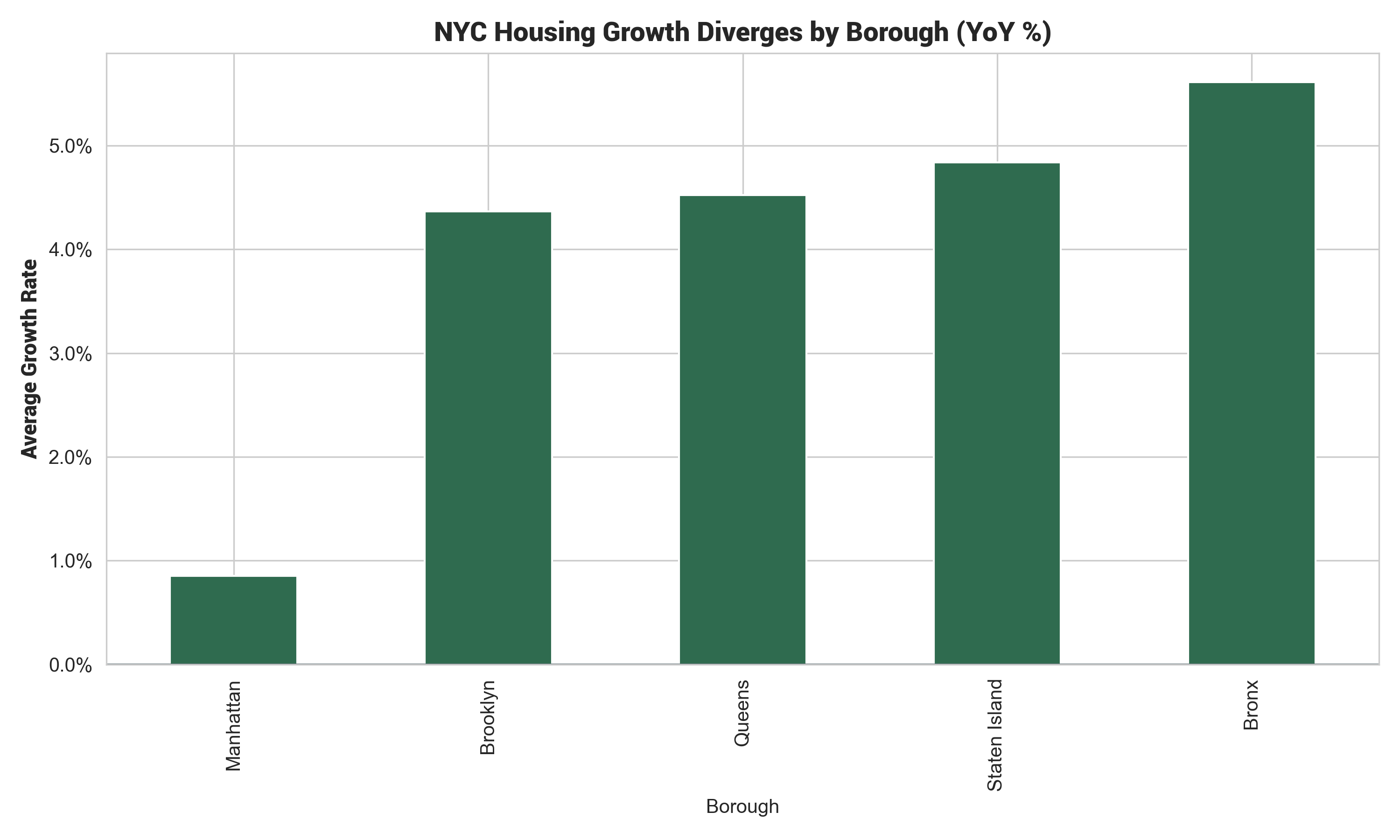
Across New York City, home values increased at a simple average rate of 3.74 percent year-over-year, while the value-weighted growth rate was slightly higher at 3.89 percent, suggesting that appreciation is not driven solely by lower-value segments of the market.
Manhattan significantly lagged at just 0.85 percent average growth, despite containing the city’s highest-value housing stock.
The data suggests Manhattan is functioning less as a growth engine and more as a high-value stabilization zone, with appreciation concentrated in select luxury ZIP codes rather than across the borough broadly.
Hertz said those dynamics can affect buyer behavior at the entry level, where added transaction taxes may further raise upfront costs.
In her view, the combined effect of rising purchase costs and escalating rents can reshape long-term decisions about staying in the city.
What Are Economists Saying About The Policy?
Emily Eisner, acting executive director and chief economist of the Fiscal Policy Institute, said the proposed pied-à-terre tax represents “a significant advancement toward implementing progressive taxation,” arguing that it would generate revenue from wealthy property owners who do not reside in New York City and help support local investments.
However, Eisner noted the legislation alone would not close the budget gap or fully fund Mamdani’s affordability agenda.
“Over the past fifteen years, New York City’s revenue has not grown at the same pace as its economy and the city’s tax code has grown detached from economic circumstances,” she said, adding that policymakers may need broader changes to personal income and corporate taxes to address longer-term fiscal pressures.
The proposal now enters the state budget process, where lawmakers are expected to negotiate final thresholds, exemptions and enforcement mechanisms alongside broader fiscal priorities, including efforts to address a multibillion-dollar budget gap.
Editor's Note: If having trouble accessing or searching the table, click here.
Get more local news delivered straight to your inbox. Sign up for free Patch newsletters and alerts.