Politics & Government
Record Amount Of Outside Money Flooded NYC Elections Last Year
There were more than $83 million in independent expenditures last year, with about $65 million for the mayoral election.

Sept. 1, 2026, 5:02 a.m.
A record amount of outside spending from deep-pocketed donors flooded the 2025 citywide elections, but the windfall wasn’t always successful in getting candidates elected or defeated, a new analysis by the city’s Campaign Finance Board shows.
Find out what's happening in New York Cityfor free with the latest updates from Patch.
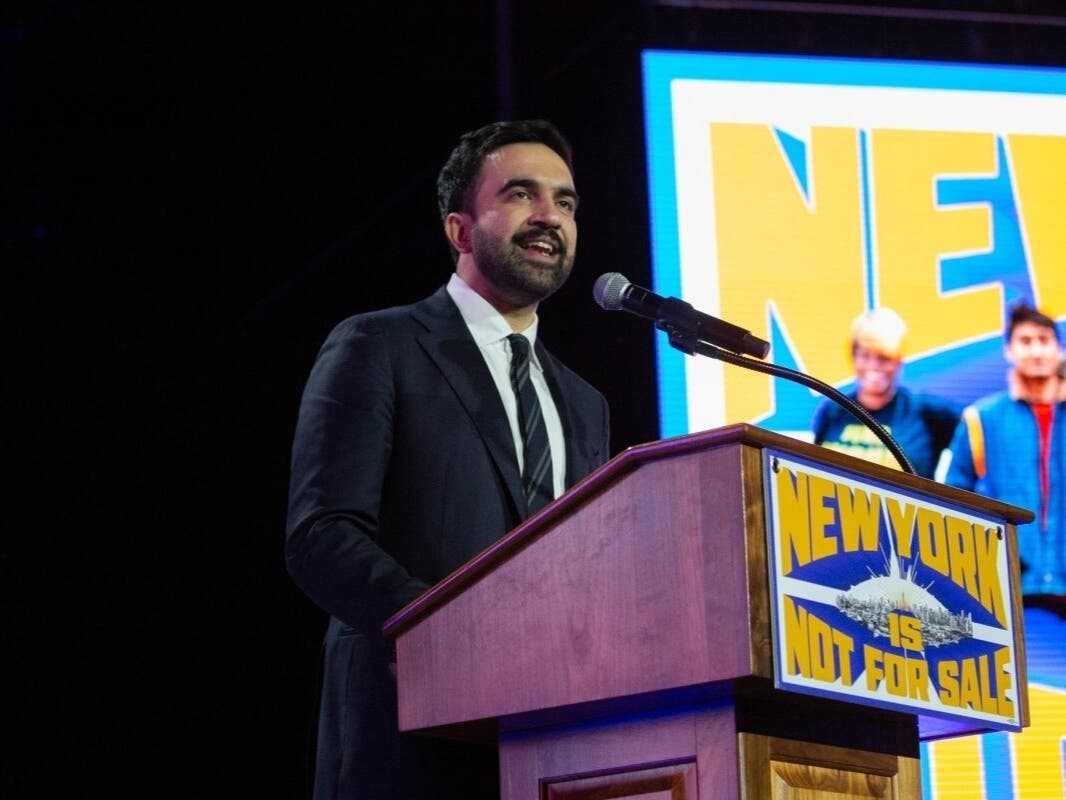
Mayor Zohran Mamdani won two competitive elections despite tens of millions of dollars spent against him, in what turned out to be a historic race in terms of turnout.
Independent spending — money raised and spent ostensibly without coordination from candidate campaigns — also swamped City Council races in historic numbers.
Find out what's happening in New York Cityfor free with the latest updates from Patch.
There were more than $83 million in independent expenditures last year, with about $65 million for the mayoral election, according to the board. Such spending also more than doubled for Council races compared to the 2021 election, from $6.6 million to $15.5 million.
More than 90% of independent spending in the high-profile mayoral race targeted the top two candidates, former Gov. Andrew Cuomo and then-state Assemblymember Mamdani, with Cuomo benefiting from $31 million in support. Mamdani had nearly $22 million spent against his candidacy, the data shows. Both Cuomo and Mamdani participated in the city’s public campaign finance program for the election.
“Independent spending in 2025 broke records and it nearly matched the total amount of public funds that we distributed,” Paul Ryan, the board’s executive director, told The City Reporter in an interview.
“But by and large, New York City’s public financing program is up to the task, and it really made it possible for New Yorkers to continue to drive democracy here, so candidates can run successful campaigns even without the backing of big money,” he added.
The report, set to be released Tuesday and previewed exclusively by The City Reporter, analyzes the nitty-gritty financial details of last year’s election cycle, covering the June primary, November general and special elections.
The independent board manages the city’s public campaign finance program, which matches some donations 8-to-1 with tax dollars and is designed to encourage new candidates to seek office. The agency also enforces rules around campaign funding and audits campaign finances.
The report recommends changing some penalties around independent expenditures, including lifting a $10,000-per-violation cap on fines outlined in the city charter.
“I think the penalties should be proportional to the amount of the violation,” Ryan said, adding that the fine is “trivial” when campaigns are spending upwards of $80 million altogether in an election. “Ten thousand dollars just won’t disincentive illegal behavior. We need to change that.”
Public Dollars Fuel Political Campaigns

Andrew Cuomo mayoral campaign flyers were scattered at an East Harlem bus stop, Oct. 29, 2025. Credit: Ben Fractenberg/THE CITY
The board’s analysis, which is mandated by the city charter, shows almost 83% of all candidates who qualified took part in the public financing program in 2025. That includes every major candidate for mayor and comptroller, the top two competitive races on ballots last year.
Four in five of all candidates said the public funds helped in their decision to run. More than 130 candidates in the matching program raised more than $41 million through some 244,000 contributions, and the board doled out nearly $87 million to their campaigns.
Most donations came from city residents, and more than two-thirds of all contributions came from Brooklyn and Manhattan, according to the data. Campaign finance officials didn’t immediately have an explanation for why those two boroughs led the pack, but said it was potentially related to voter interest and wealth concentration.
The boroughs varied in how much was donated, with Manhattan having the highest average contribution at $199. Staten Island was next at $144, then Queens at $132, Brooklyn at $122 and The Bronx at $108.
Last year’s mayoral race was full of twists and turns. Then-incumbent Mayor Eric Adams ran first as a Democrat before skipping the primary amid his federal corruption case and pivoting to an independent candidacy for the general election, which he quit in September. The crowded Democratic primary field was shaken up by Mamdani, then a little-known state lawmaker from Queens who went on to build grassroots support across the city, and Cuomo, who boasted major institutional support and lots of donations but lost.
Mamdani received the most public matching funds, at $13.1 million, with Cuomo receiving $8 million, according to the data. Board figures show Mamdani’s campaign was powered by a record number of small-dollar donors: more than 54,000 people who gave an average of $75 each.
He also spent the most in the overall mayoral race, at around $16.5 million, while Cuomo was next at $14.2 million. For the general election, where Cuomo ran as an independent, both he and Mamdani each spent more than $10 million, the data shows.
Mamdani Declines City Funds in Re-election Campaign

Thousands of Zohran Mamdani supporters packed the stands at Forest Hills stadium for a mayoral campaign rally, Oct. 26, 2025. Credit: Ben Fractenberg/THE CITY
Mayor Mamdani announced earlier this year that he wouldn’t take part in the city’s matching funds program for his 2029 re-election campaign, anticipating unprecedented outside spending. He said the program was key to his election, but the money his campaign raised through it was dwarfed by outside spending against his candidacy.
“This is a decision we’ve made to look to narrow the gap between the resources that we would be able to raise and spend and those that we know will be marshaled in opposition,” he said at a July press conference.
By not participating in the program, Mamdani faces fewer restrictions on what he can raise, and no cap on how and when he spends leading to the election. Candidates who enroll in the program can’t accept individual donations above $2,500 and are limited in what they can spend while campaigning. The mayor has already raised more than $300,000 through July 11, according to city records.
Ryan of the Campaign Finance Board didn’t directly address the mayor’s decision, but said the board’s “vision for New York City is to have all qualified candidates participate in the public financing program, including the mayor — incumbent, challengers, City Council candidates, you name it.”
The report also outlines some of the agency’s challenges in tracking down who raises what money and how, especially as fundraising practices change. Donations by credit card now account for nearly 90% of all contributions, up from just over 10% 20 years ago, according to the data.
The board is calling for more transparency around campaign intermediaries — or “bundlers” who collect donations on behalf of candidates — and fundraising events. The city’s Campaign Finance Act doesn’t clearly define a “fundraiser” or “house party,” making it difficult for both candidates and the agency to document them.
“Across recent election cycles, independent spending activity has continued to increase,” the report said. “In order to effectively respond, the CFB must ensure its rules and enforcement mechanisms continue to evolve.”
This press release was produced by The City. The views expressed here are the author’s own.