Business & Tech
Iconic Crescent Duck Farm, Last On Long Island, Reopens 19 Months After Being Hit By Avian Flu: 'We're Back'
"This is a huge step." Owner speaks to Patch about joy of rehiring staff, seeing family's legacy live on, as LI's last duck farm is reborn.


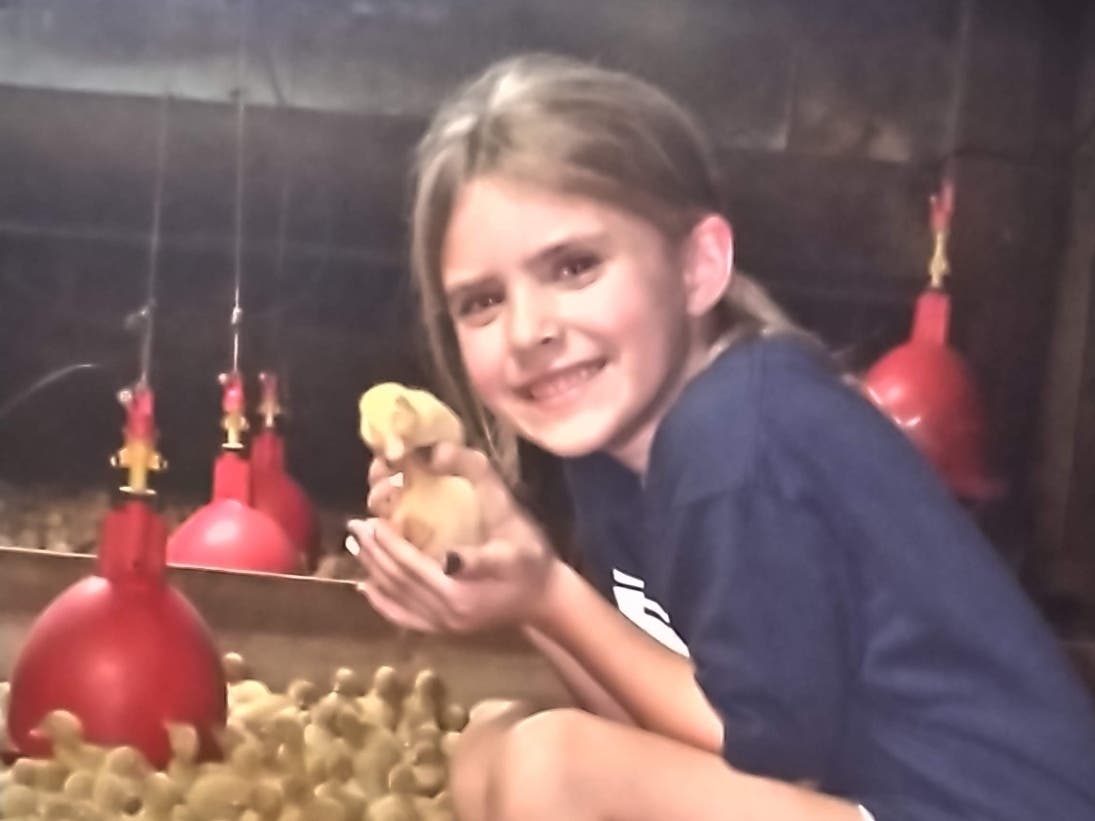
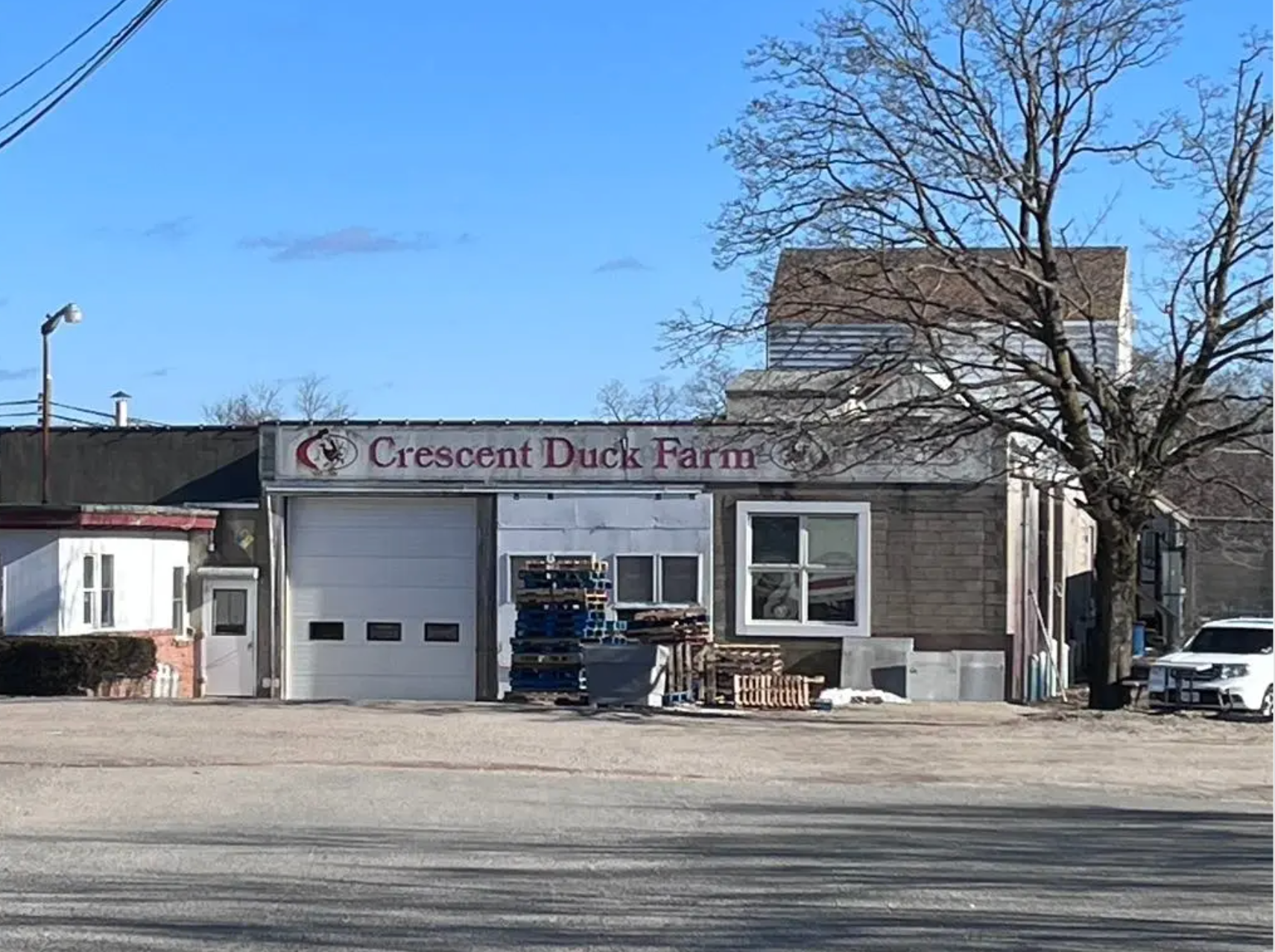
AQUEBOGUE, NY — Nineteen months after it was first shuttered due to avian flu, the owner of the Crescent Duck Farm announced this week that the beloved family business has once again taken flight and reopened its doors in Aquebogue.
In January, 2025 Suffolk County health officials announced the outbreak of avian influenza at the iconic Long Island poultry farm.
The Crescent Duck Farm had to euthanize close to 100,000 ducks, its entire flock, initially leaving the future of the last remaining commercial duck farm on Long Island uncertain.
Find out what's happening in Riverheadfor free with the latest updates from Patch.
But this week, the uplifting story of the farm's resurrection is a story of hope and determination — a testament to one man's fervent wish to keep his family's deeply rooted family legacy alive.
"Three weeks ago was a huge step," owner Doug Corwin told Patch. "When we started our first day of production on August 31, it was a huge step."
Find out what's happening in Riverheadfor free with the latest updates from Patch.
Corwin, a self-professed "very focused, long-term person, very stoical," said from his standpoint, there is still work to be done. "To me, I'm not at the endpoint yet — getting back, calling my customer base " is an important next step, he said.
"But this was a huge, huge step in the process. The diagnosis and the ugliness was a huge step. And then, New York State allowing me to save those old eggs was truly the lifeline," Corwin said. "When we had this happen, most people would have been totally out of business. Without my genetics, which are so unique in my industry, I wouldn't have survived. Them allowing me to save the eggs was a crucial step because if that didn't happen, we wouldn't be talking right now. "
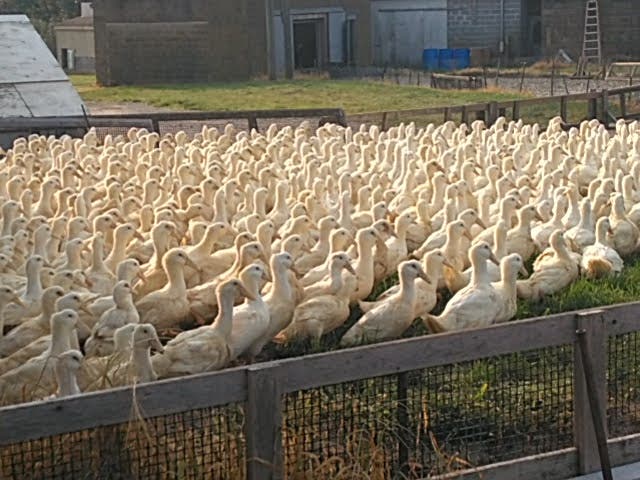
Describing the long road that led to the rebirth of the time-honored business, Corwin said: "Getting out of quarantine was a step, and then we had the long process of quickly getting them old enough — we needed to get a second generation and we need to get a second generation old enough to lay eggs."
Now that that's happened, Corwin said, the human element of his mission took shape: "Now we have the critical mass, I can hire back a huge number of people. I hired 39 people and 37 of them were people I had actually laid off in January of last year. It's all just one big family that came back. That was really heartening."
His voice laced with emotion, Corwin said: "That was one of the hardest things in my life, laying them off."
Over the past months, Corwin said he has been peppered with questions from the public and prominent local officials alike, asking, "How come it's been so long?" But, he said, "I always told them everything I knew, and the steps that we were taking."
Reflecting on a lifetime in his family business, Corwin said: "You get a lot of challenges in an industry like this. We had a county executive, H. Lee Dennison, when I was a little kid, about 6 to 7 years old. He said he wanted a duckless county. Ducks were a huge environmental problem at this point in time in the county. The industry was really close to its peak at that point — and, the industry was having a hard time solving its environmental problems."
But, he said: "We were lucky that my grandfather and father had the fortitude of always trying to plan ahead, always trying to work with the regulators — trying to figure out how to get it done. It cost them a fortune and a lot of sleepless nights — a lot of hours. There are a lot of hours that go on in this place."
He added: "I remember my father missing most of Christmas one year to plow snow so we could get to the ducks. And he'd come home at 7 o'clock at night, and then he'd go back to work for an hour or two at 10 o'clock at night to check on the ducks. These are the sacrifices you had to make, to do this. So I guess you get a certain fortitude, when you're here seven days a week, 365 days a year."
That same dedication has been a hallmark of Corwin's own lifetime at the farm.
"Don't get me wrong," he said. "I might take a couple days off here and there. But all of my vacations over the last 25 years were to places that I had customers. This is a lifestyle."
After the avian flu outbreak, Corwin said there was another path that he could have taken — but his heart and his family's legacy have long remained steadfast: "Would my family have been wealthier if we'd said, 'To heck with this? Why are we doing this?' We could have closed the place up and sold 140 acres. We would have been a lot wealthier. I spent a fortune over 19 months here. I kept 16 people on the payroll, all the way through. And we were fixing up barns and doing this and doing that, raising the couple of ducks that we had."
When asked what fueled his inner fire, what inspired him to keep going during the hardest of times, Corwin spoke with deep conviction.
"I'm 67," he said. "I saw a lot of these farmers go out."
But farming, he said, has long been a part of his very soul and essence.
"I was dragged to National Duck Council meetings when I was 14, 15," he said. "I'd sit in and listen. And even when I got out of Cornell I was put on a lot of the cooperative boards. There was Cornell Cooperate, a research cooperative. I was a young kid. The farmer cooperatives are one farmer, one vote. We might have been the largest farmer, and, because I had the background and Pop had no interest in doing it, he made sure that I did it. So I got to meet a lot of these guys that really, really loved to grow ducks. Most of them went out of business in the middle or late 80s. A few of them stuck it out for a while after."
The decision wasn't easy for those that left the business, Corwin said. "I always remember these 60 and 70 year olds who were saying, 'Wow, we're getting this type of money for our land,' and whatnot. They were happy, but they were crying on the inside — you could see that and you could feel it. And then when you'd see them in town afterward, they were so inspirational, telling me, 'God, I love that you're still growing ducks. I'm so happy for you.'"
Another source of strength, a beacon of hope that guided him forward, Corwin said, was the love of the community has buoyed him during the darkest of recent days.
"To see the community support that we had during our outbreak, the fundraisers," he said.
Local business owners and chefs turned out, planning fundraisers to help the Corwin family — a show of love and solidarity that spoke to the power of love and community.
"The fundraisers, I gave all of that money to the people that I laid off. They needed it more than me," he said. "I wasn't going to go hungry, but a lot of people are living paycheck to paycheck. Just to see all of the support that we had, listening to all my customers saying, 'Yeah, we'll be back. We'll be back. Just keep going. Keep going.' I know the business is coming back. I'm not concerned about that at all."
Corwin said he and his entire family are fully invested in seeing the business rise again. His voice filled with warmth of all outpouring of kindness he has received, he said, "The support of community and my family — we're kind of stuck as duck farmers, I guess. This has been a huge step — we're back."
Looking ahead, Corwin said he plans to continue on his quest to ensure his business keeps moving forward with changing times.
"Change is the nature of it all," he said.
In the coming months, Corwin said, plans include: "Solidifying my business, making sure I'm taking care everything I've got to environmentally — as well as taking a deep breath and taking a look back at what happened. We did a lot of that in the past 19 months."
A top priority, he said, is ensuring the farm remains biosecure — a challenge if a a viral load is present in the community.
"This stuff floats by air. Once you get a large viral load in the community, it's hard. I would have started up earlier. I would probably started up in June or July, if it wasn't for all the dead geese that we had around here in February. There was a huge viral load. My entire focus was that the second generation that I had was secure until we were able to get past that viral load."
He added: "This virus is very heat sensitive. You't don't see much of it in the summertime.But once the migratory birds come down and things are colder, the sunlight doesn't kill all that stuff, and the temperature doesn't kill it off so well. And then it starts getting into the wild community — the geese are the worst but then they can start spreading into local birds. If we can just get past past this first winter. My fingers are crossed, my toes are crossed. We're just hoping we get there."
Keeping duck farming alive is a joy and a mission that means everything to Corwin.
"It's one of the few things that we can be proud of, on Long Island," he said. "I feel a big responsibility personally to try to keep it going. I know we've achieved a lot. I know that we've got something that's really great, that's so respected in the restaurant trade. You wouldn't see chefs put on a fundraiser if they didn't feel like it was something very valuable to them."
Reflecting, Corwin said: "It's iconic — and I hope we can keep it going."
Keeping the family tradition flourishing, Corwin's sons Pierce W. Corwin and Blake Corwin run the business alongside him.
This week, Pierce, live production manager, told Patch: "I’m very grateful that we were able to get this far. And that everyone stood by us from our employees to the larger community. I’m extremely proud that my family found our way back to this point."
From the first, the community has followed the Corwin family's journey back from the outbreak.
In February, 2025, new hope was born as thousands of new eggs hatched.
Pierce added in 2025 that his family was touched and heartened by the outpouring of concern from the community. "It’s amazing how much love and support we have been getting from the local community and the restaurant industry at large," he said.
In 2025, Suffolk County Department of Health officials announced a confirmed detection of Highly Pathogenic Avian Influenza (HPAI), also known as H5N1 or bird flu, at the farm.
The farm's owner, Corwin, had reported signs of illness in his flock early the previous week, and test results from the United States Department of Agriculture (USDA) Animal and Plant Health Inspection Service (APHIS) Veterinary Services Laboratories confirmed the detection of H5N1, county officials said.
The Suffolk County Department of Health Services worked closely with the Suffolk County Office of Emergency Management and the New York State Department of Health, officials said.
The department was also in contact with Corwin, who reported that none of the potentially exposed workers was ill, county officials said.
Staff began interviewing potentially exposed workers and providing H5N1 testing and preventive medications to those at high risk. Staff also counseled Corwin, regarding preventive measures, including hand hygiene and the use of appropriate personal protective equipment, to prevent further exposures to staff, Suffolk County health officials said.
Although workers may have been exposed, H5N1 is not known to be transmitted from human to human at this time and the risk to public health remained low, officials said.
When the outbreak hit, the farm housed more than 100,000 birds; the New York State Department of Agriculture and Markets and the United States Department of Agriculture and Animal and Plant Health Inspection Service were involved in the response, officials said.
Both agencies were on site at the farm advising on depopulating, cleaning, and disinfection activities.
H5N1 avian influenza has been detected in wild birds and poultry in New York since 2022. Since March 2024, the USDA has confirmed that cows on dairy farms in multiple states have tested positive for H5N1 avian influenza. The virus has been found in raw (unpasteurized) milk and secretions from the noses of cows on these farms.
The announcement prompted reminders for commercial and hobby poultry farmers to increase their biosecurity measures to help prevent the spread of the H5N1virus. To learn more about biosecurity measures, click here.
Crescent Duck Farm, according to its website, was founded by Henry Corwin in 1908 in Aquebogue, on land that had been in the Corwin family since the 1600s. The business has remained family-owned and operated, the last bastion of an industry that once defined the East End.
Many across Long Island spoke out about how much the farm means not just to the culinary canvas, but to the community, including Chef Bujoreanu, who spoke to Patch about his reaction to the devastating news and the enduring support for the Corwin family's business.
Get more local news delivered straight to your inbox. Sign up for free Patch newsletters and alerts.