Traffic & Transit
Why There’s An 'Avenue A' Sign On An Uptown Street
There's a vestige of old New York at an Upper East Side public school.


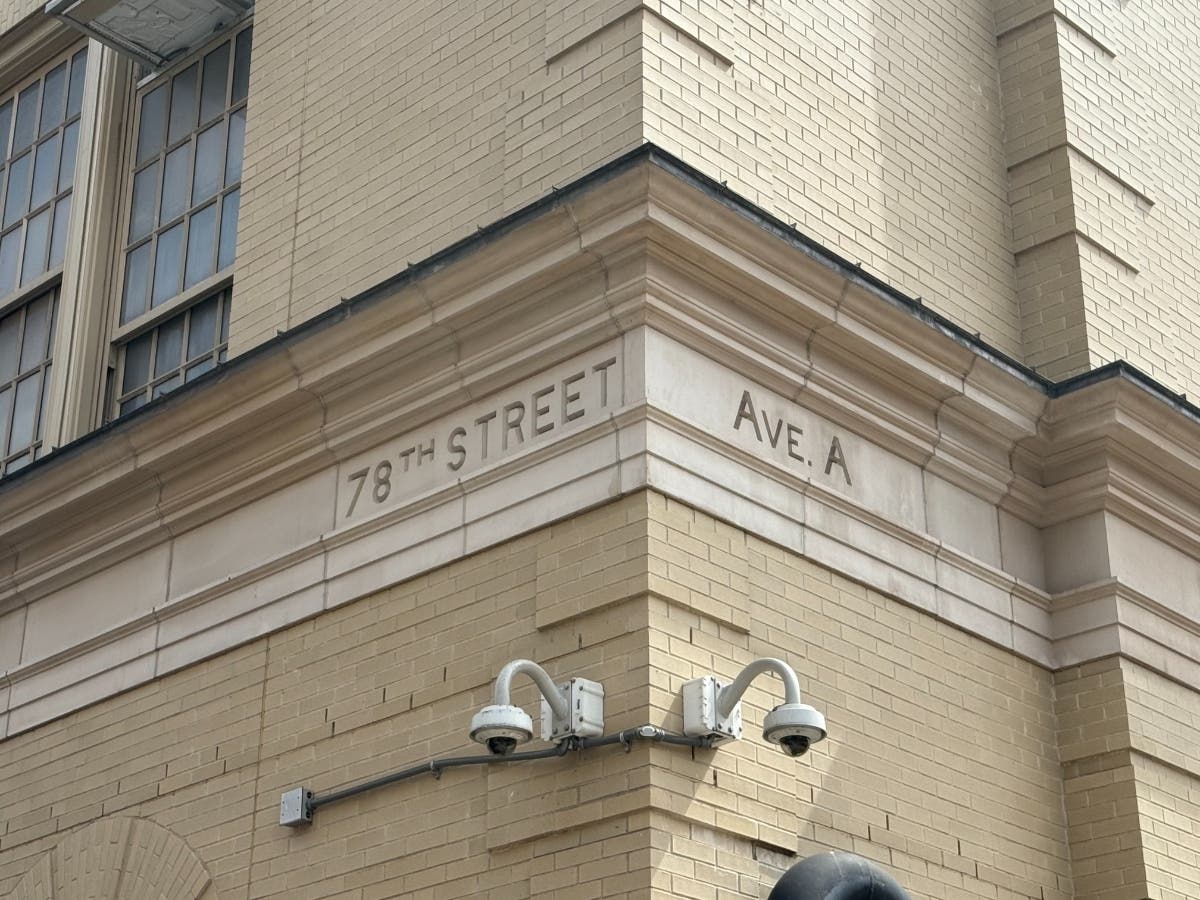
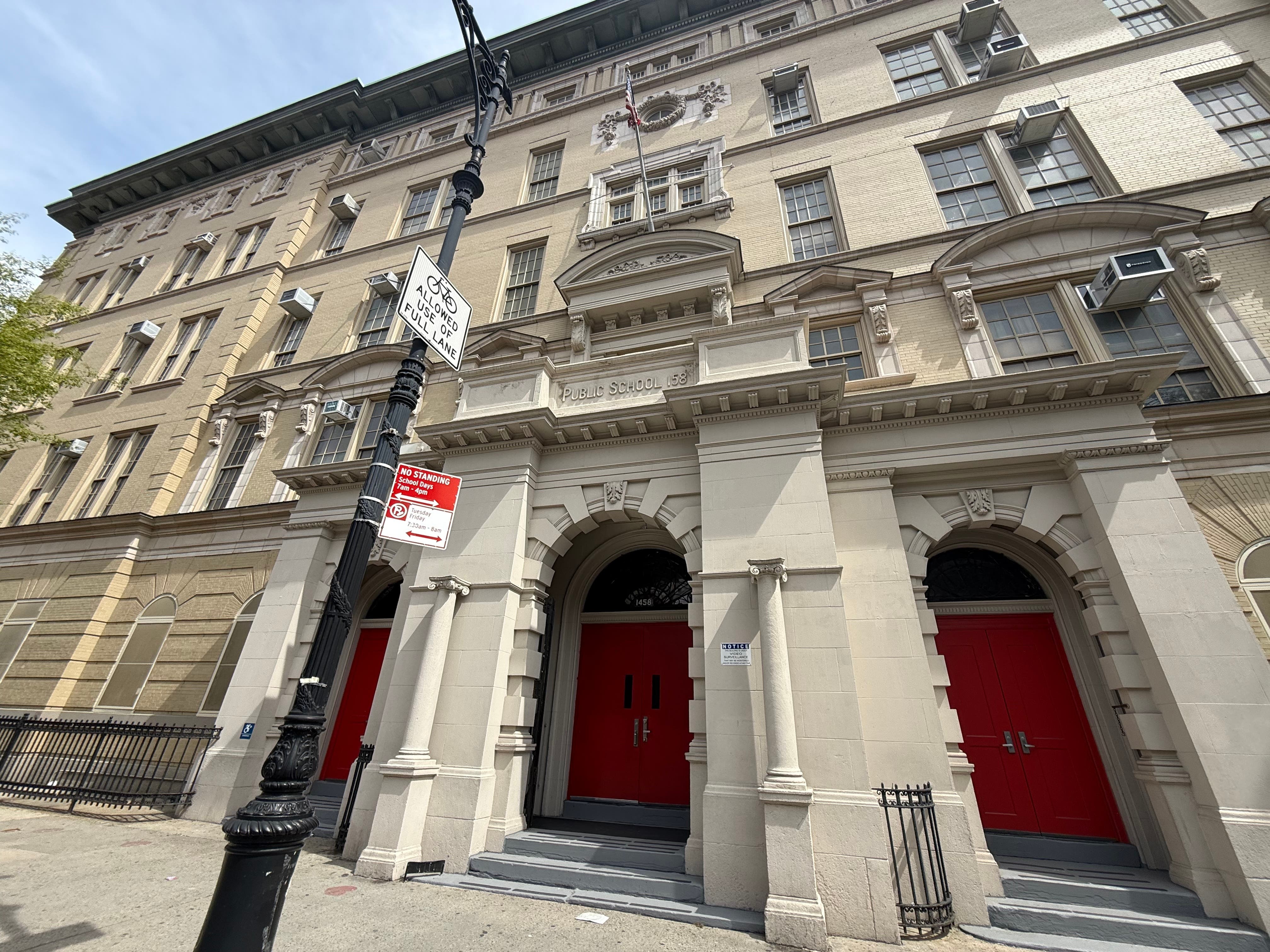
UPPER EAST SIDE, NY — On the limestone Beaux-Arts facade of P.S. 158 on York Avenue between East 77th Street and East 78th Street, there's a trace of old New York hiding in plain sight.
On the limestone blocks of the building below the ledging are two street markers for Avenue A, more than 60 blocks from where Avenue A stops at 14th Street. However, this wasn't always the case: Avenue A used to stretch all the way to 96th Street, historic street maps of Manhattan show.
When the city’s grid was laid out by settlers in 1811, avenues were numbered from First to Twelfth — but Manhattan’s jagged edge along the East River forced planners to improvise, Kevin Draper, a local New York historian who runs New York Historical Tours, told Patch.
Find out what's happening in Upper East Sidefor free with the latest updates from Patch.
Extra land that jutted out downtown led to the creation of Avenues A, B, C and D. When the island juts out again uptown, planners added Avenue A, as it was directly aligned with the downtown section, Draper said.
It wasn't until 1928 that the Avenue from East 60th Street to East 92nd Street was renamed York Avenue to honor a World War I hero most New Yorkers have forgotten, Draper told Patch.
Find out what's happening in Upper East Sidefor free with the latest updates from Patch.
The street is named for Sergeant Alvin York, a Medal of Honor recipient who became one of the most celebrated American soldiers of the war.
"He had received the Medal of Honor during World War I against the Germans at the time, which is kind of ironic, because Yorkville was a very German neighborhood," Draper, an Upper East Sider whose daughters went to PS 158, said.
York, a Tennessee native, tried to avoid war due to his religious beliefs, but was drafted anyway in France, according to the National Museum of the Army. After his unit found themselves in enemy territory, he killed 28 Germans and captured 132 prisoners, according to the museum.
He returned to the States as a national celebrity. A movie called "Sergeant York" was released in 1941, starring Gary Cooper.
However, this wasn't the only reason for the name change, Draper said. At the time, the city was also trying to differentiate its neighborhoods and streets to minimize confusion, lest one confuse the Upper East Side for Alphabet City.
"It wasn't called Yorkville way back then, just like there was no Dumbo, no Soho, no Tribeca," Draper said. "Yorkville would start really going into the 20th century," meaning it's likely the neighborhood's name emerged alongside the change from Avenue A to York Avenue.
Today, Draper believes most people walking along York Avenue have no idea that its name is tied to a specific soldier rather than to New York itself.
"I don't think most New Yorkers know that it's Sergeant York, and I don't think most New Yorkers know how important he was, and what a real American hero he was," Draper said.
With New York City itself named for the Duke of York, he added, it’s easy to assume York Avenue fits the same pattern.
"But no, definitely, definitely not," Draper said.
Have a local mystery to solve? Email Miranda.Levingston@Patch.com.
Get more local news delivered straight to your inbox. Sign up for free Patch newsletters and alerts.