Community Corner
What Life-Saving Question Lung Cancer Patients Don’t Know to Ask
Nearly 9 in 10 Newly Diagnosed Patients Say Clinical Trials Were Never Discussed
This is a paid post contributed by a Patch Community Partner. The views expressed in this post are the author's own, and the information presented has not been verified by Patch.
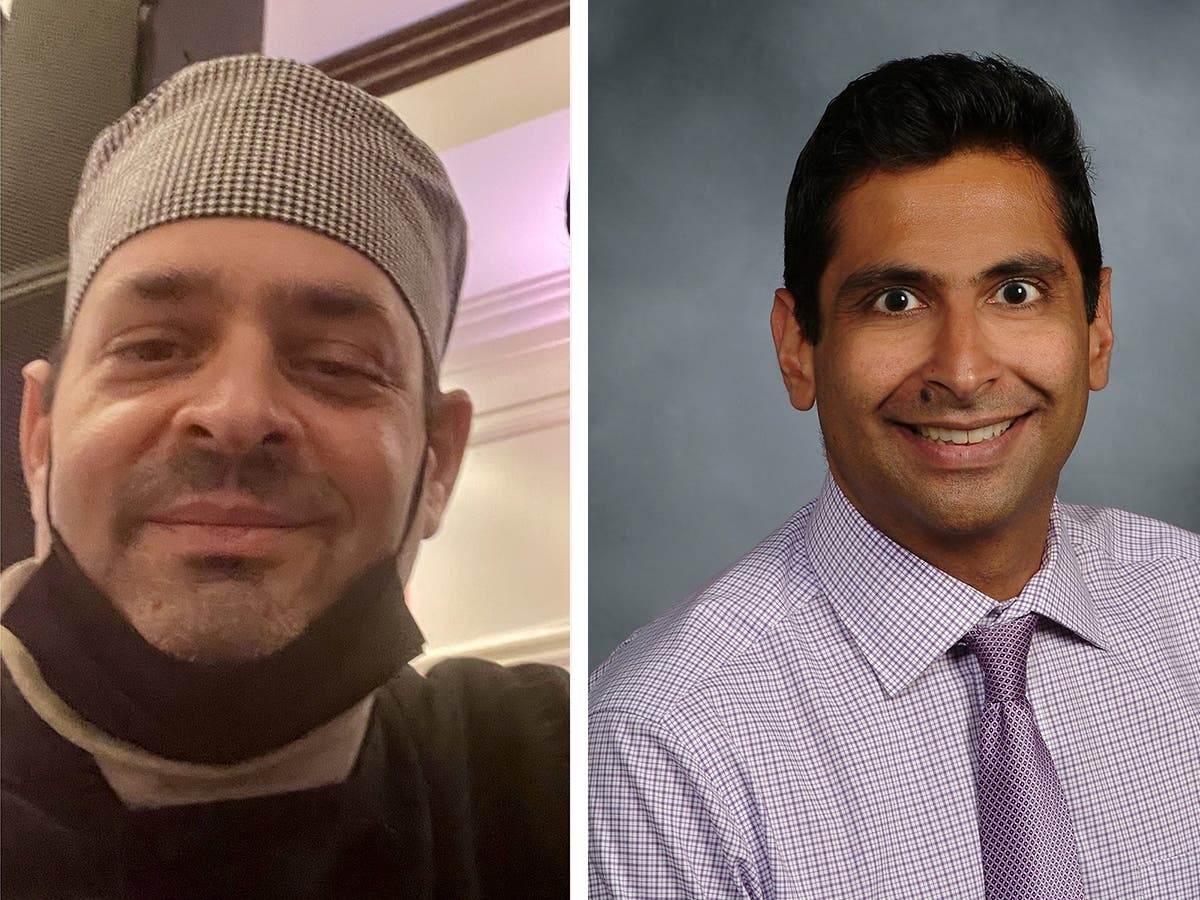
When New York City resident Evan Markowitz was diagnosed with small cell lung cancer, his doctors told him about a clinical trial starting at Weill Cornell Medical Center.
Markowitz says joining the clinical trial before beginning treatment saved his life.
For people diagnosed with small cell lung cancer, asking about clinical trials before treatment begins can mean the difference between having more options and learning about them too late. According to a recent study in the Journal of the National Cancer Institute, only 14% of newly diagnosed patients say they discussed clinical trials with their care teams.
“There's really an explosion of promising new treatments, but also understanding that a lot of these are as part of clinical trials.” says Dr. Ashish Saxena, Section Chief for Thoracic Medical Oncology and an Associate Professor of Clinical Medicine at Weill Cornell Medical College.
Some of those clinical trials will not accept patients who have begun treatment. That’s because any treatment may have already caused the cancer to shrink, change, or develop resistance. That would contaminate the data set in the study. That’s why, on the day they’re diagnosed, it’s important for lung cancer patients to ask if there are clinical trials that would be appropriate for them.
“You're not a guinea pig,” Saxena says. “So it's not a shot in the dark. We have data to support that it will work and maybe be better than what we've got.”
Markowitz became the first patient to enroll in the clinical trial run by Dr. Saxena.
“I will not go away without a fight,” Markowitz says. “Whatever that fight entails.”
For Markowitz, it entailed enrolling in the clinical trial before he started standard treatment. In addition to the standard small cell lung cancer treatment of chemotherapy and immunotherapy drugs, patients in Dr. Saxena’s clinical trial also received radiation.
“So not enough radiation to kill the whole tumor, but hopefully enough to stimulate your immune system. So it would work better with the immunotherapy,” Saxena says.
For Markowitz, it did work. It’s been five years since his diagnosis.
“The fact that I'm metastatic disease-free at this moment from stage four is the miracle,” he says.
“One thing I tell patients is all that what we call standard therapies today, for the most part, started out as a clinical trial,” says Saxena.“And enrolling in a clinical study, you have the opportunity of getting a future treatment, tomorrow's treatment right now.”
Doctor and patient agree that on day one of a lung cancer diagnosis, patients should ask, what are the clinical trial options that might be appropriate for me?
To learn more, go to Lung Cancer Foundation of America lcfamerica.org, clinical trial page, or ClinicalTrials.gov.
This post is an advertorial piece contributed by a Patch Community Partner, a local brand partner. To learn more, click here.