Politics & Government
Questions Surround Constable Partnerships With ICE In Pennsylvania
Several of Pennsylvania's constables said they sought to engage with the program, only to be told their participation had been suspended.

April 6, 2026
David Pierchorowicz, a constable in Pennsylvania’s rural Bradford County, thought he would be the perfect partner for the federal Immigration and Customs Enforcement agency, or ICE, to assist in increased immigration enforcement efforts.
Find out what's happening in Across Pennsylvaniafor free with the latest updates from Patch.
“I feel I have a lot to offer them,” said Pierchorowicz, citing his 22 years of experience in the U.S. Army and other work overseas.
So when he heard that the Trump administration was recruiting local law enforcement to join 287(g) partnerships — which allow state and local officials to help enforce federal immigration law — he signed the paperwork. But after completing the first parts of an online immigration law training course, Pierchorowicz said, he was told the program is on pause for constables. He doesn’t know much more.
Find out what's happening in Across Pennsylvaniafor free with the latest updates from Patch.
“Every time you call, it’s still under investigation,” he said.
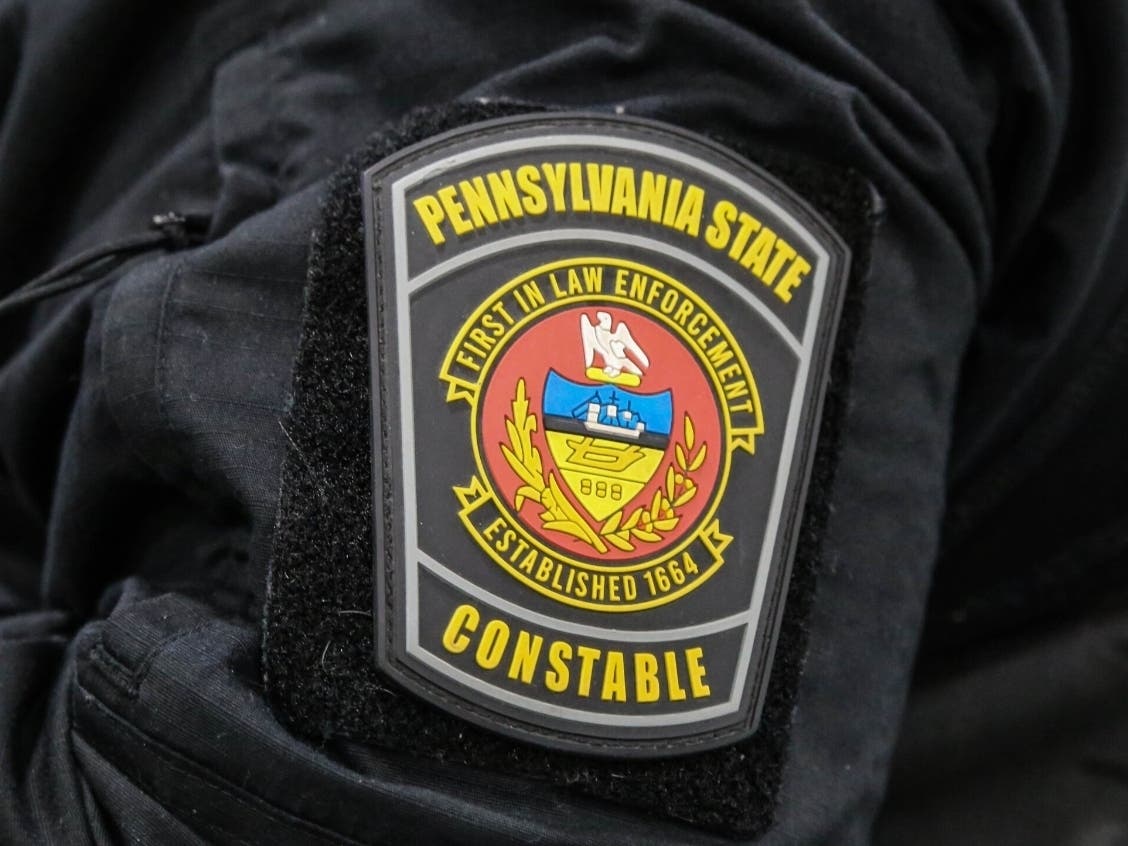
Constables work alongside magistrates and district judges, and have the power to arrest someone with an outstanding warrant, or to serve eviction or other civil papers. They can provide courtroom security or be called to keep order at a polling place.
While none of those duties involve federal immigration enforcement, constables like Pierchorowicz now make up more than one-quarter of the 287(g) signatories in Pennsylvania: Twenty of the 73 law enforcement agencies ICE claims to have enrolled in the state are constables. (The agency claims to have 1,500 partner agencies nationwide.)
Participants in 287(g) programs receive training and can gain access to federal grants and other assistance. But several constables from around the state contacted by WESA said that, like Pierchorowicz, they sought to engage with the program, only to be told their participation had been suspended.
ICE did not respond to requests for comment about the program’s status. But some constables, who are either elected to six-year terms or appointed by a judge to fill a vacancy, say they are frustrated at being sidelined.
One Western Pennsylvania constable likened the situation to the federal Department of Government Efficiency, the Trump administration’s early — and now largely forgotten — attempt to rein in government spending under billionaire Elon Musk.
“This is the new DOGE,” said the constable, who did not wish to be identified because he didn’t want to jeopardize relations with other officials. “Six months from now, it will be ‘287 what?’”
Some critics say they’d rather not wait even that long.
In recent months, communities have wrestled locally and across the nation with how closely their police departments should work with federal immigration authorities. Critics say 287(g) programs jeopardize the relationship between local police and the community, and they point to a litany of cases in which immigration authorities have been accused of disregarding constitutional rights as well as family and community ties. A 287(g) agreement involving Springdale borough police has been at the heart of a dispute in that Allegheny River community regarding the arrest of motorist Randy Cordova Flores in the winter.
Constables have attracted some of that scrutiny as well.
Monroeville Ward 6 Constable Warren Park told WESA that he signed up for the program last summer in hopes of receiving training. He wasn’t able to take the training course and has heard nothing about it since, but he said that hasn’t stopped people from sending “nastygrams” to him since ICE included him in its database of participants.
Park, a retired police officer, said he often signs up to learn skills that could help the community, such as training in CPR or conflict de-escalation.
“I’m not gonna go out kicking doors,” he said. “I just wanna know personally what is going on. … That’s the reason I signed up.”
But enrolling in the program, he said, has been “like trying to get rid of [an] ex-girlfriend’s name as a tattoo off you. I can’t get out of the damn thing. And they got my name posted out there, and I’m doing nothing with it.”
A Change.org petition urging Park to withdraw from the agreement has garnered more than 250 signatures.
“We must urge our ward’s constable to prioritize building trust within our community over enforcing federal immigration laws, which are not within the local purview,” it argues. “It’s time for Monroeville to take a stand with its people and set an example for others.”
The online petition was posted by Monroeville resident Katie Baumgarten, who said she did so to express concern that any local law enforcement agency would take part in the program — and to make clear that Monroeville’s own police department wasn’t one of them.
Baumgarten said she began the petition to “fight misinformation” after a local TV station did a segment on local 287(g) agreements and listed Monroeville by name — even though constables are elected independently, and the community itself is not partnering with ICE.
“People are saying, ‘Be careful about going to Monroeville, because they have this going on there.’ and I am constantly telling people Monroeville doesn’t have [a 287(g) agreement],” Baumgarten said.
Baumgarten said she tried to reach Park but was unable to do so, though she had heard from others that he wasn’t actively participating in the program. Even so, she said, “The fact that someone could enter into such an agreement without having the backing of a larger government, or the oversight of any governing body at all — it’s really concerning.”
Indeed, some critics of 287(g) programs say that constables should have no part in them at all, in part for the very reasons that led to confusion in Monroeville.

A voter registration booth asks attendees at the NRA’s Great American Outdoor Show at the Farm Show complex in Harrisburg to show their support of ICE on Feb. 11, 2026. (Photo by Tim Lambert/Pennsylvania Capital-Star)
While constables have limited police powers and work closely with local courts, they are not part of any state or local police department. They act as independent contractors rather than court employees. They are elected locally, but have jurisdiction across the commonwealth.
And University of Pittsburgh law professor David Harris says a federal order for detention isn’t the kind of thing a constable can enforce.
“At the very least, it’s unclear that a constable would have any authority to make a move, an arrest, a detention of a person under one of those documents that comes from ICE,” he said.
Ari Shapell, a staff attorney at the American Civil Liberties Union of Pennsylvania, said he believes constables lack the authority under both federal and state law to enter into the agreements.
Shapell said federal law allows 287(g) agreements only between the feds and a state, or a political subdivision of a state. Because constables are independent contractors, rather than employees of state or local government, Shapell said, “I don’t think they’re authorized to enter into these agreements.”
The ACLU has sued about the implementation of 287(g) agreements undertaken by other officials, and Shapell believes state law bars constables from entering the agreements as well.
“They have these very narrow, statutorily authorized functions. … They aren’t authorized to — under state law — to do warrantless arrests of people that they suspect are here without legal authorization.”
The constable’s authority to join a 287(g) agreement is another case of confusion about the role played by an office that, as Harris puts it, “goes back to the era of night watchmen, town criers and things like that.”
A 2014 state report that laid out potential reforms to the constabulary noted the office of constable “is among the oldest law enforcement offices still in existence.” Early English settlers brought the institution to Pennsylvania and “the first Constables in the territory called Penn’s Woods began serving in . . . 1664,” according to the report.
But the report also found that the laws governing them needed an update, by deleting references to “anachronistic” duties such as enforcing timber laws, or taking trespassing livestock into custody.
State and local agencies do not seem to have addressed what role, if any, constables should play in immigration enforcement.
The Pennsylvania Commission on Crime and Delinquency operates the Constables’ Education and Training Board, which provides guidance on state standards for constables. But in a statement, the board said it trains and certifies constables “to perform judicial duties” only, rather than other tasks.
The Allegheny County Constables Association, which represents over 100 active and retired constables in Allegheny County and surrounding areas, said it does not offer members guidance about 287(g) programs.
“This is a decision taken by each elected constable,” it said, noting that “one benefit can be the opportunity to engage in training and education that would not be otherwise available.”
That was much of the appeal for Joseph Sneddon, a constable in Somerset County. Having three major interstate highways near his office means the area sees illegal immigration, he said, but he added he signed up mostly “to get the training and education.”
Sneddon said he was frozen out of the ICE online-training system before he could complete it, and he was later notified that the program was “on hold,” because “they wanted to review the program for constables.”
He said his goal as a constable was to help the community, and while there’d been no criticism of his interest in the 287(g) program, if he had a chance to resume his participation, “I would probably have more questions this time.”
Baumgarten, of Monroeville, said she worried that “people don’t know the nuances of this constable stuff: They just see ‘Monroeville’ and may be afraid to call the police” — all because of an office that can be won with a handful of votes, and without many citizens even noticing it on the ballot.
“These small elections matter a lot,” she said, but when it comes to constables, “Giving people this authority in this position is problematic.”
The Pennsylvania Capital-Star, a nonpartisan, nonprofit news site, delivers honest and aggressive coverage of state government, politics and policy. Since launching in February 2019, the Capital-Star has emerged as a go-to source for in-depth original reporting, explainers on complex topics, features that ground policy debates, and progressive commentary on a range of issues. The Capital-Star is part of States Newsroom, a national 501(c)(3) nonprofit supported by grants and a coalition of donors and readers.