Politics & Government
Fitzpatrick Pushes Data Center Legislation As Development Accelerates
Bipartisan push would protect ratepayers, demand transparency, reinforce state and local safeguards, and establish stronger standards.


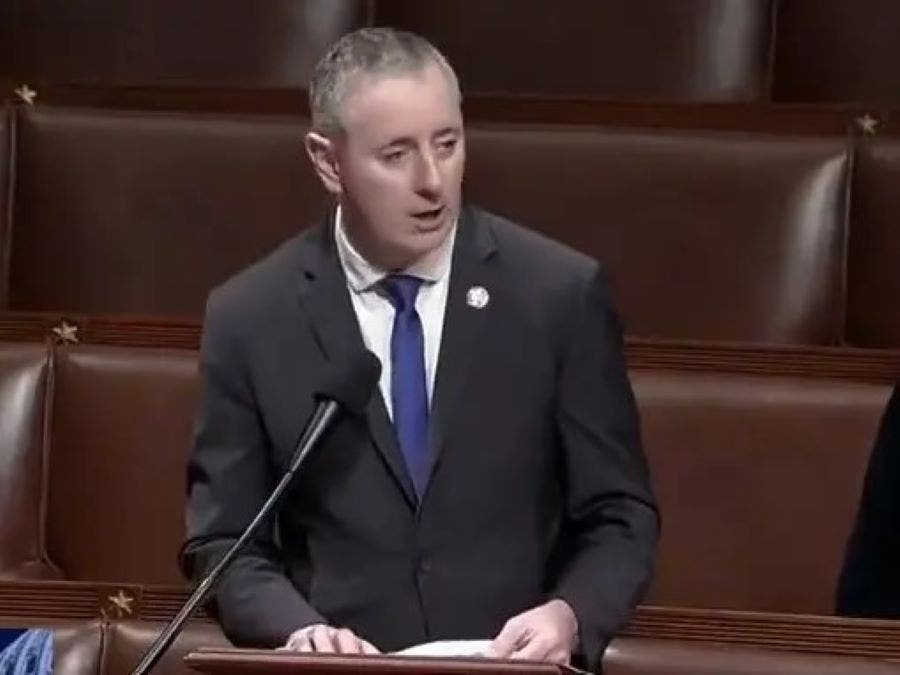
WASHINGTON, D.C. — As data center development accelerates across Pennsylvania and the country, Congressman Brian Fitzpatrick (PA-01) is advancing a bipartisan federal agenda to ensure technological growth strengthens communities rather than leaving them to absorb its costs and consequences.
The effort would protect families and small businesses from infrastructure costs driven by massive new energy demand, strengthen transparency around data centers’ use of energy and water, protect grid reliability, and hold technology companies and developers to clear labor, environmental, safety, and community standards from the outset.
“The question is not whether America should build the infrastructure necessary to lead the next generation of technology. We should,” said Fitzpatrick. “The question is who pays for it, who bears its impact, and whether the communities affected have a meaningful voice in the process. Families should not be forced to subsidize private development through higher utility bills. Communities should not have to guess what a project will mean for their water, air, electric grid, or quality of life. Innovation does not come with a blank check.”
Find out what's happening in Doylestownfor free with the latest updates from Patch.
Across Bucks and Montgomery counties, Fitzpatrick said communities are already grappling with the real-world implications of rapid data center growth — from pressure on local infrastructure and natural resources to rising energy demands and quality-of-life concerns. Fitzpatrick said he is working directly with residents and local leaders to ensure those realities shape the federal response and that Washington reinforces, rather than erodes, local control.
“Our communities and our residents must always come first,” Fitzpatrick said. “That is why we are approaching this from every level: strong local ordinances, strong state protections, and federal legislation that closes the gaps between them. If these projects are going to be built, they must be built responsibly, transparently, and on terms that protect the people who live here.”
Find out what's happening in Doylestownfor free with the latest updates from Patch.
Protecting Ratepayers
Fitzpatrick is advancing the bipartisan Ratepayer Protection Act (H.R. 9340) to ensure the extraordinary infrastructure costs driven by data center development are borne by the large users driving those investments — not shifted onto existing customers.
As data centers create substantial new demand for electricity generation, transmission, and distribution, the legislation would require state public utility commissions to consider strategies ensuring those facilities bear the incremental infrastructure costs required to serve them.
The principle is straightforward: families, seniors, and small businesses should not be asked to subsidize infrastructure built primarily to serve some of the largest companies in the world, said Fitzpatrick.
Demanding Transparency and Accountability
Fitzpatrick is also advancing the bipartisan Data Center Transparency Act (H.R. 6984) to ensure communities, regulators, and policymakers understand the full footprint of data center development before consequential decisions are made.
The legislation would require federal agencies to collect and regularly update information on data center energy consumption, water use and reuse, pollution and environmental impacts, and the effects on local utility systems and household costs.
Communities cannot exercise meaningful control without meaningful information. Residents and local officials deserve the facts before projects move forward — not after the costs and consequences are already being felt, said the Congressman.
Setting the Rules Before Development Begins
Fitzpatrick is also pressing technology leaders and developers to meet clear standards for labor practices, worker safety, environmental protection, energy and water use, and the costs associated with new development.
Working with labor stakeholders, the effort is focused on establishing those expectations at the outset — so projects are built safely and efficiently, workers and communities are protected, and potential impacts on utility costs, air, and water are addressed before problems arise.
Taken together, Fitzpatrick said the actions are part of a broader push to establish a responsible federal framework for data center growth — one that protects ratepayers, demands transparency, establishes consistent standards for developers, and puts communities at the center of decisions that directly affect them.
Building a Framework for Responsible Growth
That framework, he said, rests on three principles: local control, state guardrails, and federal accountability. "Communities should have a decisive voice over what is built and where," he said. "States should establish strong development and environmental safeguards. And Washington should address the challenges that extend beyond municipal boundaries — from grid reliability and interstate energy markets to ratepayer protections and consistent national standards.
“Technological leadership and community protection are not competing objectives,” said Fitzpatrick. “America can lead the world in the technologies of tomorrow while insisting that growth be responsible, transparent, and accountable to the people it affects. Families should not have to surrender their voice, absorb someone else’s costs, or compromise the communities they worked their entire lives to build. Progress should work for the people who live here—not happen to them. That is the standard we will always fight for.”
Republican Brian Fitzpatrick represents Pennsylvania's 1st Congressional District, which includes all of Bucks County and a portion of neighboring Montgomery County.
Get more local news delivered straight to your inbox. Sign up for free Patch newsletters and alerts.