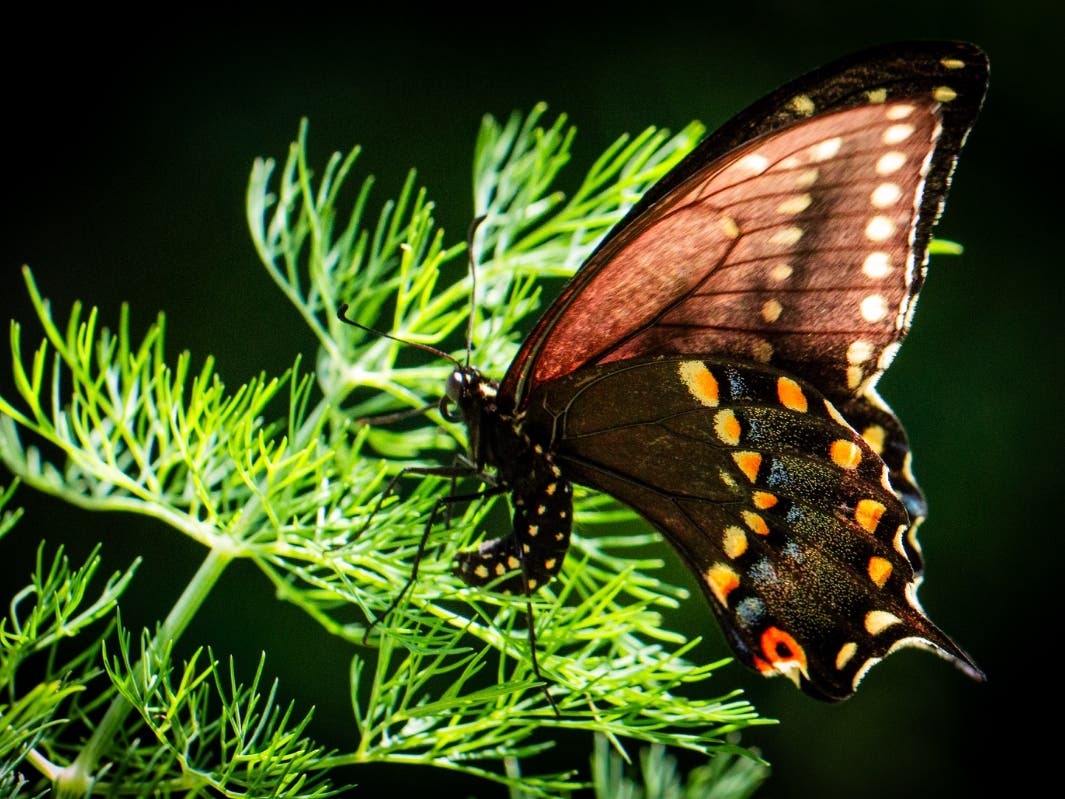


Happy Pollinator Week!
Each year, National Pollinator Week gives us an opportunity to celebrate some of the hardest working creatures on our planet. Pollinators help keep our landscapes colorful, our ecosystems healthy, and our tables full of food. Without them, many of the flowering plants and wildlife we enjoy simply could not exist.
Did you know there are an estimated 350,000 species of pollinating animals worldwide? These include bees, butterflies, moths, beetles, flies, wasps, birds, bats, and even some mammals and reptiles. Together, they help flowering plants reproduce and support healthy ecosystems around the world.
Find out what's happening in Doylestownfor free with the latest updates from Patch.
Here in Bucks County, many pollinators can be found right in our own backyards, both during the day and at night. You may encounter honey bees, bumble bees, carpenter bees, mining bees, sweat bees, butterflies, moths, hover flies, beetles, wasps, hummingbirds, and yes... even mosquitoes! While mosquitoes are best known as biting insects, both male mosquitoes and many female mosquitoes feed on flower nectar and contribute to pollination.
Pennsylvania is home to at least 437 species of bees, and about 70% of those species nest in the ground. Most of our bees are solitary, while others are communal or semi-social. The only truly social bees in our area are honey bees and bumble bees.
Find out what's happening in Doylestownfor free with the latest updates from Patch.
Interestingly, every bumble bee colony begins with a solitary queen. In early spring, an overwintered queen emerges from hibernation and starts the colony on her own. She must forage for nectar and pollen, find a suitable nesting site, and raise her first generation of workers by herself. Once those workers emerge, they take over foraging and caring for the nest, allowing the colony to grow throughout the summer.
Bees are unique because they are the only pollinators that actively collect pollen to feed their young. Different species have evolved fascinating ways to transport it. Depending on the species, pollen may be carried on dense branched hairs called scopa, located on the hind legs or on the underside of the abdomen. Honey bees and bumble bees carry pollen in specialized structures called corbiculae, or pollen baskets, on their hind legs. Some bees, such as yellow-faced bees (Hylaeus), swallow pollen and nectar, carrying it internally in their crop before regurgitating it into brood cells for their offspring.
Other species, known as kleptoparasitic bees, do not collect pollen at all. Instead, they lay their eggs in the nests of other bees. Their larvae consume the pollen provisions collected by the host bee and, in many species, kill the host egg or larva before developing themselves.
Every pollinator has evolved to fill its own ecological role, which is one of the many reasons protecting a diversity of species is important. Each pollinator contributes to a healthy, functioning ecosystem in its own remarkable way.
The more diverse your backyard habitat becomes, the more pollinators and other wildlife you are likely to see. More than 80% of the world's flowering plant species rely on animal pollinators. Without them, many wildflowers would disappear, reducing food sources for wildlife and weakening entire ecosystems. Pollinators help sustain the natural world around us.
Unfortunately, many pollinator populations are declining. Habitat loss, pesticide use, invasive species, diseases, climate change, and reduced floral diversity all contribute to these declines. As natural meadows and flowering habitats disappear, pollinators are left with fewer places to find food, shelter, and nesting sites.
The good news is that we can BEE the change.
Supporting pollinators can begin right outside our doors. Plant a diversity of native flowering plants that bloom from early spring through late fall to provide a continuous source of nectar and pollen.
Leave patches of bare soil for our ground-nesting bees. Leave stems standing through winter and into spring for cavity-nesting bees, such as mason bees and small carpenter bees, because they emerge throughout the growing season, not just in spring or even have a brush pile for stems. And leave the leaves! Many pollinators depend on leaf litter for shelter and overwintering habitat. Bumble bee queens may hibernate in leaf litter throughout the winter.
Reducing or eliminating pesticide use is important to protect our pollinators. Insecticides are especially harmful because they are designed to kill insects, including the beneficial insects. Pollinators can be exposed as they move from flower to flower, and research has shown that combinations of insecticides, fungicides, and herbicides can have synergistic effects, meaning the combined toxicity is greater than each chemical alone. These exposures can impair navigation, reproduction, immune function, and survival.
Mosquito sprays are broad-spectrum insecticides that also target other beneficial insects and our pollinators. Healthy ecosystems depend on these insects, and removing them affects birds, bats, amphibians, reptiles, us, mammals, and other wildlife that rely on them for food.
If mosquitoes are a concern, protect yourself instead of spraying your entire yard. Wear long sleeves and pants when appropriate, use an EPA-registered insect repellent on exposed skin or clothing, eliminate standing water around your home, and avoid spending time outdoors when mosquitoes are most active. These steps help reduce mosquito bites without harming pollinators and other beneficial insects.
When purchasing plants, ask your local nursery if they have been treated with systemic insecticides, such as neonicotinoids. Many ornamental plants are treated before they ever reach the garden center, and these chemicals remain in the pollen and nectar that pollinators depend on long after the plants are purchased.
Small spaces matter. Whether you have a backyard, balcony, patio container, or window box, you can create habitat that supports pollinators. Every flower planted and every patch of habitat restored helps connect a larger network of resources for these important species.
You can also become involved in citizen science by documenting pollinators through programs such as iNaturalist, Bumble Bee Watch, The Great Sunflower Project, or local bee monitoring efforts. Every observation contributes valuable information that helps researchers better understand and conserve pollinator populations.
This Pollinator Week, spend a few minutes watching the flowers around you. Look closely at who is visiting. It could be a bee, or maybe a fly that looks remarkably like a bee, a beautiful emerald gem like a metallic sweat bee, a wasp, a butterfly, beetle, or even a moth. Every observation is an opportunity to learn something new and appreciate the incredible diversity that surrounds us. You may be surprised by what you discover. Curiousity can be the first step toward conservation.
Together, we can help ensure that pollinators continue to thrive for generations to come.
Excellent pollinator resources can be found through the Pollinator Partnership and the Xerces Society for Invertebrate Conservation. These organizations provide science-based information on pollinator conservation, habitat creation, and opportunities to participate in citizen science.
Happy Pollinator Week!
Nicole Zebrowski
Backyard Buzz