Politics & Government
Could A Ban On Gas-Powered Leaf Blowers Be In Newtown's Future?
The borough's EAC opened up a discussion on the issue at this month's borough council agenda meeting.


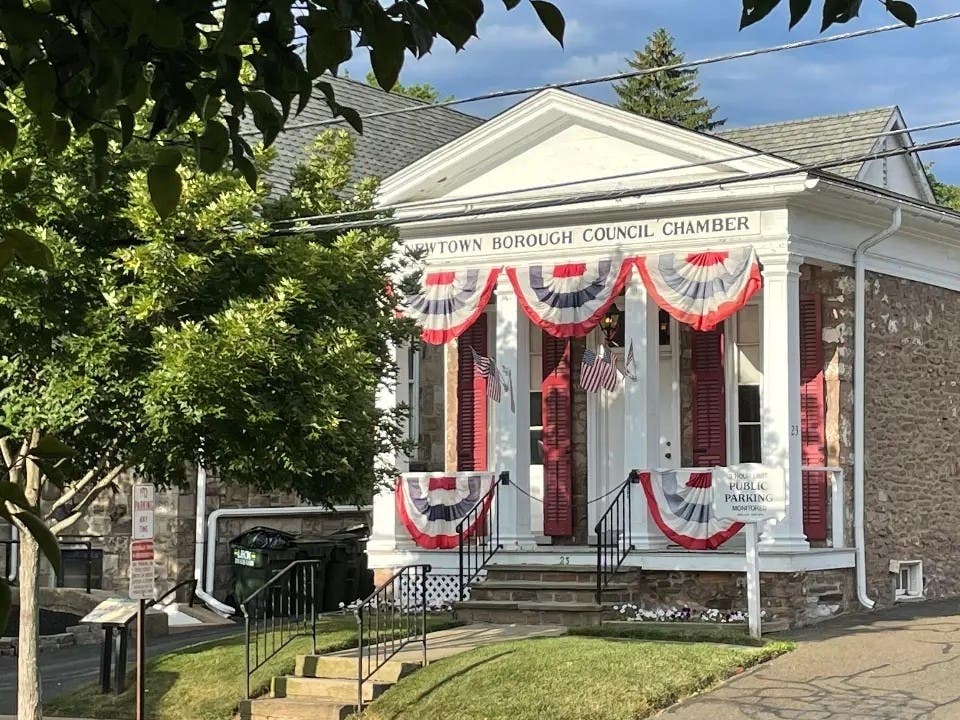
NEWTOWN BOROUGH, PA — Could a ban on gas-powered leaf blowers be in the borough’s future?
It’s too early to say, but at this month’s agenda meeting, the borough’s environmental advisory council (EAC) laid the groundwork, opening what it said was the first of several conversations on the topic.
“For most of the last 50 years these gas-powered leaf blowers have run in American neighborhoods without anyone really examining what they do to the people around them. That has changed in the last decade,” said EAC member Bob Mirales.
Find out what's happening in Newtownfor free with the latest updates from Patch.
Mirales presented to council and the public facts and information it has gathered on the equipment, health impacts, research, what other towns have done, and the legal grounds for regulating their use.
“This isn’t a fringe topic, and it isn’t new,” said Mirales, reporting that more than 200 communities from around the nation have already taken action to ban gas-powered leaf blowers in their communities, while many more are weighing the issue.
Find out what's happening in Newtownfor free with the latest updates from Patch.
Last fall, Lower Merion became the first Pennsylvania municipality to pass a motion phasing out the use of gas-powered leaf blowers.
Narberth Borough, which is about the same size as Newtown, followed suit, voting in favor of a ban this past spring. The ban is also being phased in over a several-year period leading up to a full ban in 2029.
At issue, said Mirales, is the low-frequency sound the engines make while in use. “It’s the kind of sound that travels a long way and passes straight through walls,” he said.
The engines, he said, also emit exhaust fumes carrying harmful CO2 emissions into the air. Running a gas-powered leaf blower for an hour produces the same amount of pollution as driving from here to Florida, according to PennEnvironment, a statewide nonprofit environmental group.
More importantly, Mirales said is the impact on hearing, adding that while OSHA requires hearing protection at 85 decibels over a workday, gas powered leaf blowers run 95 to 100 all day across seasons and across years.
“We think the right first step is to make sure we have the facts and then hear whether you’d like us to keep going,” Mirales told council.
After listening to the presentation, council president Emily Heinz said she’d be more inclined to limit any kind of restrictions to commercial use and not to individual homeowners.
“If someone is doing their own yard, we shouldn’t restrict them from doing it the way that works best for them. That’s just how I feel about it,” said Heinz. “It’s the same conversation we had about forcing residents to go with a single trash hauler. You take the decision out of their hands. I’m fine with looking into it for commercial.”
“That’s certainly a conversation you can have, but if your neighbor has an enormous gas-powered leaf blower, that’s going to be disturbing you while you’re working at home as much as if a commercial operator comes in,” said Councilor Julia Woldorf. “It appears to me that homeowners are going toward electric on their own, and it’s really hard to say commercial can’t do it, but the next person can.”
Heinz, however, said gas-powered blowers are much more effective in doing the job they’re supposed to do. “And some people have much larger properties than other people. I’m fine looking into this. That’s just how I feel right now.”
Councilor Josh Phillips suggested the EAC consider holding public information sessions to bring awareness to the community on the issue.
“Instead of starting with a ban, start with education and help the public make those decisions and see where that goes first,” he said. “You can bring in some contractors and have them answer some questions.”
Phillips also suggested a petition to get a feel for what residents are thinking about the issue. “That could be a valuable tool in making the argument,” he said.
Get more local news delivered straight to your inbox. Sign up for free Patch newsletters and alerts.