Sports
Best Steel Targets for USPSA and IDPA Practice: What You Actually Need
You don't need a full competition setup to train like a competitor. You just need the right steel.

Key Takeaways
- A 28-inch pepper popper is the best first steel target for most USPSA and IDPA shooters because it provides competition-relevant feedback and reinforces proper hit placement.
- Static 8-inch AR500 plates are a practical next step for building transitions, accuracy, and repeatable practice drills without overcomplicating your setup.
- A plate rack is especially useful for USPSA-focused shooters who want to improve target-to-target speed while still getting clear hit-or-miss feedback.
- Reactive targets like Texas Stars, swingers, and dueling trees are valuable, but they are better treated as later upgrades after you have built a strong foundation with poppers and plates.
- The stand system matters as much as the target face. Stable stands, proper target angle, and quality steel help make practice more consistent and effective.
Most shooters discover the same hard truth about six months into practical shooting: dry fire and paper targets will only take you so far. At some point, you need steel in front of you.
The good news? You can justify the thrill of the upgrade: The sound, the movement, the reset, and the accountability of a plate that doesn't forgive a bad hit are where real stage-reading ability and trigger management start to develop.
In other words, you do not need a full competition setup to train like a competitor. You do, however, need the right steel, set up with a clear purpose.
Find out what's happening in Green Bayfor free with the latest updates from Patch.
For USPSA and IDPA shooters, steel targets add something paper cannot: immediate feedback. A clean hit gives you sound, movement, and confirmation. A poor hit does not get politely ignored. That kind of accountability is exactly why steel is so useful for building better stage awareness, cleaner transitions, and more disciplined trigger control.
The challenge is choosing what to buy first. Poppers, plates, plate racks, dueling trees, Texas Stars, swingers, and other reactive targets all have a place, but not every shooter needs all of them right away. If you are building a practical training setup, start with the steel that best matches what you will actually see in competition.
Find out what's happening in Green Bayfor free with the latest updates from Patch.
What USPSA and IDPA Shooters Actually Need
USPSA stages commonly use cardboard metric targets, steel poppers, and steel plates. The full-size USPSA popper stands 42 inches tall with a 12-inch circle at the top, while the mini popper stands 28 inches. Both must fall when hit to score.
IDPA is more centered on cardboard silhouettes, but steel still shows up as poppers, activators, and stationary plates. IDPA poppers must be at least 24 inches tall and 8 inches wide, while stationary plates must meet minimum surface-area requirements.
That matters because a USPSA-focused shooter usually benefits from more steel variety, especially multiple plates and plate arrays. An IDPA shooter may not need as much steel, but poppers and a few well-placed plates still add valuable match-style feedback.
Start With a Pepper Popper
If you are buying any steel, make your first a pepper popper. According to Evan Moyer, president of Shoot Steel, "The shooters who close the gap fastest between practice and match performance are the ones who train on steel that matches what they'll see in competition. A popper that's built to spec falls the way a match popper falls. That consistency matters."
No single steel target is more useful across both USPSA and IDPA practice. A popper gives immediate feedback, but it also teaches something a simple plate does not. It punishes poor hit placement, especially low hits.
That is the value of the shape and calibration. A popper is designed to fall on a proper hit and resist falling on a weak or low hit. A plate that reacts no matter where you strike it can confirm that you hit steel. A popper tells you whether you made the hit you needed.
For many shooters, the 28-inch mini popper is the most practical first choice. It is competition-relevant for USPSA, satisfies IDPA’s minimum popper height requirement, and is easier for one person to manage during practice.
Look for 3/8-inch AR500 construction, a weather-resistant base, stake holes for field use, and a calibration adjustment bolt. A raw, unpainted target face is also useful because you can repaint between sessions and clearly track impacts.
Add Static Plates for Speed and Transitions
After a popper, the next best addition is a set of static plates.
Round or square plates are simple, but that simplicity is what makes them useful. They let you work on transitions, sight tracking, trigger control, and target-to-target movement without adding unnecessary variables.
For USPSA practice, 6-inch, 8-inch, and 10-inch round plates all have a role. Six-inch plates are useful for precision work. Eight-inch plates are a strong all-around choice. Ten-inch plates are helpful when the goal is faster transitions rather than maximum precision.
For IDPA practice, 8-inch plates are especially useful because they help reinforce a practical visual index for accurate center-zone hits without going through stacks of cardboard.
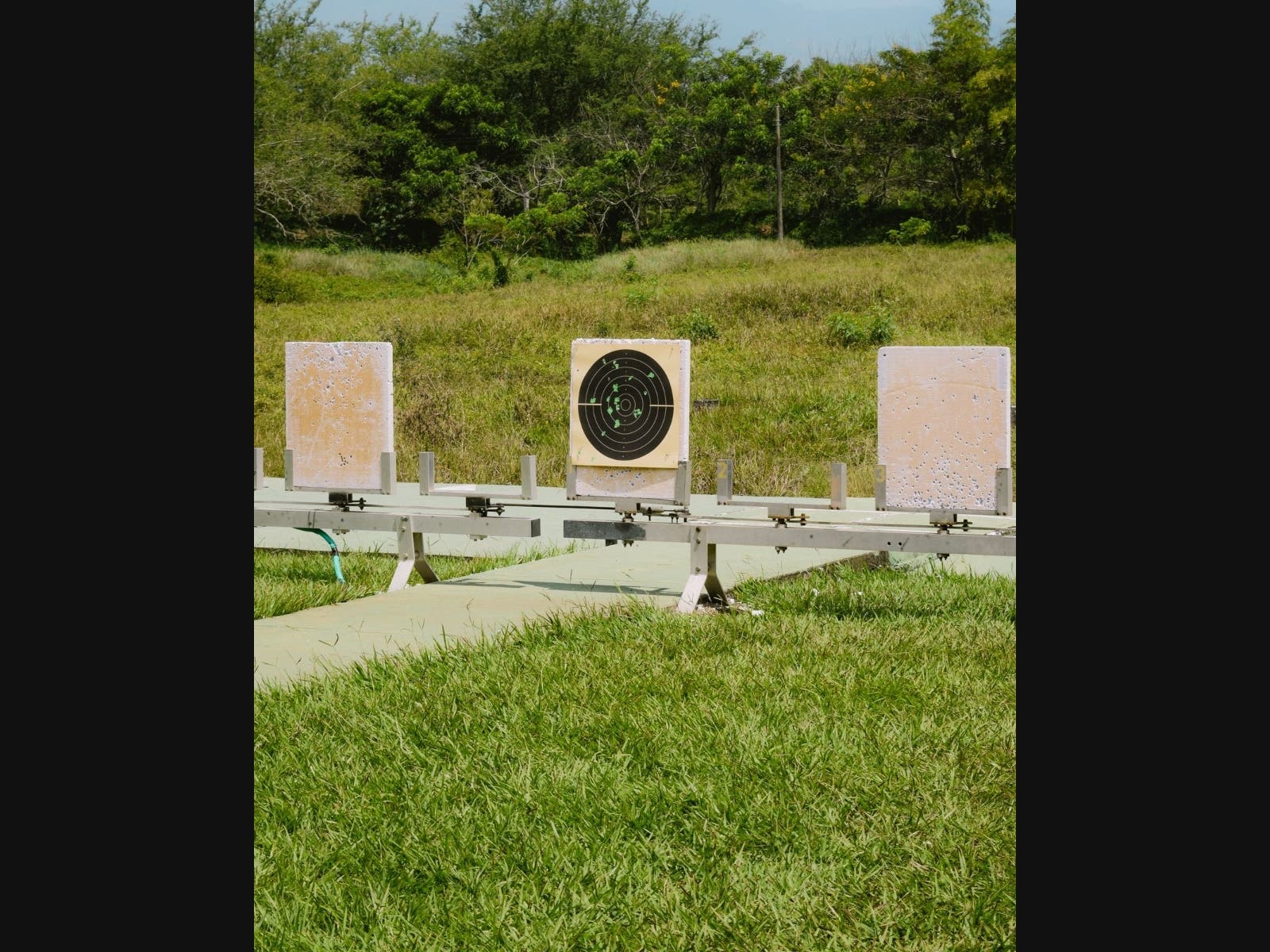
A set of four to six 8-inch AR500 plates on a crossbar or individual stands gives you a very efficient practice setup. You can build simple arrays, work different target spacing, and get repeatable feedback without overcomplicating the session.
For material, stick with AR500 or AR550 steel. Avoid mild steel, which can pit badly and create unpredictable splash when used with centerfire rounds. Always follow the target maker’s distance, caliber, and setup guidance.
Use a Plate Rack When Transitions Matter Most
A plate rack is one of the best tools for building speed. It is usually a horizontal rack with five or six plates arranged side by side. Knock them down cleanly, and you get instant confirmation. Miss one, and you have to correct it.
That is what makes the plate rack such a strong training tool. It does not let you hide sloppy transitions or rushed shots.
A five-plate rack with 8-inch rounds at practical pistol distances can become a complete practice session. Run it left to right, right to left, inside out, and outside in. Time your runs. Track your progress. The goal is not just to shoot faster, but to move your eyes and gun more efficiently while still making clean hits.
For USPSA-focused shooters, a plate rack is often more useful than loose individual plates once the basics are covered. For IDPA shooters, individual plates may offer more flexibility for building stage-like practice scenarios.
Keep Reactive Targets as a Later Upgrade
Reactive targets like Texas Stars, swingers, and activator systems are useful, but they should not be the first thing most shooters buy.
A Texas Star, for example, is excellent for learning how to read movement and adjust as the target changes after each hit. It is also more specialized. If you are still building basic transition speed, accuracy, and popper discipline, you will usually get more value from simple plates and a popper.
The same goes for dueling trees, automatic reset systems, and complex activator chains. They can be valuable, but they solve more advanced training problems. Start with the targets that build the widest foundation first.
A Practical Steel Target Setup
For a shooter building from scratch with both USPSA and IDPA in mind, a simple progression makes the most sense.
Start with one 28-inch pepper popper. It gives you competition-relevant feedback for both sports and helps reinforce proper hit placement.
Next, add four to six 8-inch AR500 plates. Use them for transitions, accuracy drills, and simple stage layouts.
Then, if your budget and range setup allow, add a plate rack. For USPSA practice especially, it is one of the most efficient ways to build speed without losing accountability.
“The shooters who close the gap fastest between practice and match performance are the ones who train on steel that matches what they’ll see in competition,” says Evan Moyer, president of Shoot Steel. “A popper that’s built to spec falls the way a match popper falls. That consistency matters.”
Do Not Overlook the Stand System
The target face gets most of the attention, but the stand matters just as much. A stable, well-designed stand keeps practice safer, cleaner, and more consistent.
Poppers with solid bases and stake holes are easy to use in the field. Static plates usually need a purpose-built stand, a crossbar, or a T-post setup. T-post systems are especially practical for shooters who train in different locations because they are stable, portable, and quick to set up.
Whatever system you use, proper plate angle matters. A forward lean helps direct splash downward instead of back toward the shooter.
Start Simple and Train With Purpose
It is easy to look at a full steel target catalog and want everything at once. Most shooters do not need that.
A beginner or intermediate competitor will usually improve faster with repeated, focused work on a popper and a few plates than with a complicated setup they barely use. The goal is not to own the most steel. The goal is to get the most useful feedback from every practice session.
Start with a popper. Add plates. Build toward a rack. Once those targets no longer expose the same weaknesses, add more complex reactive steel.
That progression is practical, cost-conscious, and directly tied to what USPSA and IDPA shooters actually need on the range.