Neighbor News
A Resident's Guide to Subsidized Housing
I spent time reviewing documentation related to the subsidized housing project proposed for the North Oakland Parking District.
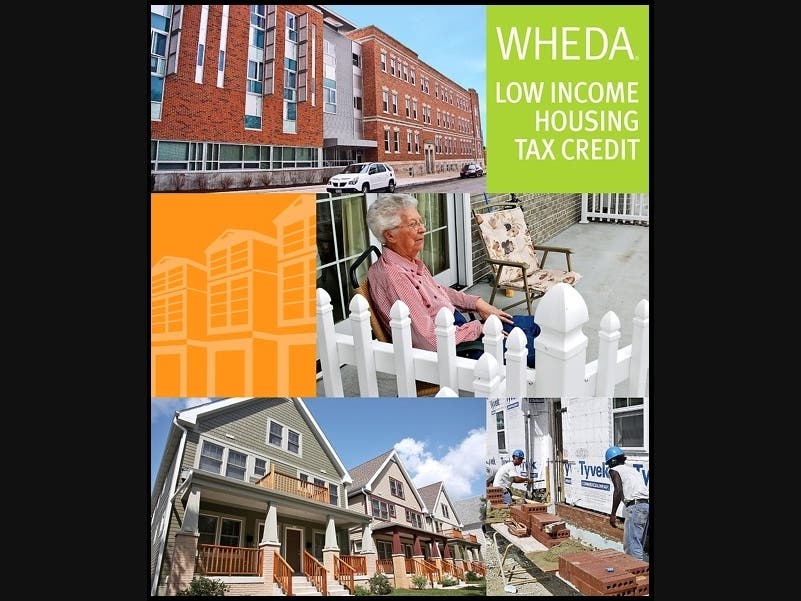
I spent time reviewing documentation related to the subsidized housing project proposed for the North Oakland Parking District. This included the WHEDA Affordable Housing Tax Credit Program Compliance Manual (2013) which guides landlords on the administration of the Low-Income Housing Tax Credit (LIHTC) program. It is a 100-page document. In addition, I reviewed the real estate purchase agreement between the Village of Shorewood and Spoerl Commercial, dated 22 September 2025 (18 pages). As a reminder this post concerns the 19-unit Spoerl development which is proposed to replace the village’s 49-space parking lot.
Here are some factoids for your consideration:
• The Wisconsin Housing and Economic Development Authority (WHEDA) is a quasi-public entity providing low-cost financing for housing projects. It also audits property owners to ensure compliance with housing regulations. Surprisingly, WHEDA does not disclose how landlords and property owners comply with regulations and standards. I imagine these would be available through a Freedom of Information request.
• Financing for the Spoerl project includes grants and loan guarantees involving the Village of Shorewood, State of Wisconsin, and the US Government:
Find out what's happening in Shorewoodfor free with the latest updates from Patch.
- WHEDA Permanent Mortgage: $815,430
- Federal LIHTC Investor Equity: $3,491,917 (sale of tax credits)
- Federal Home Loan Bank AHP: $950,000 (Federal grant, which will be funded with village TIF money if not approved by the FHLB),
- Shorewood TIF Extension: $750,000 (property taxes diverted to act as a grant, and would swell to $1.7 million if no FHLB funds).
• There are extensive instructions in the WHEDA manual for documenting tenant incomes and assets; this does not appear to be an easy process for the landlord or tenant.
Find out what's happening in Shorewoodfor free with the latest updates from Patch.
• The proposed development is unusual because 100% of the units are allocated for subsidized housing. This is the distribution of the rental subsidies:
- Extremely low income, 30% of Milwaukee AMI: 5 units (under $26,600 for 2)
- Very low income, 50% of Milwaukee AMI: 7 units (under $44,300 for 2)
- Low income, 60% of Milwaukee AMI: 7 units (under $53,160 limit for 2)
AMI refers to Area Median Income, which for Milwaukee is $110,700. The maximum income levels vary by household size. The incomes above are for a household of 2 persons, and were calculated through Google search). There appear to be asset limitations too.
• WHEDA may enforce compliance through all or any of the following: 1) Cancellation of tax credits if IRS Form 8609 has not yet been issued, 2) Notification to the IRS of noncompliance with agency requirements, 3) Legal enforcement of the owner's obligations under contract documents and Land Use Restriction Agreement(s) (LURA), and 4) Consideration of noncompliance in future applications for tax credits by the owner, developer, or related party.
• Tenant applications must include: 1) The name, birth date, age, social security number and gender (sex) of each person that will occupy the unit. 2) All sources and amounts of current and anticipated annual income expected to be derived during the twelve-month certification period. 3) The past, current and anticipated student status of each applicant for the twelve-month certification period.
• Students generally don't qualify, unless one of the following exists: 1) student is married (with a low income spouse), 2) receives social security assistance, 3) enrolled in a job training program, 4) student is a single parent with a dependent.
• Owners are normally required to recertify each low-income household at least annually. However, this development is exempt, because 100% of the units are low income. There will be no annual recertification required of tenants. Thus, there is no ongoing guarantee that residents will meet low income requirements.
• It appears that household income can rise to 140% of the income limit without effect on the tenant or owner. Effectively, this acknowledges that income for a household may increase with time. However, since the Spoerl development won't require annual certification, this limitation is moot. I'm guessing the policy exists to prevent forcing someone out of an apartment. Over time, the building could be home to a number of units that are not low income through lack of recertification.
• The manual suggests when a building is 100% committed to affordable housing, units must remain vacant until a qualified tenant is found.
• This is interesting. Total housing cost should stay around 30% of income. In addition to rent, this includes electricity, gas, water, and trash. For this development, the lowest rent received by the owner is $515 (extremely low income tenant), in addition the utility allowance is $107 (electricity, gas, water), which makes the gross rent payable by the tenant $622. The allowance is based upon “reasonable” energy consumption, and the tenant would pay out of pocket if actual use is above.
• Spoerl is free to sell the property to anyone at anytime with the provision that all future owners must comply with the WHEDA agreement for a period of 30 years. There may be other binding provisions preventing an early sale. Spoerl has the opportunity for significant profit, which of course is largely funded by taxpayers. Here are some of the items:
- $950,000: Federal Home Loan Bank AHP (Federal grant with 5-year retention provision).
- $750,000: Shorewood TIF grant (directly paid by Shorewood taxpayers),
- $1.1 million: from the below-market sale of the lot.
- $330,625: Developer fee (bounty for completing this project and a component of Spoerl’s business plan).
The above items total $3,130,625.
• Spoerl Commercial and the Village of Shorewood have signed a contract for the sale of the parking lot. There is a major condition of sale: The seller and buyer must enter into a development agreement. I'm not an attorney, but it appears if the buyer does nothing, then 90 days after July 31, 2027, the agreement goes into breach, and the village may terminate it. The date for a final cure is Friday, October 29, 2027. Oddly, an RFP on the village website indicates RFPs can still be accepted by the village on a continuing basis. We have requested a copy of the development agreement from the village.
The above narrative describes very complex operations and transactions. I’ve done my best to present the information in an accurate manner. If corrections are noted through comments below, I will correct the above content.