Community Corner
Getting Crabby At Spud Point: How-To Lessons In How To Catch A Crab
At Spud Point Marina, the lesson started less like a classroom and more like someone mid-sentence realizing they were already on stage.


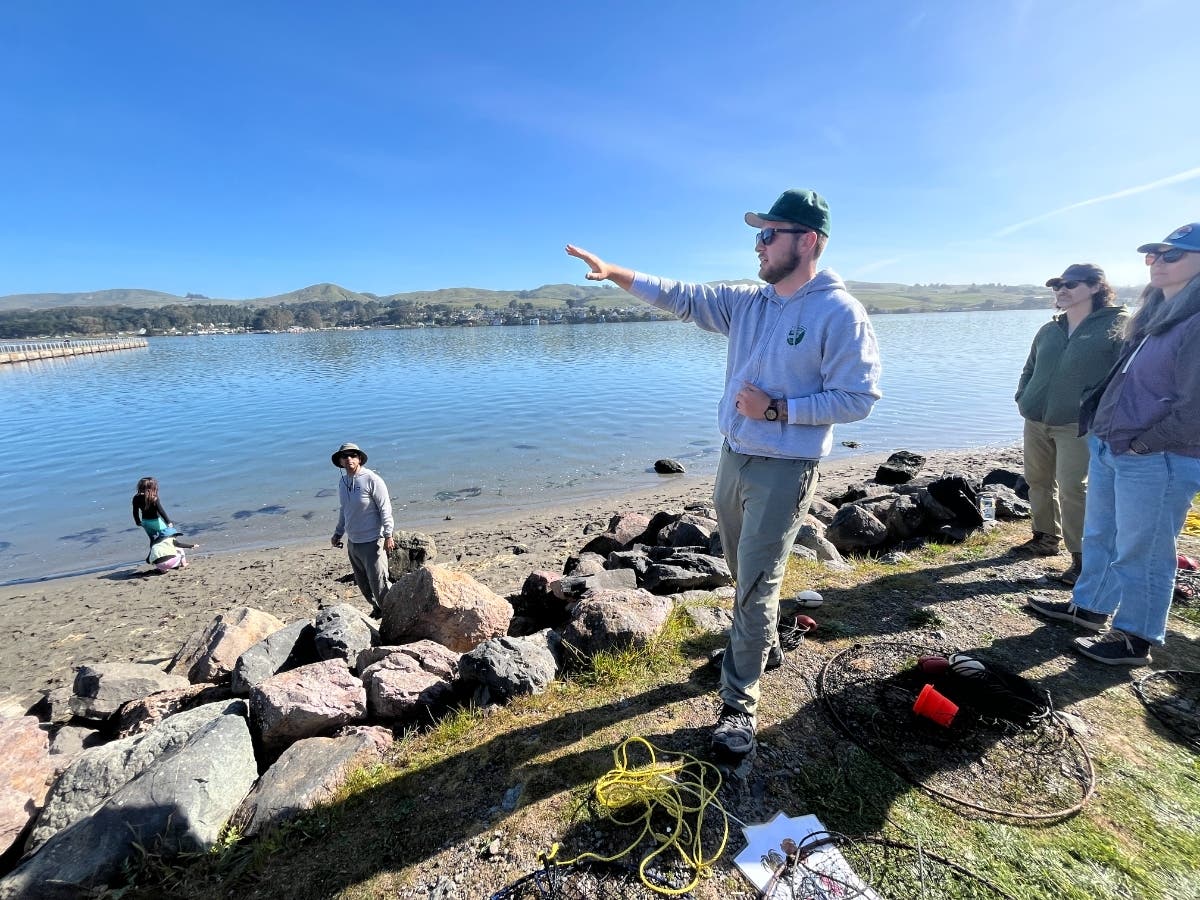
NORTHERN CALIFORNIA — The time was nearly 10 a.m. and two well-meaning Sonoma County park staffers were handing out dead fish. Really dead fish.
“Wow—so we’re here at Spud Point,” Maxwell McFadden said, speaking to the dozen or so people waiting for him to unlock the secrets to catching crab from the inky water before us.
We were there for the "Feelin' Crabby" Sonoma County Regional Parks program, and Maxwell McFadden and Holly Aguayo Bailey were our ticket to an imagined crab feast.
Find out what's happening in Healdsburgfor free with the latest updates from Patch.
"Who here has been crabbing before," McFadden asked, moving along a rocky area near a pier with the casual energy of someone who has explained crabbing a thousand times and still expects it to surprise people every time.
A few first-timers nodded politely. One admitted they had tried crabbing before and mostly succeeded at catching absolutely nothing, which, according to the group, was a kind of unofficial tradition.
Find out what's happening in Healdsburgfor free with the latest updates from Patch.
The location itself, Spud Point Marina, turned out to be more than just scenic real estate—it was a legal gateway. Because it’s designated as an “open pier” by the California Department of Fish and Wildlife, people can drop lines and hoop nets without a fishing license.
Of course, there are still rules. There are always rules. Two pots per person. Two rods. Size limits. Catch limits. Emotional limits, probably.
McFadden rattled them off while gesturing toward the water like it might personally enforce them. Then came the real twist: not all crabs are keepers.
The group leaned in when a greenish, slightly camouflaged crab was lifted from a bucket. “These,” the McFadden said, “are the ones we don’t want.”
They were European green rock crabs—fast, aggressive, and not on anyone’s dinner-invite list. They had arrived decades ago, accidentally hitchhiking through maritime traffic, and then promptly decided California mudflats were theirs now. They ate baby native crabs, dug into sediment banks, and generally behaved like they had no respect for ecosystem boundaries.
Someone in the group asked the obvious question: what do you do with them?
The answer was delivered with the kind of honesty that makes people laugh a little and wince a little at the same time: remove them. Don’t put them back. The state’s stance, McFadden said, was essentially “dispatch,” which is a euphemism for “please do not reintroduce this problem.”
The group moved on to the crabs people actually wanted— the famous Dungeness.
Ten of the big ones per day, thirty-five of the smaller ones if you were lucky and patient and didn’t drop your bait into the sea like a donation.
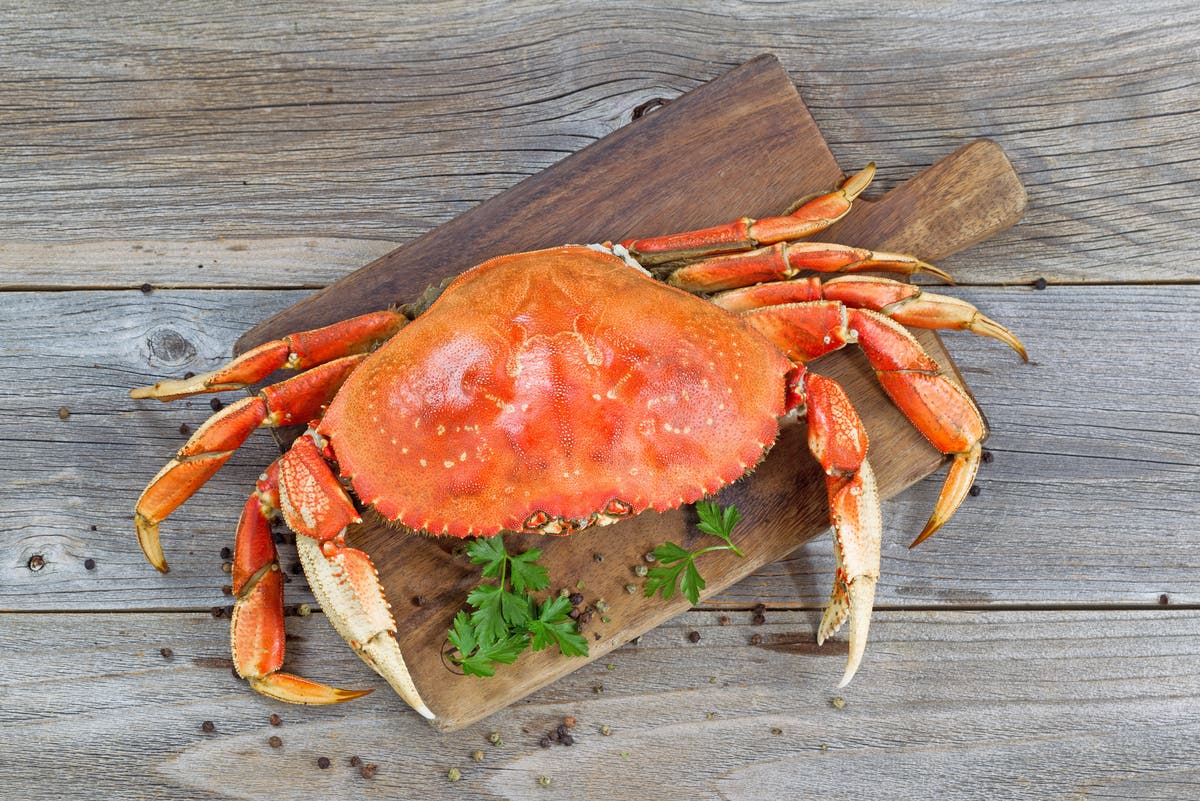
The Dungeness crab
McFadded and Aguayo Bailey had learned to read crab personalities. Native crabs, they said, behave like they’re waiting for instructions—still, calm, almost polite in the bucket. The invasive ones, by contrast, acted like they were late for something and furious about it.
Then out came the gear. Hoop nets, bait cups, bait bags, cages with opinions. Someone suggested rotisserie chicken as bait, which instantly upgraded the whole experience from “wildlife management” to “tailgate strategy.”
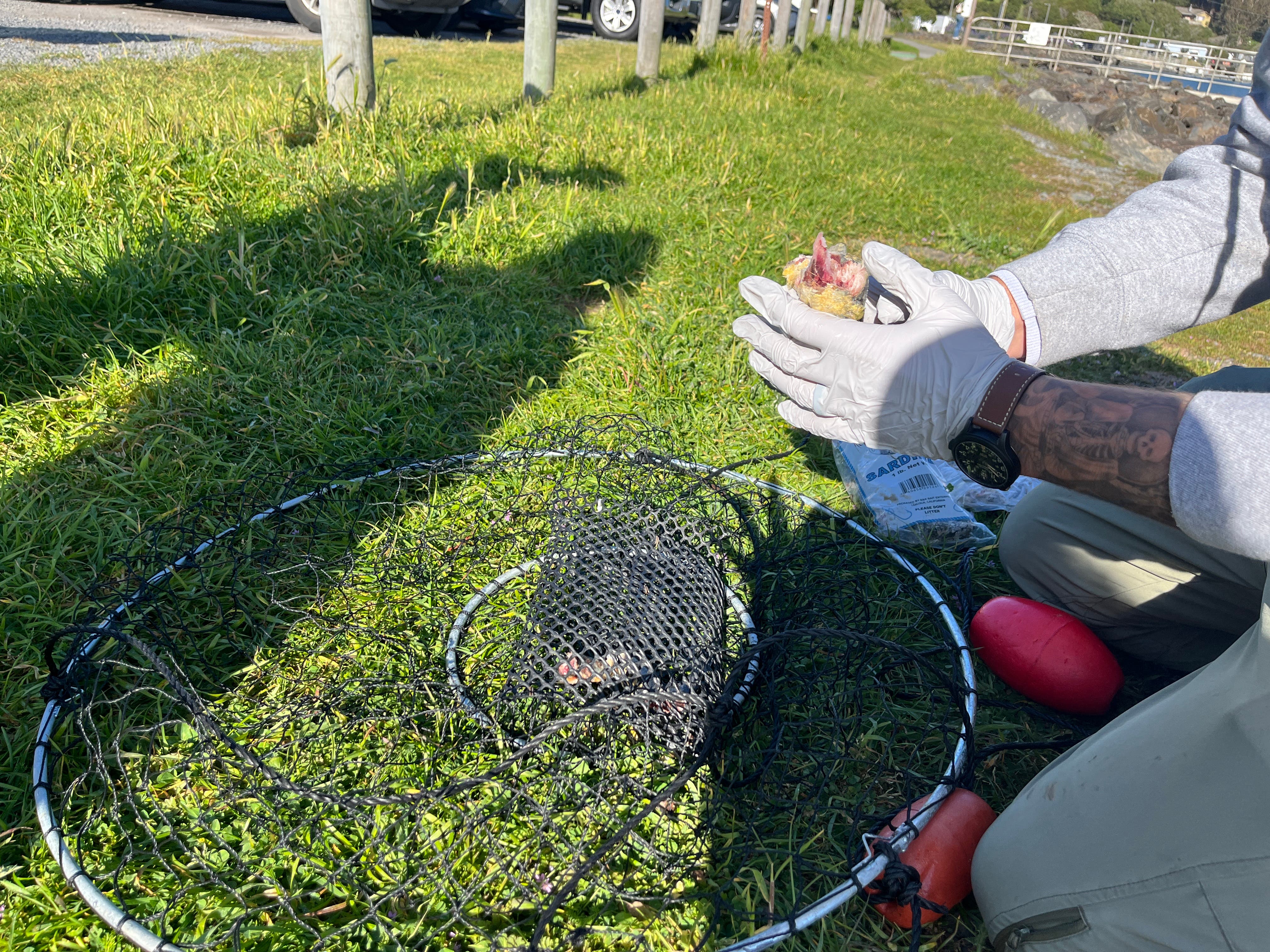
Maxwell McFadden, a Sonoma County Regional Parks assistant, demonstrating how to bait a crab trap during a March 15, 2026 "Feeling Crabby" class at Bodega Bay.
Lines were tied to the breakwater railing, sometimes confidently, sometimes with the energy of people discovering knots under pressure. Nets were tossed. Ropes were watched. Ten to 15 minutes, depending on net type, and then pull up the net, which is just enough time for optimism to build and then to become suspense.
Crabbing, it became clear, is a waiting game. And a tossing game. And then more waiting. Somewhere out there in the cold water, crabs were deciding what kind of day everyone was going to have.
When the nets came up, the real lesson showed itself—not just what was caught, but how fast people started talking like locals. Measuring shells. Comparing claws. Debating whether something was “just barely legal” with the seriousness of courtroom testimony. The mood changed from “we are probably doing this wrong” to “we might actually be dining on crab tonight.”
Some did, some did not. Some took home a lot of European green rock crabs. Those would be used for a simple green crab seafood stock.
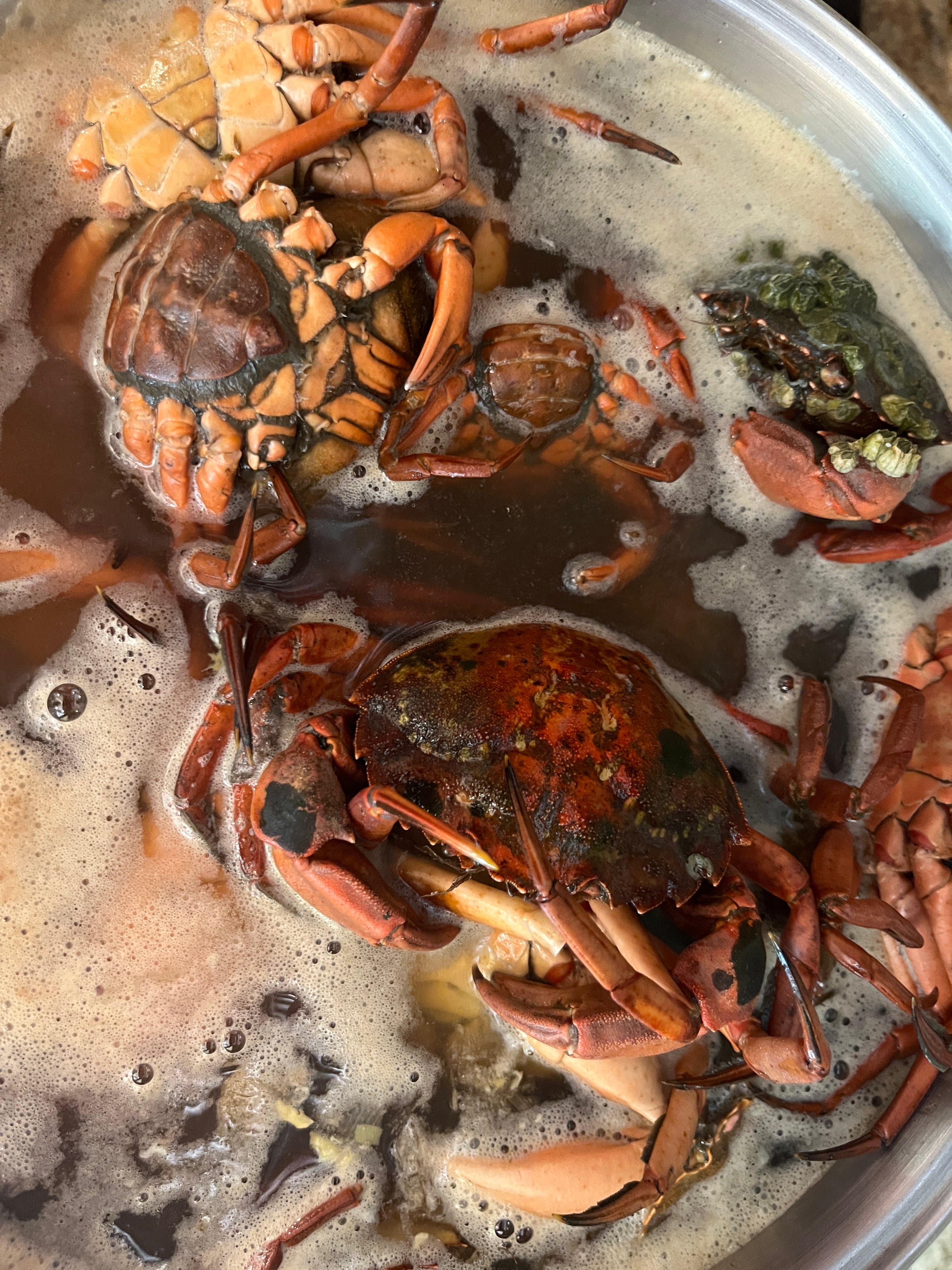
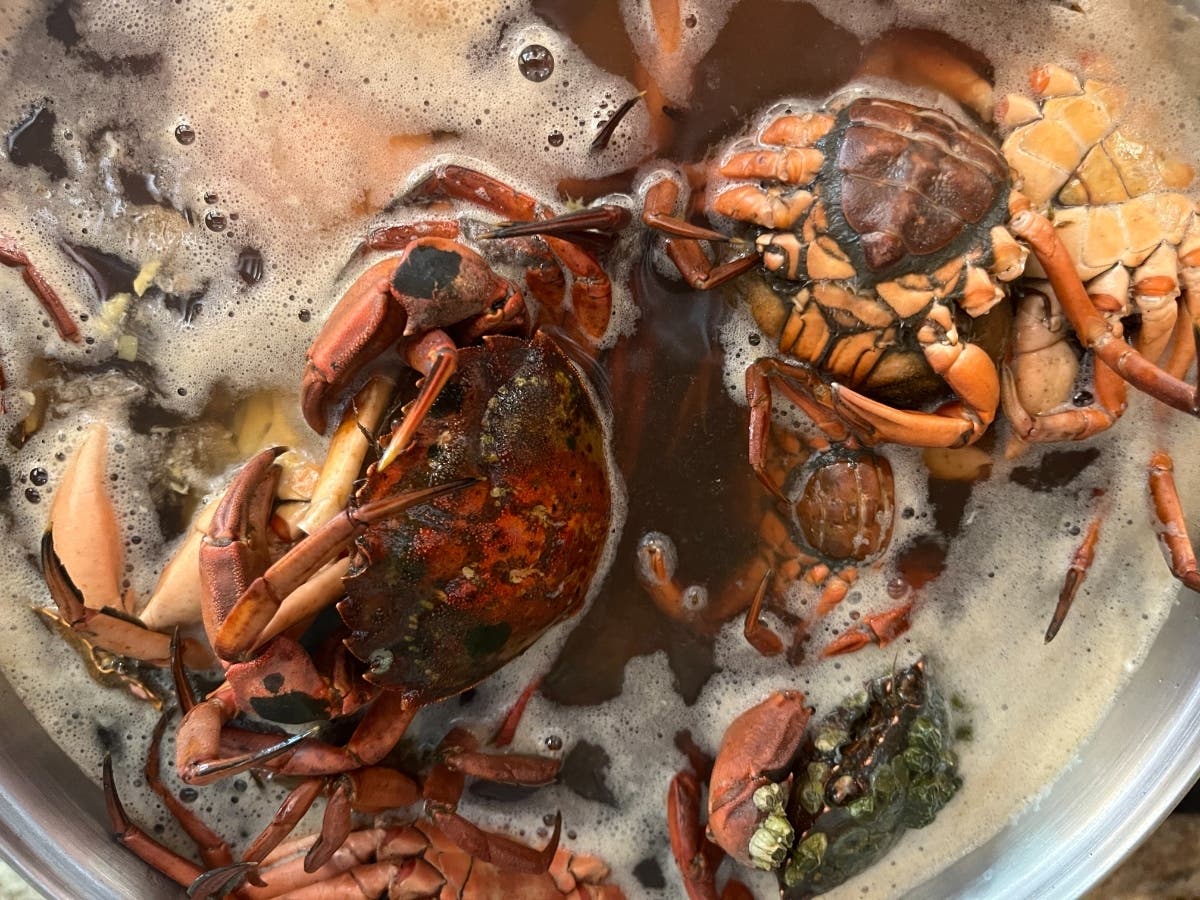
European green rock crabs caught at Bodega Bay turn red when cooked to make a seafood stock (see recipe).
Underneath all of it, the shoreline did what it always does: quietly hold the rules, the tides, and the stories of people trying to catch dinner while learning the difference between what belongs there—and what absolutely does not.
"Feelin' Crabby" is a hands-on crabbing program hosted by Sonoma County Regional Parks at the Spud Point Marina in Bodega Bay. Participants learn about local crustaceans, practice using crabbing nets and cages, and can keep the crabs they catch. A recipe for seafood stock adapted from Fearless Eating.)
Get more local news delivered straight to your inbox. Sign up for free Patch newsletters and alerts.