Politics & Government
Meet Moraga Town Council Candidate Bill Carman
Bill Carman discusses housing, park access, and emergency preparedness in the Moraga Town Council race.


LAMORINDA, CA — Patch reached out to all the candidates for Moraga Town Council.
Four candidates are running for two at-large seats on the Moraga Town Council.
We sent out questionnaires and reprinted their answers verbatim. Below, read the responses of Bill Carman, a candidate for a seat on the Moraga Town Council.
Find out what's happening in Lamorindafor free with the latest updates from Patch.
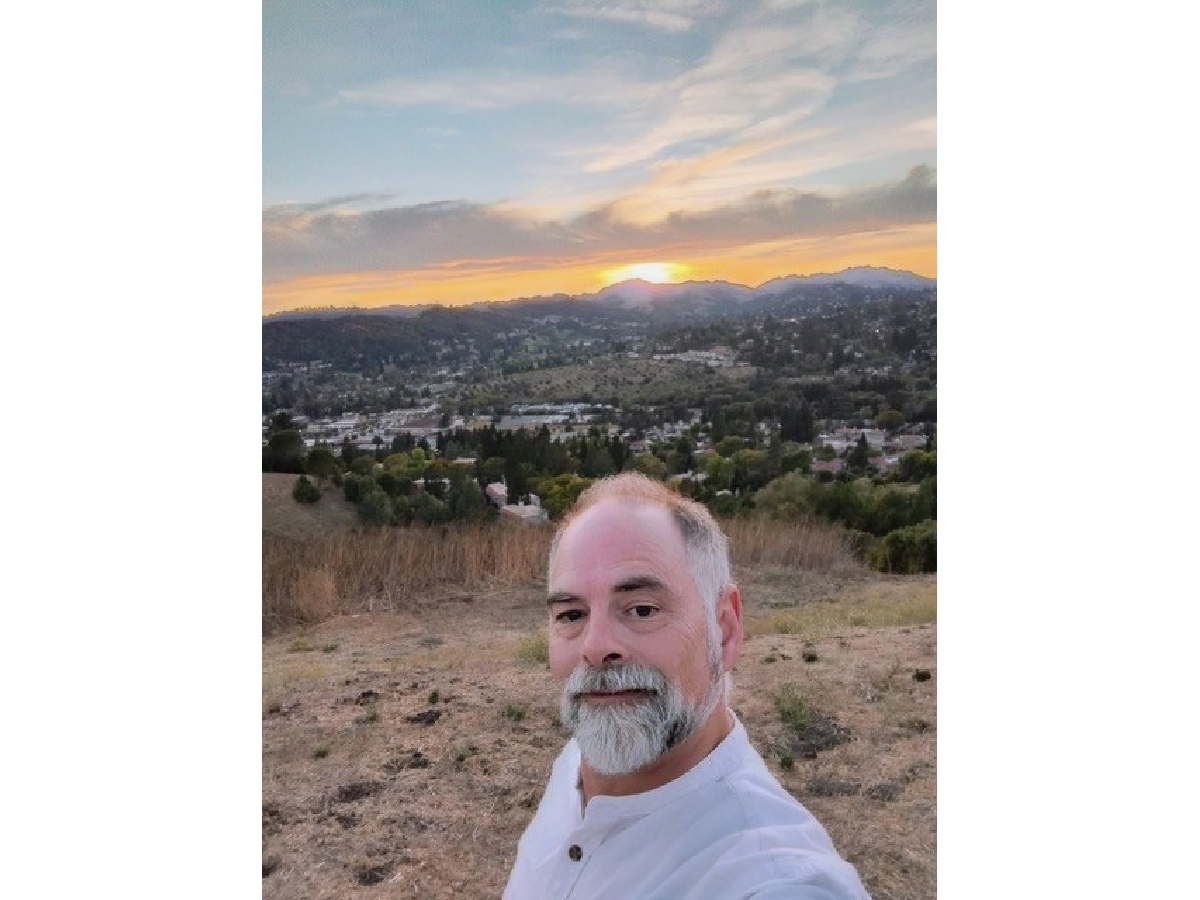
Bill Carman, 57, is running for a seat on the Moraga Town Council. In the questionnaire, Carman identified housing and park access, along with disaster preparedness and evacuation as priorities.
What is your educational background?
Find out what's happening in Lamorindafor free with the latest updates from Patch.
Bachelor's degree in Finance, San José State University. A.A. in Liberal Arts, De Anza College. Passed the National Certification Examination for Therapeutic Massage and Bodywork (1994)AMTA. Self-taught GIS mapping, through online courses.
What is your professional background?
UPS Feeder Driver, with UPS for about 20 years. Before that I worked in operations management and purchasing, including foreign-currency forecasting and transactions, and in restaurants, security and massage therapy while putting myself through school. I served on the statewide board of the California Association of Park and Recreation Commissioners and Board Members (CAPRCBM), 2015–2020, including as President, 2017–2018, supporting park commissioners across California.
Have you ever held public office, whether appointive or elective?
Appointed by the Moraga Town Council to the Parks and Recreation Commission, 2013–2019 (Chairperson, 2015). Also served on the Moraga Traffic Safety Advisory Committee (2012–2013), Livable Moraga Road Committee (2013–2014), Bicycle Pedestrian Master Planning Committee (2014–2016) and Moraga Center Specific Plan Committee (2019). No elected office.
What are the top three issues facing your district right now?
1. Meeting the state's housing mandate while getting more parks. Moraga must plan for 1,118 new homes. We need to meet it while protecting the character of a semi-rural town that borders open space. Our school fields and multi-use parks are already crowded, so I'll try to use the Quimby Act to secure new parks and trail access as development moves forward.
2. Disaster preparedness and evacuation. Moraga has only a few ways out: Moraga Road, Moraga Way, St. Mary's Road and Canyon Road. Every one of them needs to work on the worst day, and residents need support with Firewise and Zone Zero as insurers pull back.
3. The budget. Moraga receives the lowest share of property tax in Contra Costa County, with a large deferred-maintenance backlog.
What is one specific policy you would implement in your first 100 days?
As one of five council members, I can't act alone, so in my first 100 days I would ask the Council to direct staff to review how Moraga applies its park-land dedication and in-lieu fee requirements under the Quimby Act for every project coming through the housing pipeline. The goal is simple: if the state requires 1,118 new homes, the community should get parks and trail access out of the deal, not just traffic.
In 2018 I personally walked and GIS-mapped Moraga's trails, existing, proposed, and connectivity gaps, creating a unified document so no access opportunity would be lost again without fair negotiation. That map shows exactly where new development could close trail gaps. I would bring it back to the Council and the Parks and Recreation Commission as a starting tool.
Looking further ahead, over a four-year term I'd also ask the Town to consider a community tool lending library and maker space as it plans future community spaces. With up to 1,118 new homes planned under the state mandate, many won't have a garage or storage space for family projects, or room for creative ideas to come to life. It's an idea worth exploring with residents' help.
What is your plan to enact this plan and how would you measure success after one year?
New park land and a tool library won't happen overnight. Both may take a full four-year term, so my plan focuses on steady steps and honest one-year milestones. Steps: 1. Ask the Council to place a Quimby Act and trail-access review on an early agenda. 2. Work with staff, the Parks and Recreation Commission and the Planning Commission to match known trail gaps and park needs to housing sites. 3. Hold public meetings so residents, including neighbors near those sites, can weigh in before decisions are made. 4. Ask that park land and trail access be part of the conversation with every housing developer, not just fees. 5. For the tool library, gather resident interest, look at how nearby libraries work, and explore partners and possible locations. Measuring success after one year: • Park land, trail easements and park fees from new housing are tracked publicly, with a plan to spend them on new park land and trail access that serve those neighborhoods. • At least one trail gap or park site has a funded or negotiated path forward. • An updated trail map and project list are posted on the Town website. • A tool library proposal, with resident input and possible partners, is ready for the Council to consider.
What is one specific change you would make to improve livability in your district?
I would like to explore a tool lending library and maker space as one way to improve livability. Another issue we should address before new housing comes to town is a modern, less subjective noise ordinance that protects quiet nights while letting normal life go on.
Moraga's noise rules, last updated in 2011, rely on subjective terms instead of measurable decibel levels, which makes them hard to understand, hard to enforce fairly, and easy to dispute. More homes closer together will only make clear rules more important.
As one of five council members, I would ask the Council to review Chapter 7.12 of the Municipal Code and consider:
Decibel limits at the property line by time of day, strictest from 10 pm to 7 am when most people sleep.
Background levels measured over time, so short natural sounds like coyotes don't count against anyone.
Clear construction hours on weekdays and limited Saturday hours, so new homes can be built on schedule.
Permits that let community concerts and movie nights run until 10 pm.
Complaint-based enforcement that starts with a warning and time to fix the problem, not a fine.
Residents, businesses and event organizers should have a voice before anything is adopted. The goal is rules everyone can understand, that treat neighbors fairly, and that protect the quiet nights that make Moraga home.
How would you improve transparency or accountability in your local government?
It starts with following the law. I will never daisy-chain or meet with a majority of the Council outside a legal, public meeting, as the Brown Act requires. Decisions belong in meetings that are televised and recorded, where residents can see how and why their representatives vote. In this campaign, when another candidate told me the others had already agreed on an issue, I said I would run my campaign as the law requires, and that I'll shake everyone's hand on November 4th, win or lose.
Second, ask residents before decisions are final, not after. Most people don't have time to follow every Town project until it directly affects them. That's why we have representative government, but before final drafts are adopted and before concrete is poured, residents deserve a real way to weigh in. The Town already pays for resident surveys. I'd push to use them early, on projects like master plans, road changes and park amenities, when the answers can still shape the outcome.
In the past, projects like speed bumps, traffic calming and removing park amenities have moved full steam ahead, only to need costly fixes later. Asking first is cheaper than fixing later.
Moraga residents are engaged, and they speak up when they feel ignored. My job would be to listen before I vote, explain my votes, and make it easy for people to be heard before it's too late to matter.
What makes you a better choice than your opponents?
That's for voters to decide. Every candidate in this race has a strong resume, and I don't consider myself better than anyone else. What I can offer is how I work.
I try to get the facts right, listen to the people affected, then find the solution that works for Moraga. I study the issues in front of me, and I look for outcomes a majority of residents can live with, even when that means giving up something I personally want in favor of what the community actually needs.
I have a record of doing that. Before I was a Parks Commissioner, when coaches wanted a sports field at Rancho Laguna Park, I helped nudge Measure WW park funds toward the Camino Pablo school field, where it would create the least conflict. The children got their field, and Rancho Laguna was protected.
I've served on five Town commissions and committees. I drive and bike our roads, walk our trails, and I've spent twenty years getting to know Moraga's people, not just its issues.
Tough decisions that help one group of residents over another shouldn't be easy, and I won't treat them that way. I'll base my votes on sound studies and real community input, and I'll explain them.
I'll be one of five, and I know that means listening and working with others. I've been called a villain because I'm willing to disagree, but I do it while working toward practical solutions.
Get more local news delivered straight to your inbox. Sign up for free Patch newsletters and alerts.