Weather
5-Month Summers, Hotter Days, 5K More Wildfire Deaths: Severe CA Climate Change Arriving Faster Than Forecast
A new state climate report warns California could face longer summers, deadlier wildfire smoke, and rising flood risks sooner than expected.


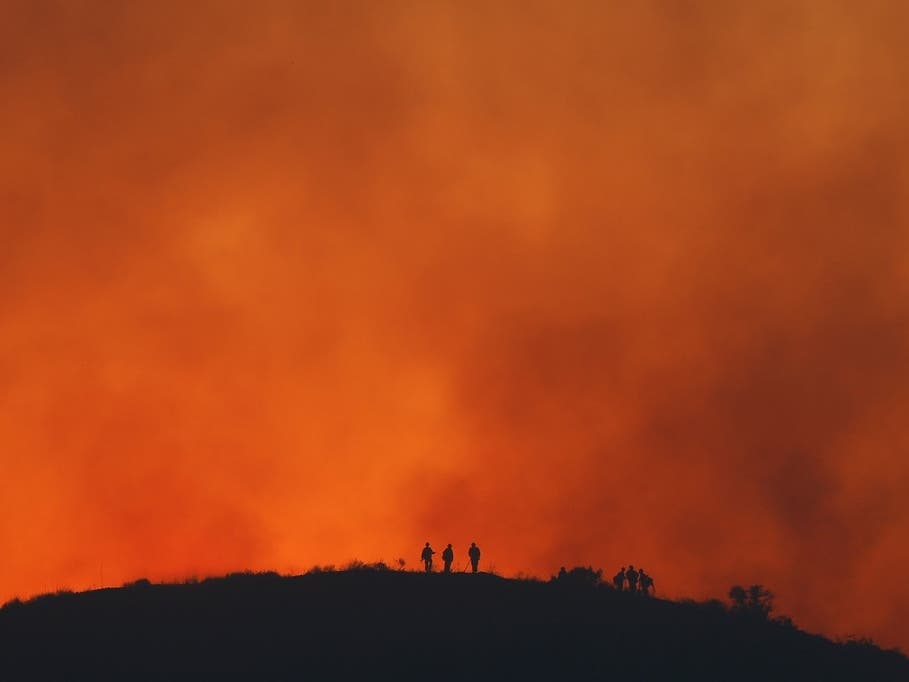
Wildfire smoke could cause more than 5,000 additional deaths a year in California by 2050, according to a new state climate assessment that also warns of five-month-long summers, heatwaves that last five times longer, shrinking snowpack and flooding from rising groundwater.
The findings appear in the summary of California’s Fifth Climate Change Assessment, released this week. The assessment combines new research and studies to help communities prepare for climate risks. It follows the state’s last assessment in 2018.
One central warning in the assessment is that the various risks of climate change overlap. Heat can make smoke exposure more dangerous, drought can increase wildfire risk and fires can leave hillsides vulnerable to flooding.
Find out what's happening in Los Angelesfor free with the latest updates from Patch.
In 2020, about 42% of California’s population experienced extreme heat and wildfire smoke simultaneously. Research cited in the report links that combined exposure to more hospitalizations and serious health outcomes than either hazard individually.
Rising Temperatures
California’s average temperature is projected to rise 3.5 to 4.3 degrees Fahrenheit by 2050 compared with the 1981-2010 average. The report also projects longer summers and shorter winters, disrupting water supplies, agriculture and seasonal patterns that plants and animals depend on.
Find out what's happening in Los Angelesfor free with the latest updates from Patch.
Under one scenario of continued high greenhouse gas emissions, the longest heat wave each year would average 19 days in the Sierra Nevada and six days in the Bay Area by the end of the century — compared with roughly three days statewide historically.
The report also identifies gaps in protection from the heat. A 2023 study jestimated that 15% to 20% of California’s public schools, from transitional kindergarten through 12th grade, lacked mechanical heating, ventilation and air-conditioning systems.
"Young children and infants less than 4 years of age may have an increased risk based on physiology to extreme heat events," the report states. "California schools are also not prepared for the impacts of extreme heat."
People living without shelter face especially severe risks. The assessment says they account for 13% of hospitalizations for heat-related illness despite representing about 0.5% of the state’s population.
Some costs are already reaching households through utility bills. Wildfire-related expenses accounted for about 5 cents of the roughly 6.2-cent increase in statewide electricity costs per kilowatt-hour between 2019 and 2024, according to research cited in the assessment. Those expenses include burying power lines, managing vegetation, utility insurance and payments for damage from utility-caused fires.
"Without action, the costs of preventing, insuring against, and recovering from wildfires will be passed on to electricity customers as climate change increases wildfire risk," the report states.
'Climate Whiplash'
California is expected to experience sharper swings between wet and dry extremes, a pattern the assessment calls “climate whiplash.” Annual precipitation totals could be similar to today — though arriving over fewer days of more intense storms.
"These changes are expected to continue and intensify, with summer periods projected to grow longer and winter periods shorter in the decades ahead," the report reads.
Research cited in the report found that summer lasted around 90 days between 1981 and 2010. By the end of the century, the season is expected to grow 66% longer: 150 days.
The report describes how the "climate whiplash" sequence helped set the conditions for the January 2025 Los Angeles wildfires: Two wet winters encouraged vegetation growth, followed by exceptional warmth and delayed rain that left the vegetation dry when powerful Santa Ana winds arrived.
Water Storage Shrinks
Meanwhile, the state’s natural water storage is shrinking. Under a high-emissions scenario, average early April snowpack is projected to decline about 40% in 2041-2070 and 60% in 2071-2100 compared with the 1981-2010 average.
As more winter precipitation falls as rain and snow melts earlier, less stored water may be available during dry months, when demand is highest. Those changes put pressure on reservoirs and delivery systems designed around different climate conditions.
Rising Seas Threaten Communities
Along the coast, rising seas could threaten communities from below, not just through waves and storm surge. Higher sea levels can push groundwater upward, damaging foundations and underground infrastructure while saturating contaminated sites. Some volatile contaminants can become gases and enter buildings through sewer lines and pipes.
With 3.3 feet of sea level rise by 2100 — an intermediate scenario — shallow or emerging groundwater could impact 1.9 million coastal residents and $480 billion in property, the assessment estimates. That is substantially more exposure than from coastal flooding alone.
In the Bay Area, more than 1,500 active contaminated sites could be inundated from below with that amount of sea level rise, raising concerns about how pollutants could spread into surrounding communities.
How To Reduce Climate Risk
The assessment also identifies ways to reduce the risks. Directing floodwater onto suitable fields and floodplains can replenish underground water supplies while reducing downstream flooding, helping communities prepare for the next drought.
For extreme heat, the report points to planting shade trees, reflective roofs and pavement, air conditioning and accessible cooling centers. In Los Angeles County, research it cites suggests expanded tree cover and reflective surfaces could prevent roughly a quarter of heat-related deaths during an extreme heat event.
For wildfire, research cited in the assessment finds prescribed burns can reduce the likelihood of future catastrophic fires by up to 92% for a decade after treatment. The report identifies prescribed fire as particularly effective in forest ecosystems where accumulated vegetation fuels dangerous fires.
It also highlights California Native American tribes’ work restoring cultural burning, rivers, wetlands and forests, while warning that funding barriers and limits on tribal authority can constrain those efforts.
The assessment does not establish new regulations or provide an implementation plan.
"The future is not predetermined. The decisions made today can help California adapt to a changing climate and strengthen resilience for generations to come," the report states.
More California News:
- Teen Girls Arrested School Shooting Plot Had List Of Names: Police
- Tom Skerritt, Emmy-Winning 'Alien' And 'Top Gun,' Actor Dies At 93
- Swimmer Makes History On California’s Ocean Coast: 'Grit Is My Superpower'
- These Are The 25 Best Elementary Schools In CA: U.S. News
- First 'Gas Station Heroin' Death Reported In San Francisco
- Video Appears To Show ICE SUV Swerve Into Cyclist In Long Beach
- Famed CA Rocker Steps Away Due To 'Serious Health Issue,' Band Says
- Disneyland Almost Axed Annual Pass Program, Former CEO Says: Report
Get more local news delivered straight to your inbox. Sign up for free Patch newsletters and alerts.