Los Angeles, CA|Featured Classified|Gigs & Services|
New California Disclosure Law May Give Los Angeles Businesses More Leverage in Merchant Cash Advance
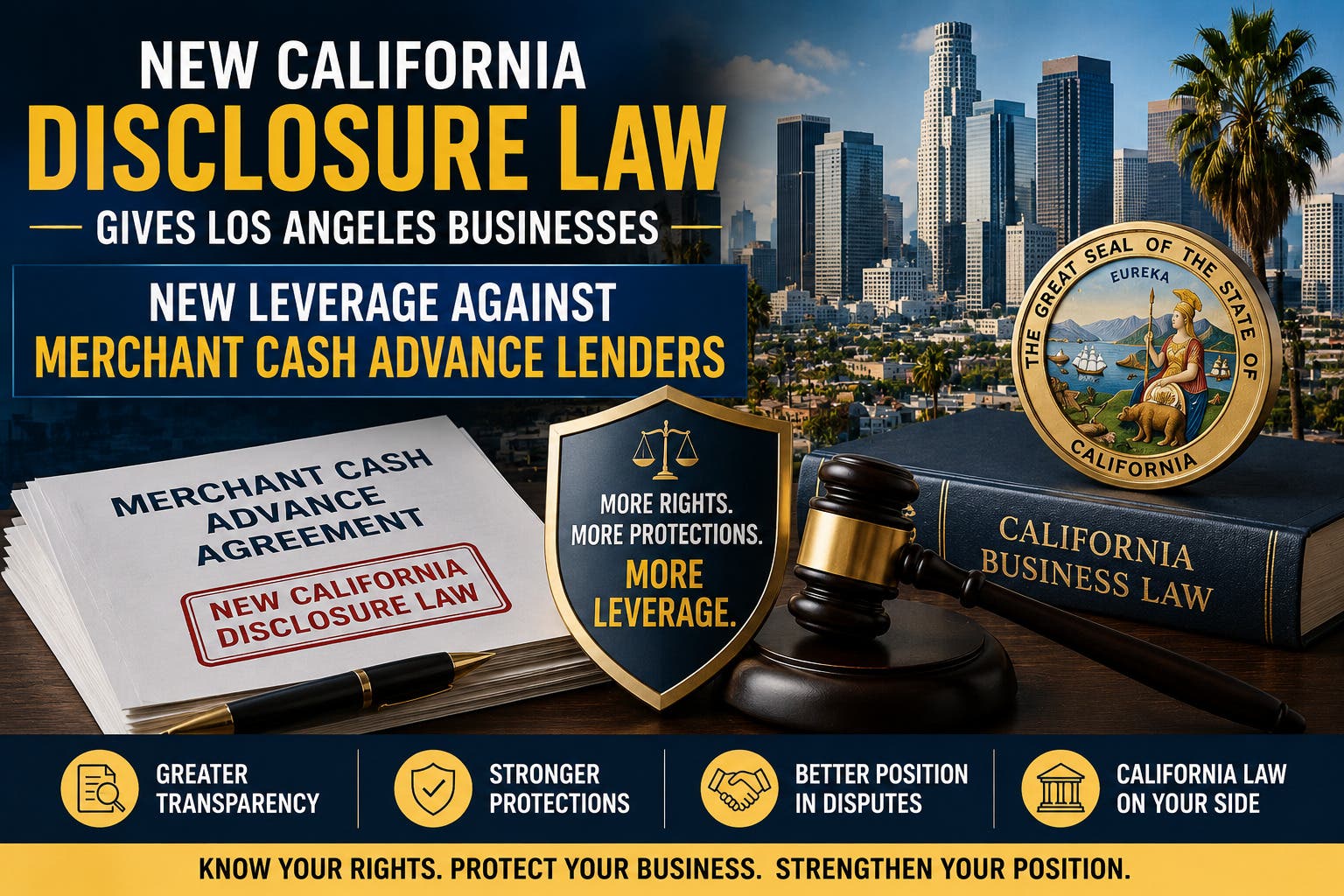
New California Disclosure Law Gives Los Angeles Businesses New Leverage Against Merchant Cash Advance Lenders
SB 362, in effect since January 2026, is reshaping how Los Angeles business owners challenge merchant cash advance contracts — and where those disputes get fought.
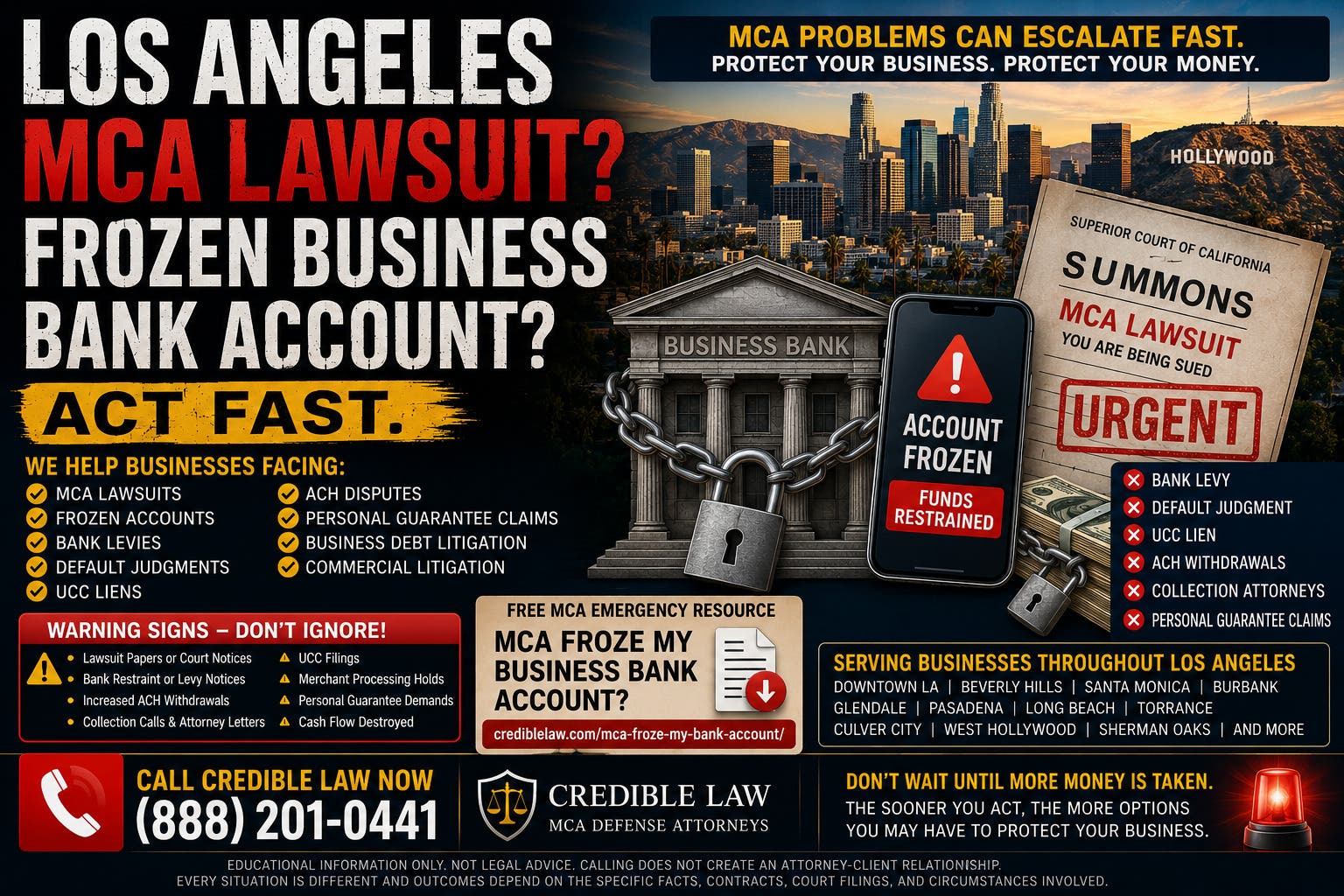
LOS ANGELES — A California law that took effect at the start of 2026 is changing the calculus for Los Angeles business owners buried in merchant cash advance (MCA) debt, giving them disclosure-based defenses that were largely unavailable two years ago.
Senate Bill 362, which took effect January 1, 2026, is the most significant update to California's commercial financing disclosure framework since the original SB 1235. It requires MCA providers operating in Los Angeles to deliver standardized APR disclosures that meet strict formatting rules. When a funder fails to do so, the contract may be voidable — and the daily ACH withdrawals draining a business account may be legally stoppable.
The California Department of Financial Protection and Innovation (DFPI) enforces these disclosure requirements, and the standards exist so business owners can see the true cost of financing — APR, finance charge, payment amount, term, and prepayment details — before signing. Where the disclosures were missing, understated, or inconsistent with how the deal actually performed, those gaps are becoming central to MCA disputes across the LA metro.
Disclosure is only one line of attack. Los Angeles business owners are also challenging the fundamental characterization of the MCA itself. A true merchant cash advance is a purchase of future receivables — not a loan — and that distinction matters because loans are subject to California's usury limits. Courts apply a three-factor test, examining whether the contract includes a genuine reconciliation clause that adjusts payments to actual revenue, whether the funder retains recourse if the business fails, and whether the funder bears real risk. Fixed daily payments that never flex with sales are a hallmark of a disguised loan.
There is also a jurisdictional trap unique to out-of-state enforcement. Many MCA agreements route disputes to New York courts, and a New York judgment can be enforced in California — but only if proper domestication procedures were followed. California courts can refuse to recognize judgments that skip those steps.
For Los Angeles owners, the recurring theme is timing. Reconciliation records, bank statements, and the original disclosure documents all matter, and the strongest defenses take shape before a judgment is entered and accounts are frozen.
Los Angeles business owners facing MCA collections, a UCC lien, or a frozen account can review their options and connect with an experienced attorney through CredibleLaw's Los Angeles network at crediblelaw.com/los-angeles-mca-defense-attorney-sb362.
Credible Law
Phone: (888) 201-0441
crediblelaw.com/about/
share.google/yhjxzZAGumlN6buaH
Credible Law is a national legal resource and referral network. It is not a law firm and does not provide legal advice.