Traffic & Transit
One Of LA's Busiest Streets Is Getting A Massive 12-Mile Overhaul: What To Know
A sweeping redesign of the street is underway, with major changes ahead for drivers and commuters along the 12-mile corridor.


LOS ANGELES, CA — Metro broke ground Wednesday on a major overhaul of Los Angeles County's busiest bus corridor, a 12.4-mile project expected to cut commute times by up to 24% and serve more than 66,000 daily riders.
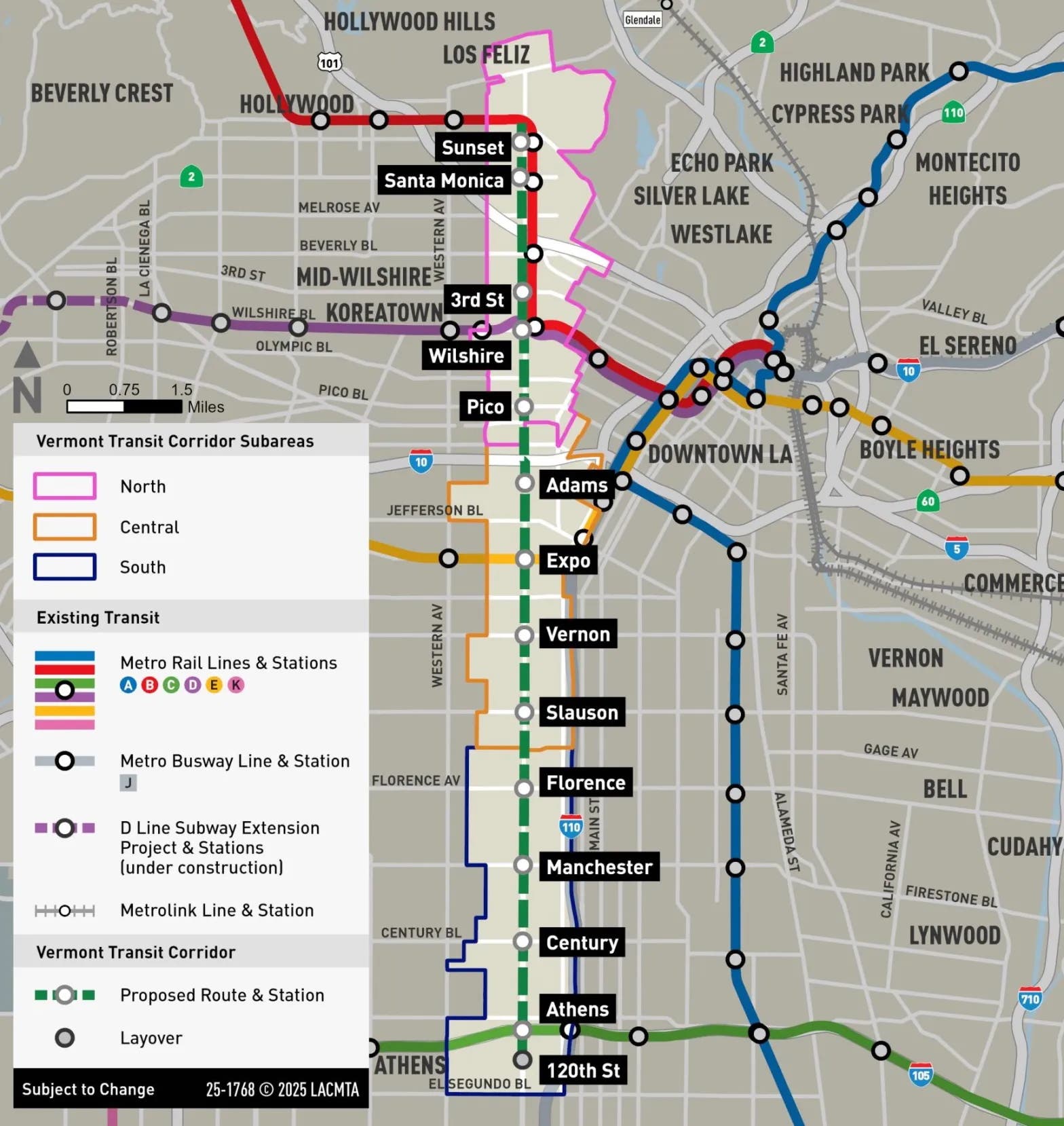
The Vermont Transit Corridor Bus Rapid Transit Project will bring dedicated bus lanes, 26 upgraded stations and faster service along Vermont Avenue between Sunset Boulevard in Hollywood and 120th Street in South Los Angeles.
Bus rapid transit, or BRT, falls somewhere between traditional bus service and rail transit. It uses buses rather than trains but incorporates rail-like features to provide faster, more reliable service than conventional buses at a fraction of the cost of building a rail line.
Find out what's happening in Los Angelesfor free with the latest updates from Patch.
Metro estimates the Vermont BRT line will cut travel times between Sunset Boulevard and the 105 Freeway from about 71 minutes to 54 minutes, a 24% reduction.
Metro hopes to have the new service operating in time for the 2028 Olympic and Paralympic Games, when Exposition Park will host events at the Los Angeles Memorial Coliseum and BMO Stadium.
Find out what's happening in Los Angelesfor free with the latest updates from Patch.
Vermont Avenue currently carries about 38,000 daily bus boardings on Metro's Line 204 and limited-stop Line 754. Ridership is projected to grow to more than 66,200 daily boardings by 2045, according to Metro.
The project will feature dedicated bus lanes along the sides of Vermont Avenue, allowing buses to bypass some of the congestion that slows existing service.
Other improvements include traffic signal priority, boarding through all bus doors and off-board fare payment to reduce delays.
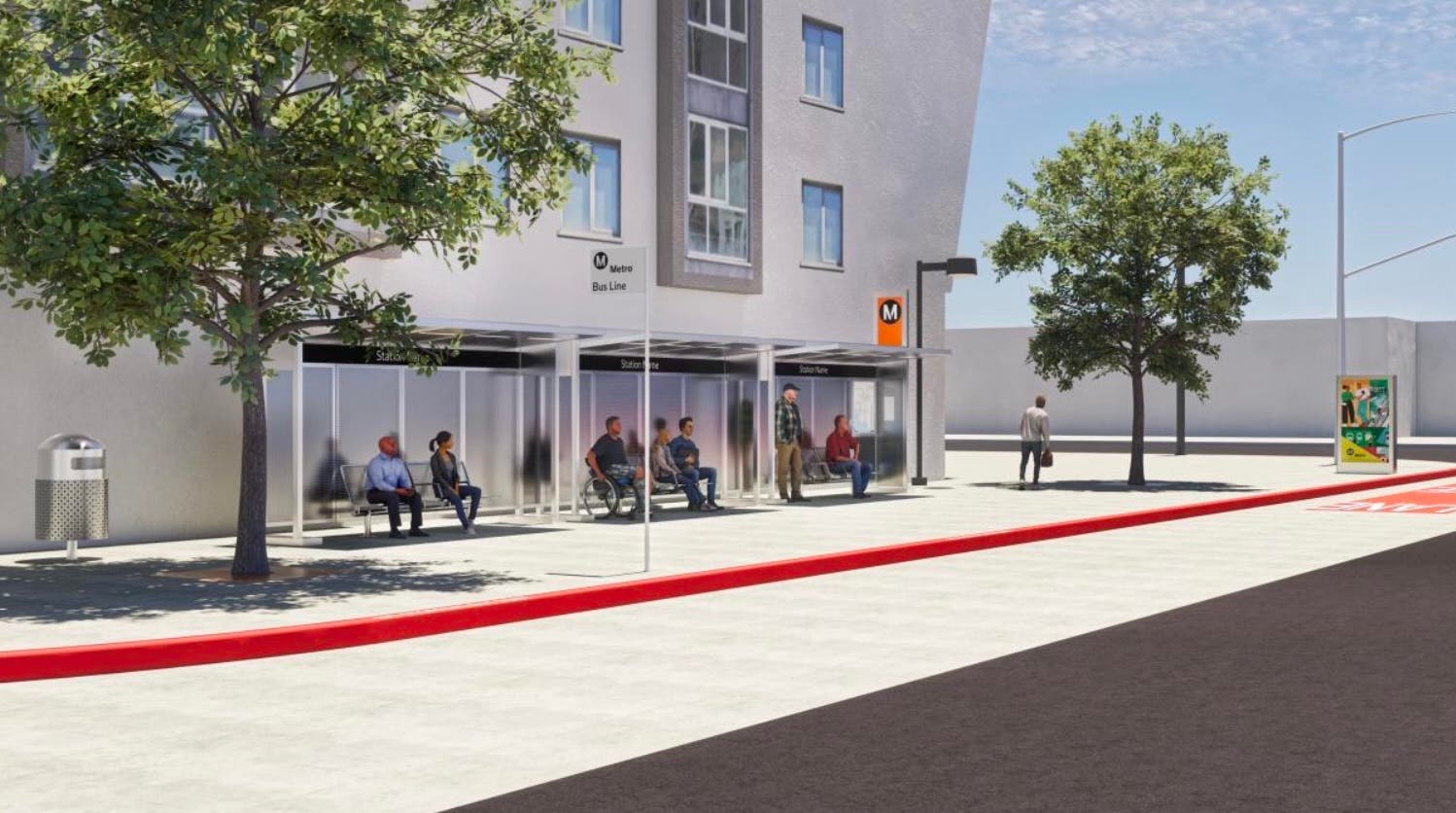
The 26 upgraded stations at 13 major intersections will feature shaded shelters, real-time arrival displays, improved lighting, emergency call buttons and accessible curb ramps.
Every new BRT station will incorporate artwork designed to reflect its surroundings, Metro officials said this summer.
Metro also plans to improve pedestrian crossings, widen sidewalks and add curb extensions that shorten the distance pedestrians must cross.
The corridor will connect riders to Metro's B, C, D and E rail lines and more than 13 east-west bus routes.
How Parking, Driving Will Be Impacted
The project will also change how motorists navigate Vermont Avenue, according to plans presented by Metro this summer.
The project will eliminate 183 on-street parking spaces, or about 8% of existing parking, and ban 48 left turn movements at intersections without traffic signals between Gage Avenue and Wilshire Boulevard.
Metro also plans to add 13 left-turn pockets and extend 10 others to improve traffic flow and safety.
Major destinations along the route include USC, Los Angeles City College, Kaiser Permanente in East Hollywood and Exposition Park, home to several museums.
The project also serves communities including Koreatown, East Hollywood, Pico-Union, University Park, Vermont Square, Vermont-Slauson, Westmont and Athens.
Construction Timeline, Impacts
Construction is expected to generate about 4,800 union jobs and $95 million in tax revenue. Once operational, the upgraded corridor is projected to support approximately 260 permanent operations and maintenance jobs.
Metro officials said riders could begin seeing benefits as individual sections of dedicated bus lanes are completed, rather than waiting for the entire project to open.
As of this summer, Metro planned for the first stretches of bus lanes to open by late next year.
Metro warned that construction will involve some nighttime work, temporary parking restrictions, possible bus stop relocations and traffic controls.
The agency said it would maintain access to businesses, sidewalks and crosswalks wherever possible and notify nearby businesses before construction.
The project received a major funding boost in September with a $149.9 million federal grant through the Federal Transit Administration's Small Starts Program.
Combined with state funding and money from Measure M, the sales tax measure approved by Los Angeles County voters in 2016, the federal grant fully funds the project, according to Metro.
The transit agency said it worked with 38 community and faith-based organizations and gathered input from approximately 26,000 residents during the planning process.
Metro's board approved the 12.4-mile project route in March 2025.
More information about the project is available at Metro's website.
City News Service contributed to this report.
Get more local news delivered straight to your inbox. Sign up for free Patch newsletters and alerts.