Community Corner
How T. Rex Teeth Helped UCLA Scientists Take The Dinosaur's Temperature
UCLA researchers used an unlikely clue to possibly solve a 66-million-year-old mystery.


LOS ANGELES, CA — Tyrannosaurus rex had a body temperature similar to that of humans — about 97 degrees Fahrenheit — providing new evidence that the massive predator was warm-blooded and capable of thriving in colder climates, UCLA researchers said.
The finding, published Wednesday in Science Advances, marks the first time scientists have directly measured the body temperature of a T. rex, according to UCLA.
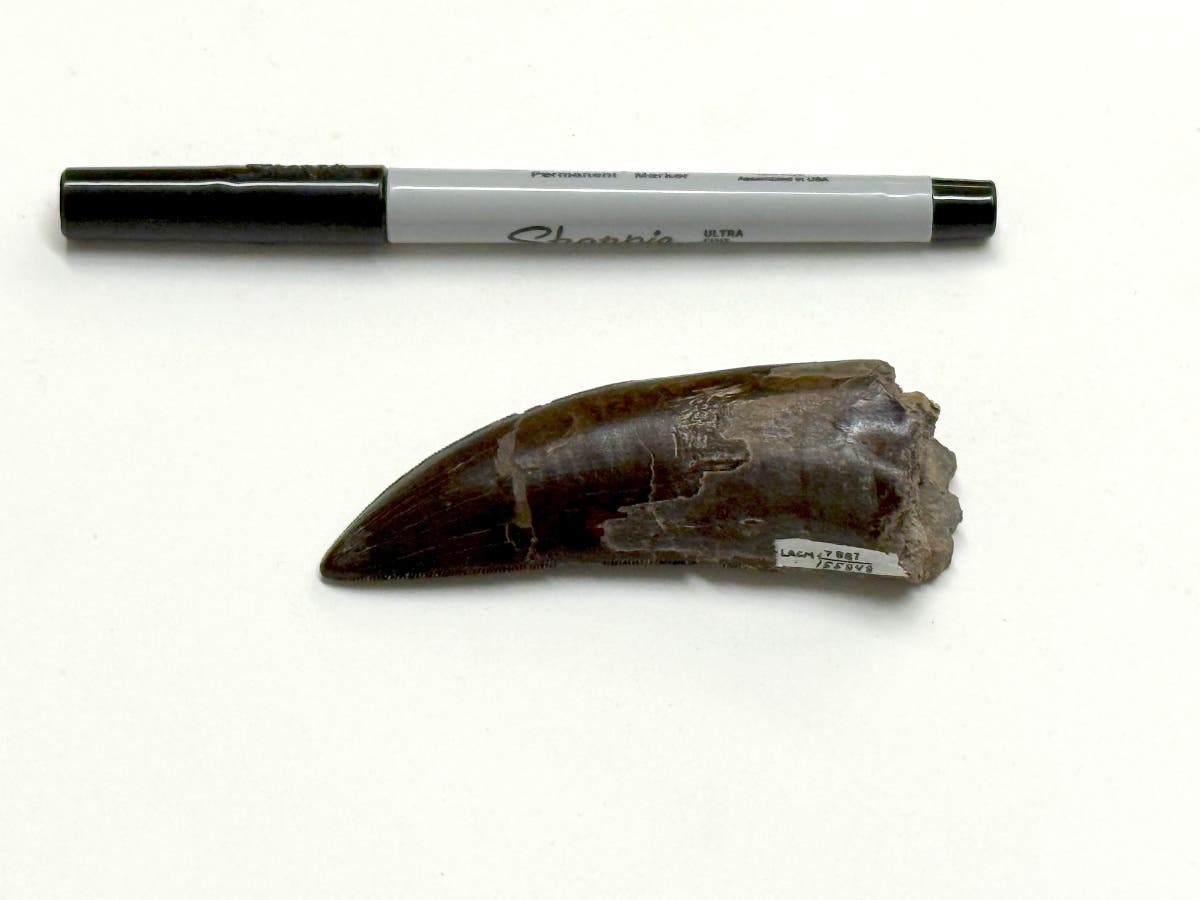
Researchers tested portions of two teeth from Thomas the T. rex, one of the most complete tyrannosaur skeletons at the Natural History Museum of Los Angeles County.
Find out what's happening in Los Angelesfor free with the latest updates from Patch.
“We found T. rex was 36 Celsius (97 Fahrenheit), about the same as humans,” UCLA geobiologist and study co-author Robert Eagle said.
Scientists determined the temperature by analyzing chemical bonds between rare carbon and oxygen isotopes preserved in tooth enamel. UCLA researchers spent more than a decade refining the method so it required only a few milligrams of fossil material.
Find out what's happening in Los Angelesfor free with the latest updates from Patch.
The results support evidence that T. rex was an active, warm-blooded animal rather than a slow-moving reptile dependent on outside heat, researchers said. Its body temperature also would have allowed it to survive in colder regions, including parts of ancient Alaska.
“For an animal this famous, it is remarkable how little we actually knew,” senior author and UCLA isotope geochemist Aradhna Tripati said. “The teeth tell us T. rex was warmer than the environment around it.”
Get more local news delivered straight to your inbox. Sign up for free Patch newsletters and alerts.