Weather
Kelvin Wave Closing In On CA, Scientist Warns
The ocean disturbance is now between Cabo and San Diego and could reach California within days, a scientist told Patch.


CALIFORNIA — A massive Kelvin wave moving toward California is now somewhere between Cabo San Lucas and San Diego and could reach Southern California within days, the scientist tracking the phenomenon told Patch Wednesday.
Dillon Amaya, an assistant professor of marine, earth and atmospheric sciences at North Carolina State University, said he expects the coastally trapped Kelvin wave to reach San Diego in roughly five to seven days. The Kelvin wave won't stop in Southern California. After reaching the Los Angeles area, the disturbance is expected to continue north along the California coast, raising sea levels for months to come. The current wave is expected to reach the San Francisco Bay Area by the second week of October, potentially raising water levels there by nearly a foot.
But Hurricane Polo, which generated powerful swells along Baja California and Southern California this week, has complicated efforts to pinpoint exactly where the wave is and how much it could ultimately raise coastal sea levels.
Find out what's happening in Los Angelesfor free with the latest updates from Patch.
"It's become somewhat hard to tell where the leading edge of the wave is because Polo has kicked up high seas along the Baja peninsula and SoCal, so there is a lot of other stuff going on," Amaya told Patch. "But as far as I can see, the wave is still propagating and somewhere between Cabo and San Diego."
This update comes after Patch reported on the approaching Kelvin wave while it was still farther south along Mexico's Pacific coast.
Find out what's happening in Los Angelesfor free with the latest updates from Patch.
At the time, Amaya estimated the disturbance could raise coastal sea levels by roughly 6 to 12 inches as it moved north along California, increasing the risk of flooding when combined with high tides, large swells or storms.
Wave Has Weakened, But Risk Remains
Amaya said Wednesday that the Kelvin wave has lost some energy during its journey north, meaning the eventual sea-level increase in Southern California could be toward the lower end of the range.
"The wave's energy has attenuated somewhat, so I think the anomalies will be on the lower end of the 6-12 inch range," Amaya said. It remains a threat for low-lying coastal areas, however.
"I know that doesn't sound like much, but every 2-4 inches of baseline sea level rise essentially doubles the flood risk for low-lying regions of California, when combined with high tides, large swells, and storms, so it is substantial," Amaya said.
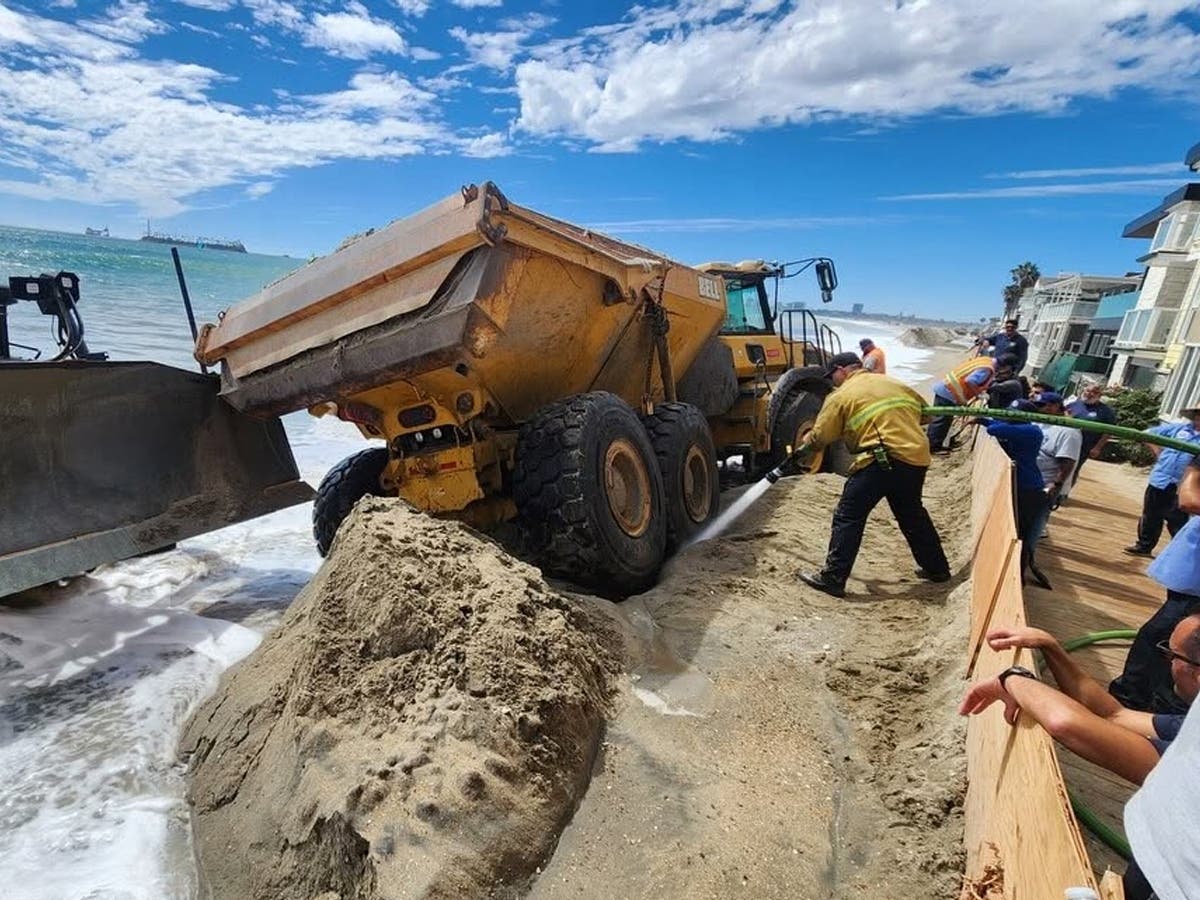
Recent erosion could leave places such as Long Beach more vulnerable to the effects of the Kelvin wave. Particularly hard hit were Long Beach, Laguna Beach, Dana Point and Malibu, where several beaches were denuded and homes were red-tagged.
With steeper, shallower beaches, Amaya said, wave energy can interact with the coastline with greater force and more water can reach buildings, roads and other infrastructure that the beach would otherwise help protect.
The National Oceanic and Atmospheric Administration says coastally trapped Kelvin waves can produce sea-level changes of approximately 15 centimeters, or about 6 inches, that can be detected by coastal tide gauges and satellites. NOAA scientists have been watching for such waves to move north along the West Coast as El Niño strengthens this fall.
NOAA's latest California Current assessment, updated Sept. 25, also said additional coastal warming was expected within weeks as El Niño-driven Kelvin waves reached the West Coast.
Polo Complicates The Picture
Polo's arrival along the Baja California peninsula came almost directly in the Kelvin wave's path.
The National Hurricane Center reported Sunday that Polo was producing peak seas of about 39 feet as it moved north-northwest off Baja California, while the National Weather Service in Los Angeles warned that swells generated by Polo and another tropical system could produce high surf, beach erosion and possible coastal flooding in Southern California.
For scientists trying to identify the much broader and more subtle change in sea level associated with the Kelvin wave, all that additional ocean activity has made the signal harder to isolate.
"Polo was a true wild card," Amaya told Patch. "It's induced so much sea level variability right in the path of the wave, that it's making it difficult to estimate the wave's position and magnitude given the data I have available."
Don't Expect To See It Arrive
Despite its name, a Kelvin wave is nothing like a conventional breaking wave or tsunami. The phenomenon raises the background sea level across a broad stretch of ocean along the coastline. Ordinary waves, tides and storm-driven swells then occur on top of that elevated starting point.
That means Southern Californians should not expect to watch a giant wave arrive on the horizon sometime next week.
NOAA describes coastally trapped Kelvin waves as one of the oceanic signatures of El Niño. They begin when changes in tropical Pacific winds generate Kelvin waves that travel east toward Central and South America before propagating north along the North American coast.
"The main thing to realize and understand about this wave is that Kelvin waves by themselves do not cause flooding," Amaya said. "They raise background sea levels, which when combined with high tides, large swells, and storms can substantially increase flood risk."
In fact, Amaya said its arrival could go largely unnoticed unless another coastal event occurs at the same time.
"Folks are not going to see this wave whiz by and may not even know it's happened until we get one of these compounding factors to trigger flood conditions," he said.
Related:
Get more local news delivered straight to your inbox. Sign up for free Patch newsletters and alerts.