Politics & Government
Meet Karen Bass, Candidate For Los Angeles Mayor
Karen Bass told Patch why she should be reelected as Los Angeles mayor. The primary election is on June 2, 2026.


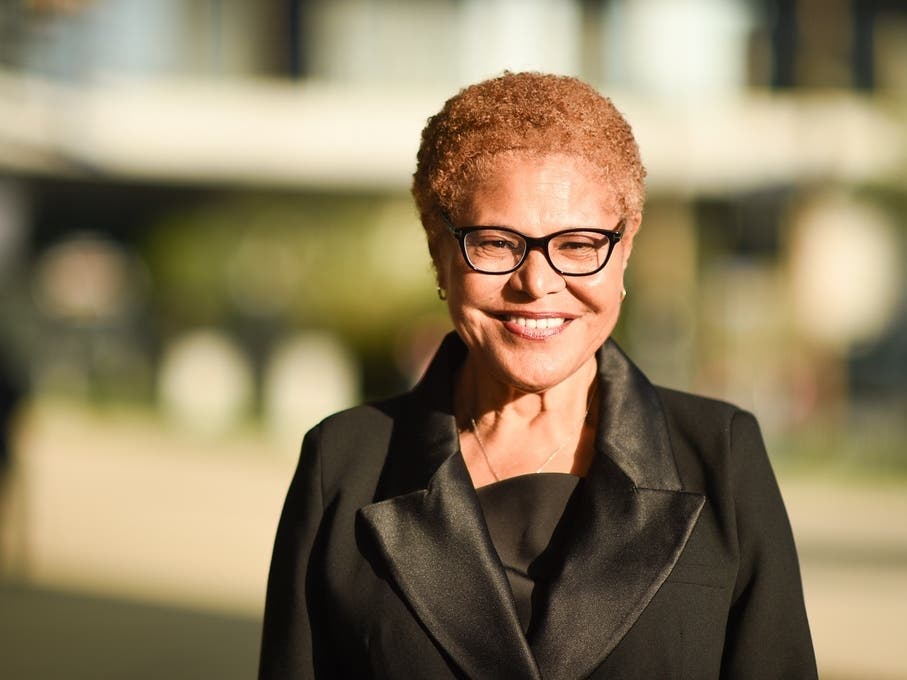
LOS ANGELES, CA — Mayor Karen Bass, 72, is vying to be reelected as the Los Angeles mayor.
In the June 2 primary, Bass will face a challenge from 13 other candidates as she seeks a second term.
Learn more about Bass' goals for Los Angeles:
Find out what's happening in Los Angelesfor free with the latest updates from Patch.
What is your educational background?
A graduate of Hamilton High School, Cal State Dominguez Hills and earned my masters from the University of Southern California.
Find out what's happening in Los Angelesfor free with the latest updates from Patch.
What is your professional background?
My background is rooted in high-stakes problem-solving. Before entering public service, I spent a decade as a physician assistant in the emergency room at LA County General Hospital, it taught me to diagnose root causes rather than just treating symptoms. I bring that same urgency to City Hall —whether we are moving Angelenos inside.
Have you ever held public office, whether appointive or elective?
- Mayor of Los Angeles (December 2022 – present)
- United States representative (2011 – 2022)
- Member of the California State Assembly, 47th District (2004 – 2010), serving as speaker of the California State Assembly (2008 – 2010)
What are the top three issues facing Los Angeles right now?
- Homelessness & housing
- Public safety & well-being
- Affordability and economic equity
What is one specific policy you would implement in your first 100 days?
As the incumbent mayor, I have moved LA from a state of crisis to a state of measurable progress by refusing to accept the status quo and building a unified partnership across all levels of government, and communities to tackle our greatest issues. We have fundamentally changed the trajectory of our city’s most pressing crises. We have proven that with urgent action and a unified strategy, we can move from managing problems to solving them.
When I took office, I declared a State of Emergency on homelessness because I refused to accept Angelenos dying on our streets. I established the Office of Community Safety to integrate community-led violence prevention and continued hiring officers. Through Executive Directive 1 (ED1) and ED7, fast-tracked housing and reduced project approval timelines by up to 85%.
While this progress is historic, our work is far from finished; it will take more than four years to truly shift our city away from forty years of failed policy decisions that created these crises.
In my second term, we cannot slow down—I will continue this vital work to save lives, improve our infrastructure, and elevate the quality of life for all Angelenos.
I have proven that urgent, unified action works. In my second term, I will make that urgency the law of the land not just executive orders to permanently change the trajectory. We are not just managing problems; we are institutionalizing solutions to ensure Los Angeles becomes the shining city we all expect it to be.
What is your plan to reduce homelessness, and how would you measure success after one year?
To address the homelessness crisis, we must reject the false choice between incarceration or waiting only for Permanent Supportive Housing (PSH). We treat this as a life-and-death emergency, prioritizing interim housing to bring people indoors now. In our first term, we changed the trajectory of this crisis. Declaring a State of Emergency, we cut decades of red tape, moved 23,000+ Angelenos indoors, and achieved a historic 17.5% reduction in street homelessness.
While PSH is the ultimate goal, we cannot let the "perfect" be the enemy of the "good" while neighbors die on our streets. My plan dramatically scales investment in interim beds to provide immediate stability. We will continue to bring people directly off the streets into safe, climate-controlled environments with on-site mental health and substance abuse services. This clears encampments and prevents their return by providing a path forward, not just a temporary move.
We are also building our way out of this. Through Executive Directive 1 (ED1), we’ve fast-tracked 42,000+ affordable housing units, cutting approval times by 85%. By making these efficiencies permanent and scaling interim capacity, we create a "flow" — moving people from the street, to a bed, to a home.
Measuring Success: Success after one year will be measured by a sustained continuation of these reductions, proving that our "lock arms" approach is saving lives and ending the era of sidewalk encampments for good.
What is one specific change you would make to improve public safety?
To improve public safety, I will institutionalize the Office of Community Safety as a permanent function with a dedicated, budget for unarmed crisis response and violence intervention.
In my first term, we proved that a dual-track strategy works. By integrating community-led intervention with traditional policing, we drove homicides to their lowest level in nearly 60 years. To truly shift Los Angeles away from the failed policies of the past, we must ensure these successes are woven into the permanent fabric of City Hall, rather than being dependent on any one administration.
My three-point safety plan includes:
Scaling Unarmed Response Citywide: We will expand the CIRCLE program to 24/7 coverage in every zip code. Mental health professionals — not police — will be the primary responders for non-violent incidents, ensuring people in crisis get the care they need.
Maximizing Police Effectiveness: By diverting thousands of non-emergency calls to specialized responders, we free up LAPD officers to focus on what they are trained for: solving violent crimes, disrupting retail theft rings, and enhancing neighborhood patrols.
Stabilizing Violence Prevention: We will move from temporary grants to a permanent funding model for peace ambassadors and interventionists who stop cycles of retaliation before they begin.
Safety is more than the absence of crime; it is the presence of stability. We are building a modern safety model that is as permanent as it is effective.
How would you improve transparency or accountability at City Hall?
First, I appointed the first Ethics Officer within the Office of the Mayor. For me, upholding the highest ethical standards is non-negotiable. We absolutely need to be more transparent about the city’s finances and budget, which is why I’ve started online dashboards for key programs like Inside Safe (encampments/homelessness).
My agenda includes harnessing technology and online tools to make sure the public can see how we are working — and spending — on their behalf. Open communication is key, which is why we are also using technology to clearly tell people when to expect a service call to be addressed, and to close the loop when it is. I am also pursuing a transparency policy for our bargaining activities and moving toward a budget process that is open, clear, and accountable to taxpayers.
Finally, City Hall must come to your community. That means consistent office hours, accessible permitting, and problems that are explained and resolved. The city should feel like a partner and ally, not an obstacle to progress. Trust is earned through results and honesty — I intend to keep earning it.
Why are you a better choice than your opponents?
Choosing the next mayor of Los Angeles is about more than just picking a name; it’s about choosing a future for our city. At a time when the federal administration is launching constant attacks on our values and our residents, we cannot afford to gamble on inexperience, reality TV antics, or ideological stagnation.
I am the only candidate in this race with the unique skills to handle a crisis from every angle. My background isn't just in politics — it’s in life-and-death triage. From my years as a Physician Assistant in the emergency room to my experience navigating the halls of power in Sacramento and Congress, I have spent my career in the breach. I know how to stabilize a patient, and I know how to stabilize a city.
Results vs. Theories
While others offer theories, we offer results. In my first term, we broke forty years of inertia:
A 17.5% reduction in street homelessness — the largest decline on record.
The lowest homicide rate in sixty years, proving our community safety model works.
The Choice is Clear
Los Angeles is a world-class city, not a soundstage for a federal agenda that targets our most vulnerable. The alternatives are simply too risky.
I have spent my life "locking arms" to build coalitions. In my second term, I will codify our successes into law to ensure Los Angeles remains a sanctuary of progress, safety, and opportunity for all.
Get more local news delivered straight to your inbox. Sign up for free Patch newsletters and alerts.