Politics & Government
Meet Marissa Roy, Candidate For Los Angeles City Attorney
Marissa Roy told Patch why she should be elected as Los Angeles city attorney. The primary election is on June 2, 2026.


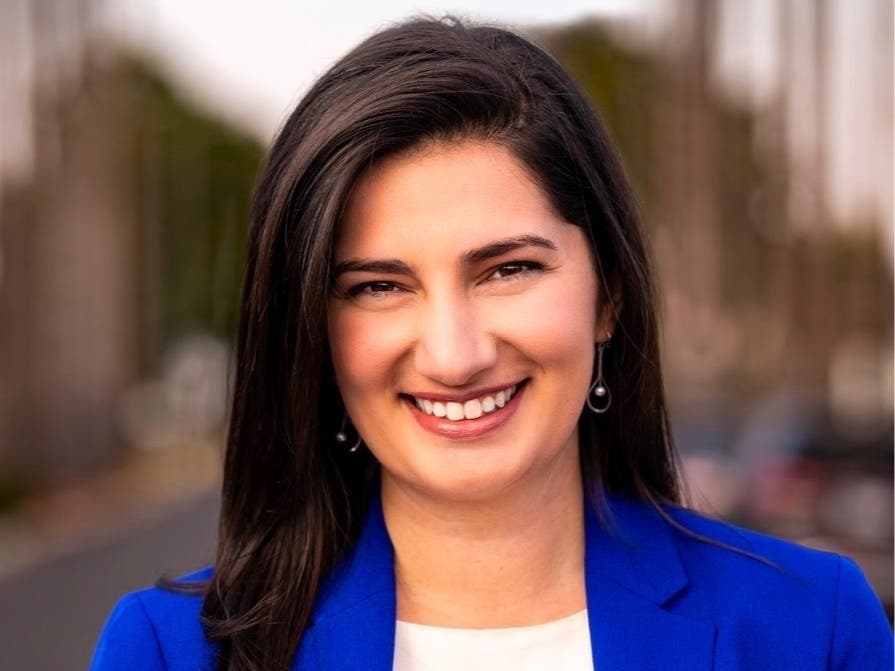
LOS ANGELES, CA — Marissa Roy, 34, is vying to be elected as the Los Angeles city attorney.
In the June 2 primary, incumbent City Attorney Hydee Feldstein Soto will face three challengers in her bid to seek a second term. Running against her are Roy, Aida Ashouri and John McKinney.
Learn more about Roy's goals for Los Angeles:
Find out what's happening in Los Angelesfor free with the latest updates from Patch.
What is your educational background?
I studied at USC and majored in philosophy. I then attended Yale Law School, where I worked in a legal clinic with the San Francisco City Attorney’s Office for two years. As part of that clinic, I helped build groundbreaking cases to fight big tech and fossil fuel companies as well as worked on my first lawsuit against the first Trump Administration, suing in my final semester and obtaining a preliminary injunction before I even graduated.
Find out what's happening in Los Angelesfor free with the latest updates from Patch.
What is your professional background?
I am a career government attorney. I started at the LA City Attorney’s Office, where I led wage theft cases that put thousands of dollars back in workers’ pockets. I then represented LA County as outside counsel in over a dozen legal actions against the Trump Administration. Now, I’m a consumer protection attorney at the California Department of Justice, where I am suing billion-dollar tech companies and obtained a half-million dollar judgment to protect tenants from an abusive landlord.
Have you ever held public office, whether appointive or elective?
I am a first-time candidate, though I have supported over 100 women running for state and local office in California.
The Los Angeles city attorney prosecutes misdemeanor offenses. How would you prioritize which cases to pursue?
I want to pursue strategies that actually make our communities safer — one key goal is reducing recidivism, or the rate of reoffending. When we structure a public safety approach that breaks cycles of criminalization, we are preventing crime and making everyone safer.
The City Attorney’s Office has jurisdiction over misdemeanor charges, which are more minor criminal charges. The majority of misdemeanor charges are nonviolent and victimless. According to a report from 2019, some of the top misdemeanor charges were public intoxication, vehicle- and driving- related offenses, and trespass. Responding to nonviolent misdemeanors with incarceration disrupts people’s lives and saddles them with a lifetime criminal record that can block them from housing, employment, and government benefits. This often leads to subsequent offenses.
This cycle of criminalization can only be broken by stopping it at the root. Across the country, many city attorneys and district attorneys are employing diversion, an alternative to incarceration, to do so. Diversion is a tailored, court-supervised program that connects people with the services they need to address that cause, such as behavioral health treatment, addiction support and counseling. Data has shown that when nonviolent misdemeanors are addressed with diversion, rather than incarceration, people are dramatically less likely to reoffend.
Under previous administrations, the City Attorney’s Office had been building out new pilot programs so that diversion could become another tool in the toolbox, but we’ve seen a return to more of a one-size-fits-all approach in this administration.
My philosophy is more nuanced: develop tools like diversion that are shown to work, collaborate with communities to develop sustainable, neighborhood-centered solutions, and work to permanently break cycles of criminalization so that we make everyone in our communities safer.
What is one specific change you would make within the City Attorney’s Office to improve its effectiveness or public trust?
I plan to restore the link between neighborhoods and the City Attorney’s Office by bringing back a new version of the Neighborhood Prosecutor Program ended by the current city attorney.
The Neighborhood Prosecutor Program was a critical public safety program where deputy city attorneys were embedded in neighborhoods to form deep connections and develop solutions that met the specific needs of different communities.
When I worked at the City Attorney’s Office, I saw how the neighborhood prosecutors assigned to schools would tour every LAUSD campus with principals and teachers, identify the safety risks to the schools, and prioritize services and solutions — for instance, when vandalism rose at a school because all of the lights were out, they’d help expedite the process on the city side to get that fixed. This was preventative public safety in action.
I want to create a Neighborhood Advocates Program that builds on this model, staffed not just by deputy city attorneys, but investigators and paralegals, who can help build relationships and community-based solutions to safety concerns. With this program, I hope to restore the broken line between communities and the City Attorney’s Office so that we build effective and preventative public safety solutions and build trust with communities that have lost access to the City Attorney’s Office.
Los Angeles faces significant legal costs from lawsuits, including police misconduct and city operations. What role should the City Attorney’s Office play in reducing the city’s legal exposure, and what specific approaches would you prioritize?
Last year, Los Angeles faced a $1 billion budget shortfall — nearly one-third driven by liability payouts mismanaged by the city attorney. While liability costs are inevitable in a city of this size, the scale of these payouts is not.
Past city attorneys have been able to stay within or close to the city’s budget for liability. Since taking office in 2023, the incumbent has exceeded it by $100 million in her first year, $200 million the next, and nearly $250 million last year — contributing directly to layoff and furlough threats across the city.
The number of cases resolved each year has remained roughly the same, meaning costs are rising because cases are being handled far more expensively. Two choices drive this spike.
First, the city attorney has increased outsourcing to pricey law firms by over 500%, with hourly billing that incentivizes prolonged litigation. Second, the city attorney has rejected reasonable settlements and pushed cases to trial resulting in “nuclear verdicts,” like five cases that could have settled for $10 million but that the city attorney forced to a $40 million verdict.
As city attorney, I’d manage liability responsibly: slashing outsourcing to outside counsel, reinvesting in deputy city attorneys who resolve cases at a fraction of the cost, and adopting proven risk-management practices to avoid runaway verdicts. For more long-term solutions, I’d work to bring departments in compliance with the law so that we prevent lawsuits before they occur.
Why are you a better choice than your opponents?
For the city attorney in particular, the relevance of legal experience is critical. The work in the City Attorney’s Office is largely between civil litigation and the criminal work is limited to misdemeanors. The incumbent is a corporate bankruptcy attorney with no litigation experience, while the other two opponents have felony and advocacy experience not directly translatable to the work of the office.
I bring both a unique vision and unique experience to this office. I plan to transform this office into the most significant public interest law office in the city, leading litigation against the Trump Administration and holding abusive corporations accountable.
I am the candidate with the most experience suing Trump, and the only candidate who has litigated wage theft cases, taken on Big Tech, and won a government enforcement action against a slumlord.
My litigation work has earned awards from the International Municipal Lawyers’ Association. I have trained hundreds of local government attorneys on local impact litigation. My specialty in this work is why I have earned the endorsement of California’s top attorneys, from Attorney General Rob Bonta to the San Diego and San Francisco city attorneys. I have a public interest vision for this role as well as the relevant experience to execute it.
Get more local news delivered straight to your inbox. Sign up for free Patch newsletters and alerts.