Community Corner
Sheriff Urges Mandatory Treatment, Explains ICE Cooperation In Sonoma County
Sonoma County sheriff explains immigration cooperation, mental health demands, hiring standards, and accountability for deputies.


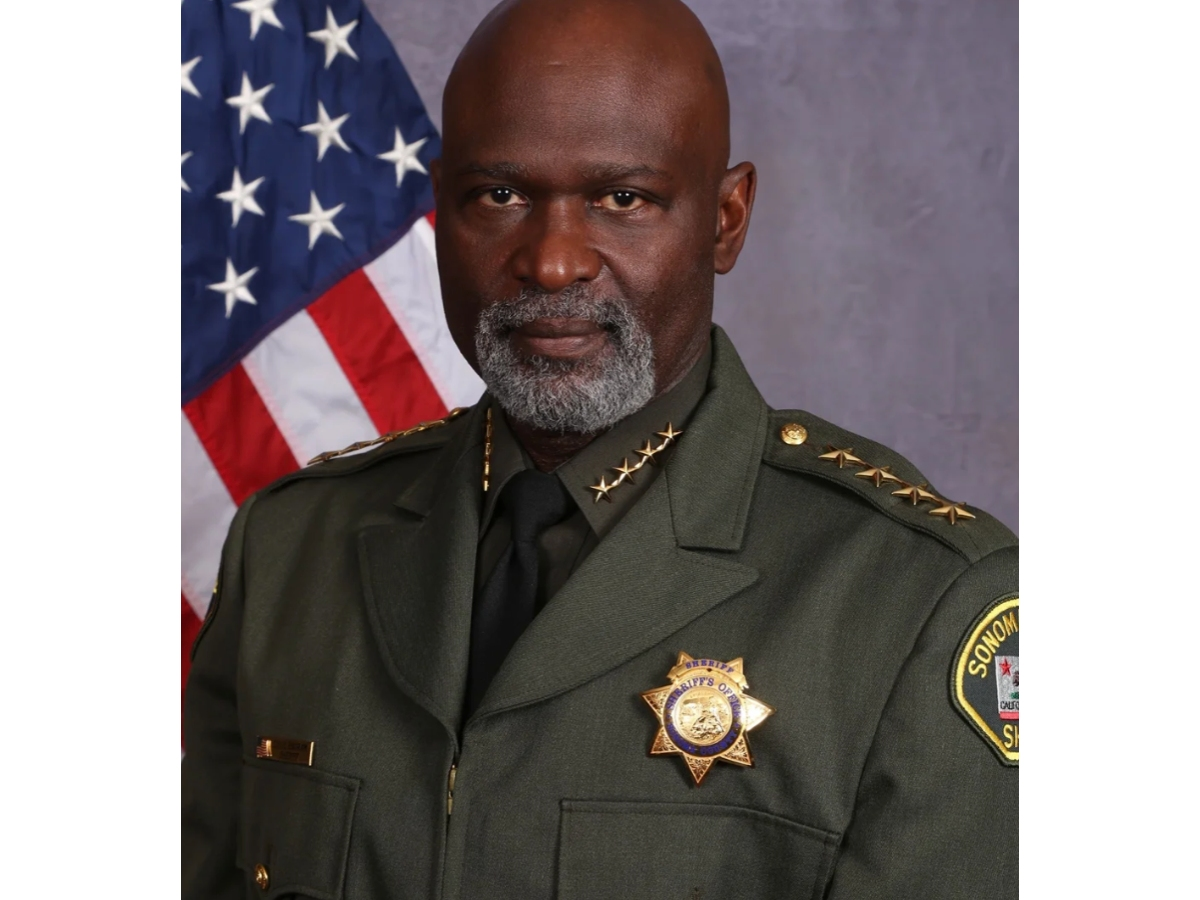
SONOMA COUNTY, CA — Sonoma County’s sheriff Eddie Engram wants mandatory mental health and substance abuse treatment, saying 49 percent of the jail population carries a mental health diagnosis.
During a conversation with Sonoma County District 4 Supervisor James Gore on “Explore with Gore,” the sheriff described a department that handles mental health crises, fields roughly 39,000 to 40,000 calls annually, and faces public scrutiny over immigration cooperation and deputy conduct.
Asked what he would change about California’s criminal justice system, the sheriff answered: “Mandate treatment. Mandate mental health treatment. Mandate substance abuse treatment.”
Find out what's happening in Rohnert Park-Cotatifor free with the latest updates from Patch.
Engram called the jail the county’s largest mental health and substance abuse treatment facility. The jail averages about 590 people daily, roughly half its pre-COVID population. He attributed the decline to several factors, including legal changes, bail changes, and pretrial programs.
“When I started, we didn’t have a whole mental health block within the jail,” he said.
Find out what's happening in Rohnert Park-Cotatifor free with the latest updates from Patch.
The department now contracts with mental health professionals and assigns specially trained deputies to mental health housing areas. About 200 correctional deputies work in the jail alongside medical, mental health, janitorial, and other staff.
ICE
Engram grew up in Union City, and graduated from James Logan High School.
He started his career as a correctional officer with the San Mateo County Sheriff’s Office and joined the Sonoma County Sheriff’s Office in 2002.
Engram was the assistant sheriff in Sonoma County when he ran for his current office.
He was elected June of 2022 as Sonoma County’s 35th elected Sheriff.
During the conversation with Gore, Engram outlined limits on the department’s cooperation with ICE.
Last year, the department provided information on 69 people, the sheriff said, and an April 2026 ICE arrest inside the jail drew objections from family and advocates.
Engram defended ICE cooperation as protecting public safety. Critics say it separates families and erodes trust.
Deputies do not join ICE operations, according to Engram, and his office rejects administrative detainers, but shares information about people convicted of serious or violent felonies.
“I hear a lot that just because someone is an immigrant doesn’t mean they’re more likely to commit crime,” he told Gore. “I 100 percent agree with that.”
IOLERO
On accountability, the sheriff said his office must investigate allegations thoroughly and impose discipline when investigators confirm misconduct.
Depending on the conduct, consequences can include termination, suspension, or a letter of reprimand.
“It’s my job as sheriff to hold my people accountable,” he said.
With a reference to Sonoma County’s independent law enforcement watchdog, IOLERO, Engram said voters must hold him accountable if he fails to perform his duties.
In 2025, IOLERO faulted deputies’ tactics in the 2022 killing of David Peláez Chavez.
Engram rejected the board's findings as speculative and cited the DA’s conclusion that deputies acted lawfully. He also refused to compel oversight interviews, citing deputies’ rights, while their union accused watchdog leaders of retaliation and demanded an investigation.
The sheriff acknowledged that past incidents continue to shape the department. He connected oversight changes to George Floyd and Andy Lopez and said law enforcement’s history includes both achievements and wrongdoing.
“We are where we are today from the successes of the past, but also the sins of the past,” he said.
He said hiring decisions help determine how deputies handle difficult encounters. The department’s selection process takes about six months and includes written testing, interviews, background investigations, polygraph examinations, medical examinations, and psychological examinations.
A starting group of 200 applicants might produce 10 to 15 successful candidates, he said.
“We can’t train you to be an honest person with integrity,” he said.
New deputies then spend about six months in the academy and four to six months training with an experienced officer. The sheriff estimated that deputies need another four to five years working independently to become skilled practitioners.
Asked which quality every good deputy needs, he answered, “Patience.”