Riverside, CA|Featured Classified|Announcement|

Diabetes and Amputation: The Warning Signs You Can't Afford to Ignore
November Is National Diabetes Month. Vascular Surgeon Dr. Pushpinder Sivia Explains How to Recognize Poor Circulation Before It Leads to Serious Complications.
Most people with diabetes focus on controlling their blood sugar, protecting their eyesight and preventing kidney problems. But there's another dangerous complication that often goes unnoticed until it's too late: poor circulation that can lead to amputation.
It's called peripheral artery disease (PAD), a condition in which plaque buildup narrows the arteries, reducing blood flow to the legs and feet.
People with diabetes face a significantly higher risk of developing PAD, and the consequences can be devastating.
"Most people with diabetes know their blood sugar numbers. But almost nobody knows how well blood is flowing to their feet. That's a blind spot that can have devastating consequences," says Dr. Pushpinder Sivia, board-certified vascular surgeon at Empire Vein & Vascular Specialists, who has performed more than 5,000 angiogram procedures for PAD.
PAD isn't just a threat to your legs. The same plaque buildup can affect arteries supplying the heart and brain, increasing the risk of heart attack and stroke.
1. Don't Automatically Blame Leg Pain on Aging
Do your calves ache when you walk but feel better when you stop? Do your legs feel unusually heavy or tired after walking a short distance?
Don't automatically blame arthritis, aging or being out of shape.
Leg pain that repeatedly appears with walking and disappears with rest is a classic warning sign of PAD. Your muscles may not be getting enough blood to meet their needs.
Other warning signs include:
- One foot feeling colder than the other
- Numbness, weakness or changes in skin color
- Sores on the feet or toes that won't heal
- Foot pain at night or while resting
2. The Scariest Symptom? Sometimes There Isn't One.
Diabetes can cause nerve damage, known as neuropathy, that makes it difficult to feel pain.
That means someone could have a serious circulation problem without experiencing the typical warning signs.
A patient might develop a small blister or cut and barely notice it. When poor circulation prevents that wound from healing, a seemingly minor problem can become a limb-threatening emergency.
This combination of diabetes, nerve damage and poor circulation makes regular foot checks especially important.
3. Who Should Be Screened?
People with diabetes should discuss PAD screening with their healthcare provider, especially if they:
- Are age 50 or older
- Smoke or previously smoked
- Have high blood pressure, high cholesterol or kidney disease
- Have neuropathy, foot ulcers or slow-healing wounds
- Experience leg discomfort when walking
A simple, painless test called the ankle-brachial index (ABI) compares blood pressure in the ankles and arms to help identify blocked arteries. Additional testing may be needed for some patients with diabetes.
4. Five Simple Steps That Could Save Your Feet
Check your feet every day. Look for cuts, blisters, redness, swelling or changes in skin color. Don't forget between your toes.
Never walk barefoot. Even a small cut can become a serious problem, especially if you have reduced sensation.
Don't wait on a wound. A foot sore that isn't healing deserves prompt medical attention. Early treatment can prevent serious complications.
Keep walking. Regular exercise can improve walking ability and help manage vascular risk factors. Ask your physician about a safe exercise program.
Protect your arteries. Control blood sugar, blood pressure and cholesterol. If you smoke, quitting is one of the most important steps you can take.
5. Amputation Isn't Inevitable. There Are Treatments.
For many patients, PAD can be managed with medications, lifestyle changes and structured exercise programs.
When blood flow becomes severely restricted, minimally invasive procedures may help restore circulation and save threatened limbs.
These treatments include balloon angioplasty, stents, plaque-removal devices and intravascular lithotripsy (IVL), which uses sonic pressure waves to help open arteries hardened by calcium.
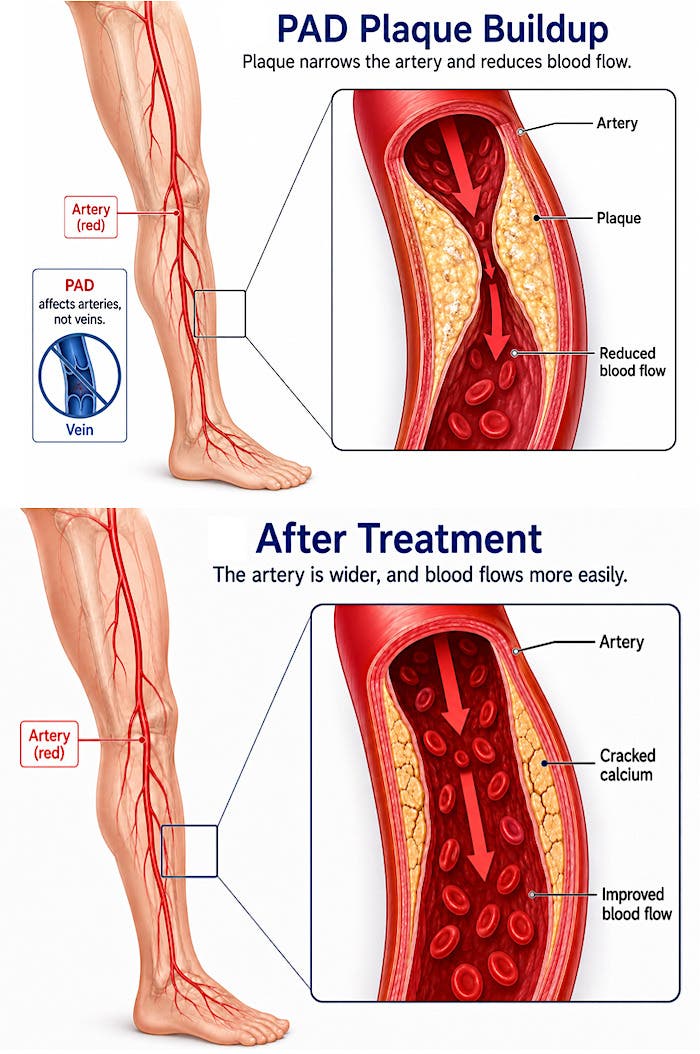
More advanced cases may require bypass surgery.
"Too many people believe that losing a toe, foot or leg is simply an unavoidable consequence of diabetes," says Dr. Sivia. "That's not true. With early detection and the right treatment, many amputations can be prevented."
The Bottom Line
You probably know your blood sugar numbers. But do you know how well blood is flowing to your feet?
This National Diabetes Month, take a few minutes to check your feet, pay attention to changes in your legs and ask your healthcare provider whether PAD screening makes sense for you.
Because protecting your feet today could mean keeping them tomorrow. Visit empirevein.com for more information or to schedule a consultation.